




































































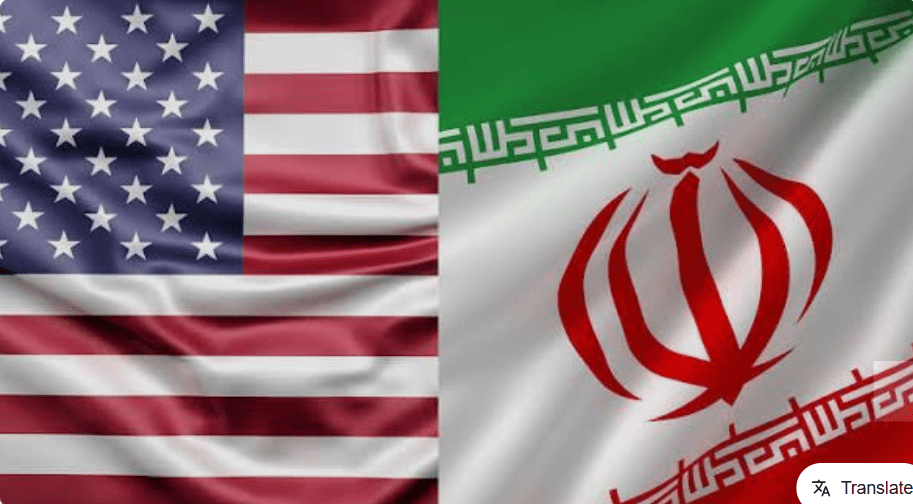
Iran has warned that any major new attack by the United States and its allies would trigger sustained retaliation against American military bases and interests across the region, raising fears of a wider escalation in the Middle East.
Tehran’s warning came on Sunday after Iranian military authorities said they had received information suggesting that Washington was preparing to resume military action. Iran did not provide details or independent evidence to support the claim.
Iran’s Khatam al-Anbiya Central Headquarters said any new US attack would be met with continued strikes against American targets. It also warned that countries in the region that support or facilitate US military operations would be treated as parties to the conflict.
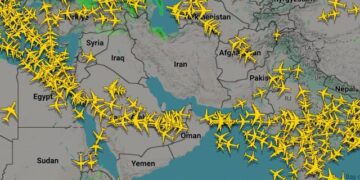
The warning came as the United States issued its own alert about the possibility of an unforeseen escalation, advising Americans in the Middle East to exercise increased caution and prepare for potential flight disruptions and airspace closures.
Conflict Spreads Across the Region
The latest exchange of threats comes nearly seven months into the US-Iran war, with no clear indication that either side is prepared to make the concessions needed to bring the conflict to an end.
The fighting has increasingly spilled beyond Iran and the United States, drawing regional powers and Iran-aligned armed groups into the crisis.
On Saturday, Yemen’s Iran-backed Houthi movement claimed responsibility for attacks in Saudi Arabia, including strikes targeting Riyadh and an oil facility in the Red Sea port of Yanbu.
Video reviewed by Reuters showed a large plume of black smoke rising near Riyadh’s main international airport after explosions were heard in the Saudi capital.
Saudi authorities did not immediately comment on the Houthi claims, although a Saudi-led coalition fighting the group said it had intercepted other attacks targeting the kingdom. The US State Department’s security alert also cited Houthi hostilities against Saudi Arabia, including threats to civilian airports.
The Pentagon did not immediately respond to a request for comment on Iran’s warning of a possible new US offensive.
Saudi Arabia Caught in the Middle
The latest Houthi escalation has put Saudi Arabia in a difficult position.
Riyadh faces the choice of continuing military operations against the Houthis to prevent them from expanding their territorial gains in Yemen, or reducing its involvement in an attempt to limit the risk of attacks on critical Saudi infrastructure.
The Houthis’ recent advances along Yemen’s Red Sea coast have also increased the strategic importance of the Bab el-Mandeb Strait, a key shipping route connecting the Red Sea with the wider Indian Ocean region.
That development has added another layer to an already severe disruption of regional shipping and energy flows.
Hormuz Blockade Adds to Energy Pressure
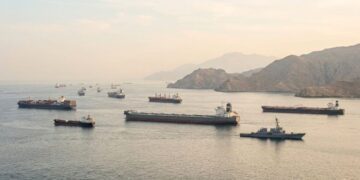
Iran has continued to restrict shipping through the Strait of Hormuz, one of the world’s most important energy corridors.
With the Bab el-Mandeb also under growing pressure from the conflict in Yemen, disruptions to shipping through both waterways have raised concerns about the movement of oil and other commodities from the Gulf.
At the same time, a US blockade of Iranian ports has severely constrained Tehran’s ability to export its own oil, adding to economic pressure inside Iran.
The disruption has also contributed to rising global energy concerns at a time when oil markets are already under strain.
Ceasefire Remains Elusive
Efforts to revive a temporary ceasefire reached in June have made little progress.
The agreement collapsed in July amid disagreements over its terms, and subsequent diplomatic efforts have failed to produce a durable settlement.
Iran said on Sunday that it would not reopen the Strait of Hormuz until the conditions of the June agreement, as Tehran interprets them, are met.
Iranian Parliament Speaker Mohammad Baqer Qalibaf said the country would have to pursue both military resistance and diplomacy, using negotiations to consolidate any gains achieved during the conflict.
The latest warnings from Tehran and Washington’s alert have heightened concerns that another round of fighting could further widen the conflict, threaten regional infrastructure and put additional pressure on global energy supplies.