

























































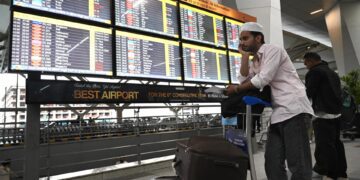



















Air traffic over Saudi Arabia’s capital, Riyadh, fell sharply on Monday after deadly attacks blamed on Yemen’s Houthi movement disrupted operations at the city’s main airport, with aviation analytics firm Cirium estimating that about 60 per cent of scheduled flights would be cancelled.
King Khalid International Airport, Saudi Arabia’s second-busiest airport after Jeddah, cancelled 99.7 per cent of its scheduled flights on Sunday, according to Cirium data.
Disruptions extended beyond the capital, with more than a third of scheduled flights across Saudi Arabia expected not to operate on Monday. Flight-tracking platform FlightRadar24 put the cancellation rate at Riyadh airport at approximately 78 per cent.
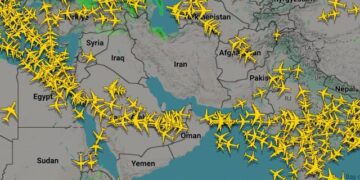
The attacks have triggered one of the most significant disruptions to Saudi Arabia’s civil aviation sector in recent years, prompting airlines in Europe and Asia to suspend services amid security concerns.
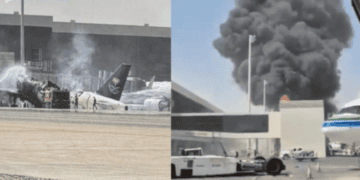
Deadly strikes force airport closure
Riyadh’s King Khalid International Airport remained closed on Sunday following an attack that killed one person and injured nearly a dozen others.
The strike came a day after another attack claimed by the Houthis killed 13 people and wounded more than 300, according to the report.
The attacks have raised concerns over the safety of commercial aviation as the conflict involving the Iran-aligned Houthi movement and Saudi Arabia intensifies.
The scale of the disruption has affected airlines operating routes into and across the kingdom, leaving passengers facing cancellations and uncertainty over scheduled journeys.
The United States Federal Aviation Administration on Sunday advised American airlines to exercise caution when flying to or over Saudi Arabia.
The advisory came as aviation operators assessed the risks posed by the attacks and the potential for further strikes against airports and other transport infrastructure.
The disruption to Riyadh’s airspace and airport operations highlights the growing impact of the regional conflict on civilian transport, with airlines forced to reconsider services as security risks increase.