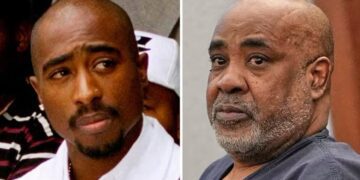











































































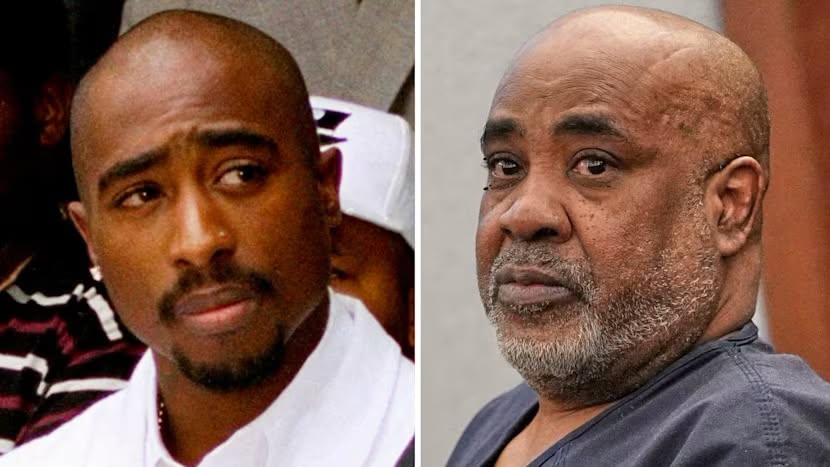
Nearly three decades after Tupac Shakur was fatally shot in Las Vegas, jury selection has begun in the long-awaited murder trial of former gang leader Duane “Keffe D” Davis.
The 63-year-old is the only person ever charged in connection with Shakur’s September 1996 killing. Prosecutors allege that Davis helped organize the attack and supplied the firearm used in the shooting, although he is not accused of pulling the trigger.
Jury selection started Monday in a Las Vegas courtroom, with about 75 prospective jurors initially called for questioning. They are being examined on whether they can remain impartial despite the enormous public attention surrounding the case.
If convicted, Davis could face life imprisonment without the possibility of parole.
The trial before Judge Carli Kierny is expected to last between four and five weeks. However, the proceedings may not conclusively establish which member of the group travelling with Davis fired the shots that killed Shakur.
Shakur was killed at the peak of his career
Shakur, widely known as 2Pac, was 25 when he was shot on September 7, 1996.
He had been in Las Vegas to watch a heavyweight boxing bout involving Mike Tyson at the MGM Grand. Later that night, Shakur was riding in the passenger seat of a black BMW with Death Row Records boss Marion “Suge” Knight when another vehicle pulled alongside them.
Gunmen opened fire from a white Cadillac. Shakur was struck and critically wounded, while Knight survived the attack.
Shakur died six days later, on September 13, 1996, at University Medical Center in Las Vegas.
His death became one of the most enduring mysteries in music history and was closely linked to the violent rivalry between rival factions of the 1990s hip-hop scene.
Prosecutors’ case against Davis
Authorities allege that the shooting followed a confrontation earlier on the night of Shakur’s death.
After the Tyson fight, Shakur and Knight were involved in an altercation with Orlando “Baby Lane” Anderson, a member of the South Side Compton Crips and Davis’s nephew.
Prosecutors contend that the confrontation was retaliation for an earlier dispute involving a Death Row associate and that Davis subsequently helped organize an attack against Shakur and Knight.
According to the prosecution theory, Davis was travelling in the Cadillac with Anderson and other associates when the vehicle pulled alongside Shakur’s BMW. Shots were then fired into the rapper’s car.
Davis is the only surviving member of the group prosecutors believe was involved in the attack.
Case revived after Davis’s memoir
For years, investigators struggled to build a criminal case over Shakur’s killing. The investigation gained new momentum after Davis published his memoir, Compton Street Legend, in 2019.
In the book, Davis described his involvement in the events surrounding the shooting and said he passed a handgun from the front of the Cadillac to people sitting in the back seat as the vehicles moved alongside Shakur’s car.
His public accounts eventually drew renewed attention from investigators.
Police raided Davis’s Las Vegas-area home in 2023, and he was arrested in September 2023, more than 27 years after Shakur’s death.
Davis has pleaded not guilty. He has since disputed the prosecution’s interpretation of his memoir and maintained that there is insufficient evidence to convict him.
A case tied to hip-hop’s biggest rivalry
Shakur’s murder occurred during a period of intense tension between the US West Coast and East Coast hip-hop scenes.
The rapper had become one of the most prominent artists associated with Los Angeles-based Death Row Records, while Bad Boy Records, led by Sean “Diddy” Combs, was one of the leading labels on the East Coast.
The rivalry also involved artists such as Christopher Wallace, better known as the Notorious B.I.G.
Shakur’s killing was followed less than seven months later by Wallace’s murder in Los Angeles in March 1997. Neither case was initially solved, fueling decades of speculation among fans and investigators.
Shakur’s career had included major hits such as California Love and All Eyez on Me. The son of a Black Panther, he was raised partly in Harlem and Baltimore before becoming one of the defining figures of West Coast rap.
Family hopes trial brings answers
Outside the Las Vegas courthouse, William Lesane, who identified himself as Shakur’s cousin, said the trial represented a significant moment for the rapper’s family after decades of uncertainty.
He expressed hope that the proceedings would reveal new information and lead to accountability for those responsible.
The case has also moved into civil court. In May 2026, Shakur’s stepbrother, Maurice Shakur, filed a wrongful-death lawsuit alleging that people involved in the rapper’s killing had not been held accountable.
The lawsuit also references a television documentary in which Davis allegedly told police that Combs offered $1 million for Shakur’s killing. Combs has denied involvement in Shakur’s murder.
As jury selection gets under way, the criminal case marks the most significant legal development in the investigation since Shakur was killed in 1996.
For the rapper’s family and millions of fans, the proceedings could finally provide answers to a murder that has remained unresolved for almost 30 years.