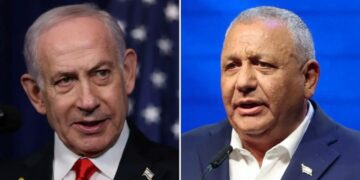



































































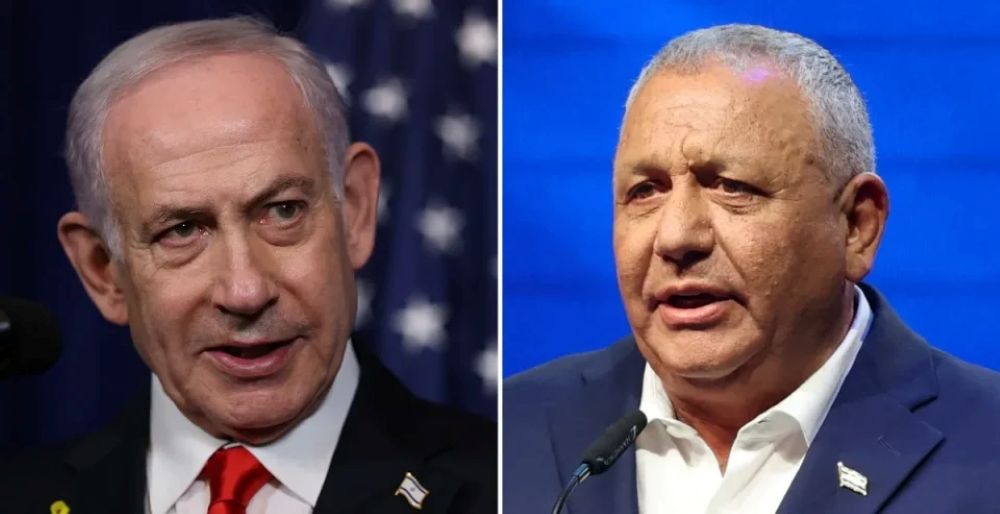
Former Israeli military chief Gadi Eisenkot has emerged as the leading contender to receive the mandate to form Israel’s next government after a religious party that has repeatedly supported Prime Minister Benjamin Netanyahu declined to back him following the October 27 election.
President Isaac Herzog continued consultations with political parties on Thursday to determine who should be allowed to form a government, after neither Netanyahu nor Eisenkot secured enough parliamentary support to command a majority.
Although Herzog has the final authority to select the candidate, the mandate traditionally goes to the politician recommended by the largest number of parties. Current consultations suggest Eisenkot has an advantage.
The opposition leader has received backing from several political groups, including a key party representing Israel’s Arab minority. However, he has yet to make clear whether he would rely on Arab lawmakers to secure the numbers needed to form a government.
United Torah Judaism, which supported Netanyahu after the previous five elections, informed Herzog that it would not recommend any candidate for the premiership. The party, which won seven seats in the 120-member Knesset, also stopped short of endorsing Eisenkot.
The decision marks a departure from its previous support for Netanyahu, although observers believe it may be intended mainly to put pressure on the outgoing prime minister rather than signal a permanent break with him.
United Torah Judaism represents ultra-Orthodox Jews of Ashkenazi background, while Shas represents the Sephardic community, whose members largely trace their origins to the Middle East and North Africa.
Both parties have traditionally worked with Netanyahu to protect exemptions from compulsory military service for religious students.
The exemption has become a major political dispute as Israeli reservists have been repeatedly called up during the country’s wars in Gaza, Lebanon and Iran. Although Netanyahu has maintained the arrangement, he has not secured legislation to establish it permanently, amid growing opposition from Israelis who believe military service obligations should apply equally.
United Torah Judaism lawmaker Isaac Pindrus said securing the status of religious students would remain the party’s immediate priority in any future government.
Eisenkot, however, has consistently argued for ending the exemptions, a position that could make cooperation with ultra-Orthodox parties difficult. He has sought support across Israel’s political spectrum, including among secular voters on both the left and right.
Some opposition politicians have also criticised the ultra-Orthodox community, which accounts for about 14 per cent of Israel’s population, over its military service exemptions and the financial demands placed on the state.
Netanyahu’s political bloc, including United Torah Judaism, holds 53 seats in the new parliament, compared with 48 for Eisenkot’s bloc.
The Raam party, led by influential Arab-Israeli politician Mansour Abbas, has also recommended Eisenkot to Herzog. Arab-majority parties collectively increased their representation to 19 seats in the election, reflecting widespread anger over Netanyahu’s hard-right government.
The increase in Arab representation could give Eisenkot a possible route to a parliamentary majority. However, accepting their support could alienate some of his potential allies, particularly Avigdor Liberman, a former Netanyahu associate who has become one of his strongest critics but maintains hawkish positions on the Palestinians.
Netanyahu has repeatedly attacked the opposition over the possibility of relying on Arab lawmakers to form a government. In a video released on Wednesday from his office, he alleged there were serious suspicions that foreign powers had financed parts of the election campaign and questioned the loyalty of Arab citizens.
Under Israel’s parliamentary system, the politician selected by Herzog will have 28 days to assemble a governing coalition, with the possibility of a 14-day extension. If the candidate fails, the president can give another lawmaker the opportunity.
The latest consultations leave Eisenkot with a potential advantage, but the absence of a clear majority means the negotiations could remain difficult. Netanyahu has not been ruled out, despite losing the backing of a party that has stood with him through several previous elections.