









































































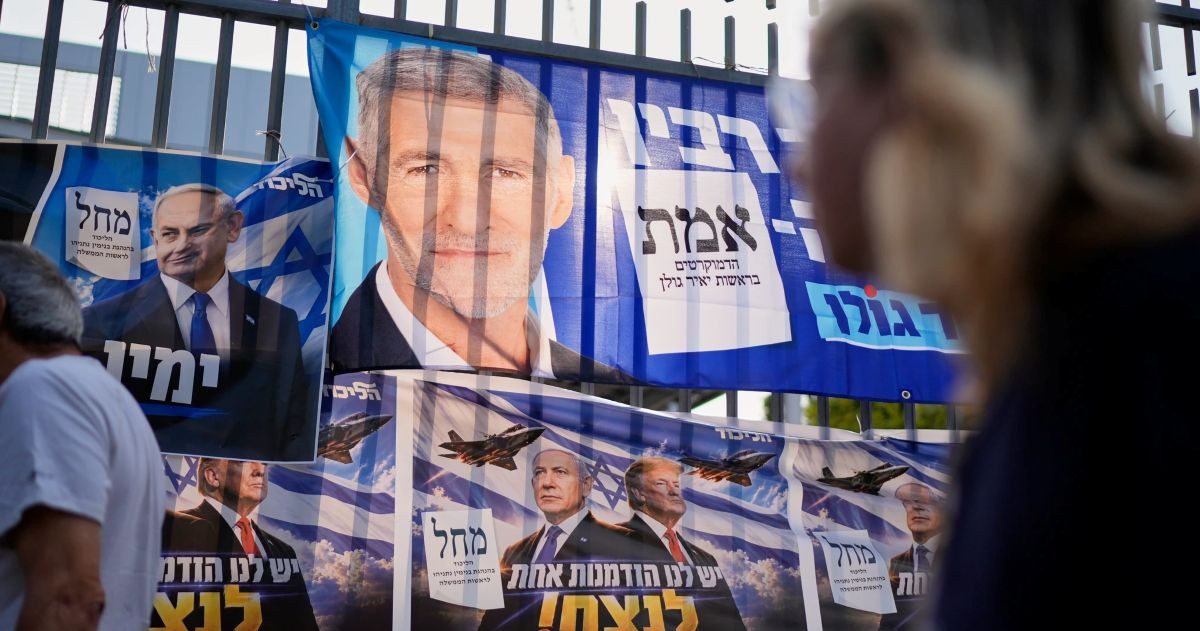
Israelis are voting in a closely watched parliamentary election that could determine Prime Minister Benjamin Netanyahu’s political future and set the country’s course after years of conflict and deep political divisions.
The election, reported by CNN and the BBC, is the first national vote since the Hamas-led attacks of 7 October 2023 and the wars that followed in Gaza and other parts of the Middle East.
Netanyahu, Israel’s longest-serving prime minister, faces a major challenge from opposition leader Gadi Eisenkot, a former military chief seeking to end his rival’s long hold on power.
The vote is widely seen as a judgment on Netanyahu’s leadership, particularly his government’s response to the 7 October attacks, its handling of Israel’s security challenges and the growing international criticism of its military operations.
Security remains a central issue for voters, alongside the cost of living, military conscription and calls for accountability over the failures that allowed the attacks to occur.
Netanyahu is seeking another term with backing from right-wing and religious parties, while opposition groups are campaigning for a change of government and a different approach to national leadership.
However, the result remains uncertain, with neither side expected to win an outright majority in the 120-member Knesset, Israel’s parliament.
Under the country’s parliamentary system, the party or bloc best placed to govern must secure enough support to form a coalition. Negotiations could take weeks, leaving the country facing further political uncertainty after the vote.
The outcome could also shape Israel’s relations with the United States and other international partners as diplomatic pressure grows over the wars and the government’s policies towards the Palestinians.