
















































































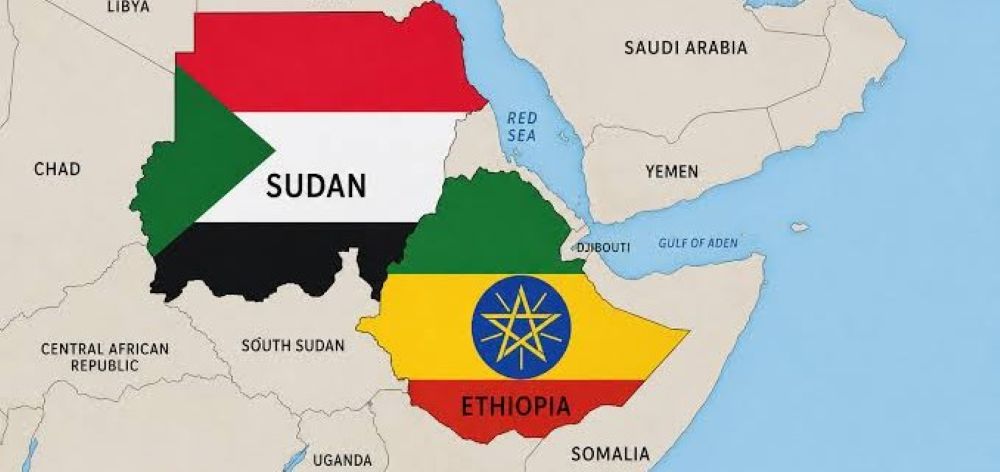
Ethiopia and Sudan have closed each other’s consulates and expelled diplomatic staff following accusations that both countries are interfering in one another’s internal conflicts, raising fears of a wider confrontation in the Horn of Africa.
Sudan has accused Ethiopia of supporting the paramilitary Rapid Support Forces (RSF) in its ongoing civil war, while Addis Ababa alleges that Khartoum is backing rebels in Ethiopia’s northern Tigray region. Both governments have rejected the accusations.
The diplomatic dispute has heightened concerns that the conflicts in the two neighbouring countries could become increasingly interconnected and trigger a broader regional crisis.
On Sunday, Sudan’s government said it had filed a complaint against Ethiopia with the United Nations Security Council and the African Union’s Peace and Security Council.
Khartoum accused Ethiopia of allowing RSF fighters to use its territory as a base for launching suicide drone attacks against civilian infrastructure in Sudan. Ethiopia’s Prime Minister’s Office did not respond to a Reuters request for comment on the allegation.
A senior Ethiopian official told Reuters that Addis Ababa had ordered the closure of Sudan’s consulate in the border town of Assosa and given its six diplomats 48 hours to leave the country. The official did not disclose the reason for the decision.
Sudan subsequently shut Ethiopia’s consulate in the eastern city of Gedaref and expelled the diplomats stationed there, according to two Sudanese officials who spoke to Reuters on condition of anonymity because of the sensitivity of the matter.
Ethiopia has repeatedly denied supporting the RSF, which is fighting Sudan’s army in a conflict that began in April 2023. The war has displaced more than 14 million people, according to United Nations figures, and created one of the world’s most severe humanitarian emergencies.
Meanwhile, Ethiopia has accused Sudan, Egypt and Eritrea of supporting Tigrayan rebels who launched an offensive against government forces in September. The three countries have denied involvement.
Despite the growing diplomatic hostility, Sudan says it does not want the dispute to develop into a direct military confrontation.
Amjad Farid, political and foreign affairs adviser to Sudan’s Transitional Sovereignty Council, said his government remained determined to defend the country’s territory but was making every effort to prevent an open conflict with Ethiopia.
The diplomatic expulsions mark a further deterioration in relations between the neighbours as fighting and competing allegations threaten to spread instability across the already volatile Horn of Africa.