




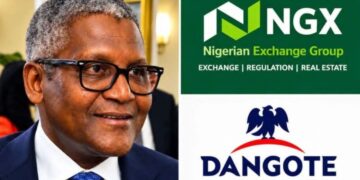































































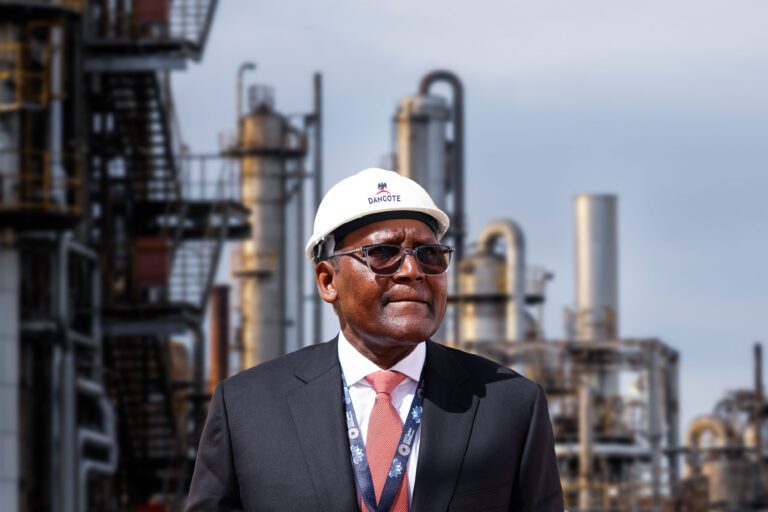
Nigerian billionaire Aliko Dangote has launched a $2.5 billion fuel storage and pipeline project in Namibia, a major expansion of his energy business into Southern Africa.
The project, inaugurated in Walvis Bay on Wednesday, is expected to strengthen fuel distribution across the region and could establish the Namibian port city as a major logistics hub serving several landlocked countries.
The investment is part of Dangote’s wider push to expand his energy operations across Africa, where many countries depend heavily on imported petroleum products. The continent’s fuel supply challenges have also been heightened by disruptions linked to the Iran war.
Dangote already operates Africa’s largest refinery, a 700,000-barrel-per-day facility in Nigeria, which is undergoing expansion. He also plans to build another refinery with the same capacity in Kenya.
Speaking at the launch ceremony, attended by Namibian President Netumbo Nandi-Ndaitwah, Dangote said the proposed pipeline network would improve energy security and supply independence in six African countries.
He said the development would help Namibia reduce its exposure to high shipping costs, logistical difficulties and fuel supply vulnerabilities.
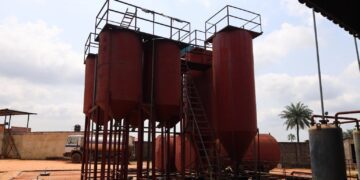
The storage facility will have a capacity of about 600 million litres, equivalent to roughly four million barrels. Of this volume, 360 million litres will be allocated to diesel, with the remainder reserved for petrol.
Dangote said construction was expected to take between 18 and 20 months.
Once completed, the facility will be eight times larger than Namibia’s existing 75 million-litre National Oil Storage Facility, which is operated by state-owned Namibia National Petroleum Corporation, known as Namcor.
The project also includes plans for a pipeline stretching approximately 1,700 kilometres. The proposed network could connect Walvis Bay to landlocked Botswana, Zimbabwe and Zambia, with a possible extension to the Democratic Republic of Congo.
Gerrit van Rooyen, a senior economist at Oxford Economics Africa, said the investment formed part of Dangote’s broader strategy to establish fuel distribution networks across the continent and create new markets for his refined petroleum products.
He noted that expanding into Southern Africa would help the company reduce its dependence on European and East Asian markets, where demand for refined fuels is expected to face pressure over the longer term as countries shift towards cleaner energy.