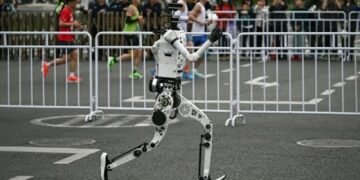














































































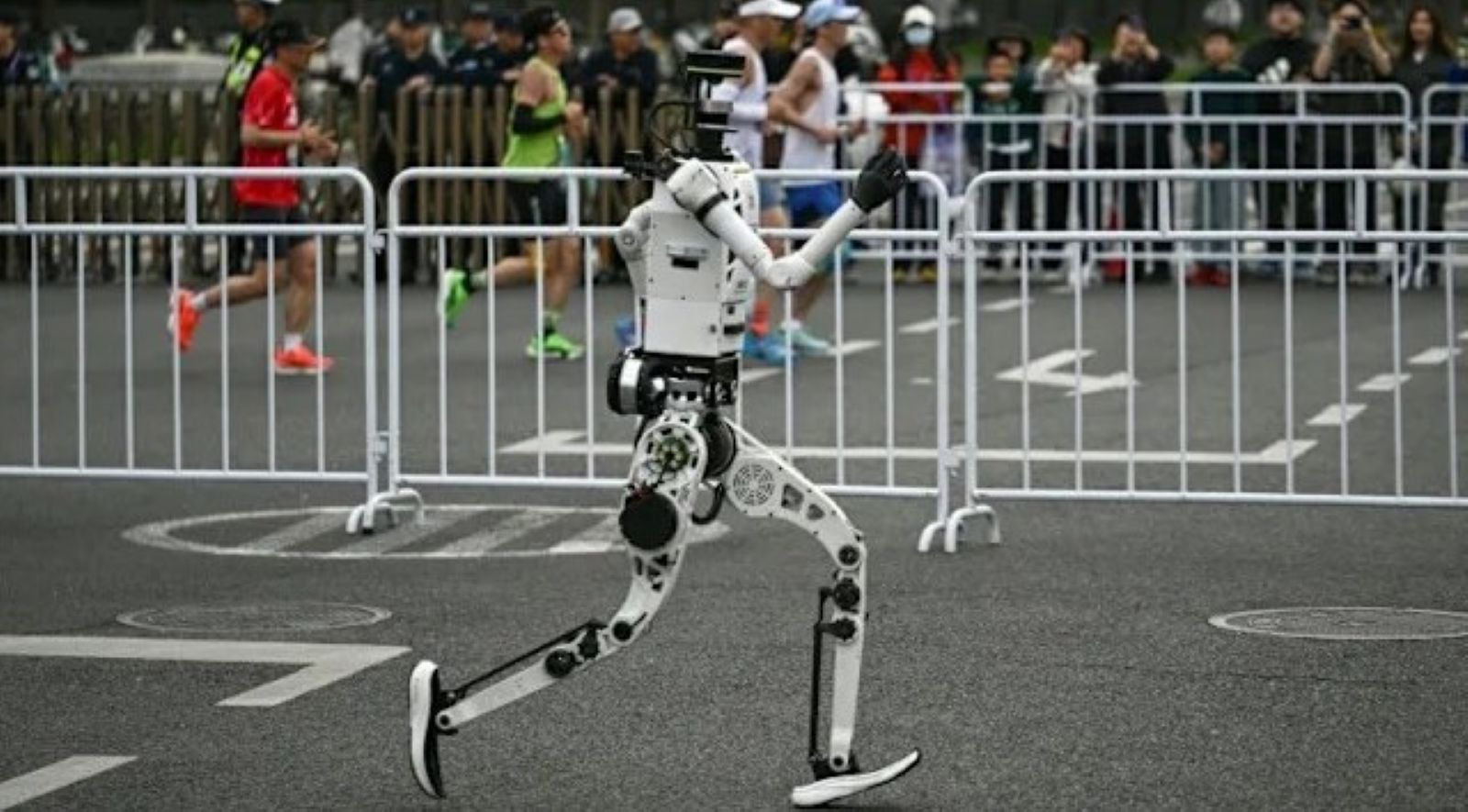
Dozens of Chinese-made humanoid robots stunned spectators in Beijing on Sunday, dramatically outperforming expectations as they raced alongside humans in a half-marathon that highlighted how quickly the technology is advancing.
At the Beijing half-marathon, more than 100 robots took part, a sharp jump from about 20 in last year’s debut event, where many machines struggled to even start or complete the course.
The improvement over just one year was striking.
In the 2025 edition, technical glitches and balance issues plagued most entries. This time, several robots not only completed the race but posted times that rivalled, and in some cases exceeded, those of human runners on parallel tracks.
The standout performer, developed by Honor, clocked an impressive 50 minutes and 26 seconds.
That time is significantly faster than the current human world record set by Jacob Kiplimo, although the robot required assistance after stumbling near the finish line, underscoring that challenges remain.
Despite the headline-grabbing robot performance, the comparison remains complex.
In the conventional race, human runners competed separately, and the top human finisher still demonstrated superior endurance and consistency over the full course without mechanical support.
Still, the gap between humans and machines is clearly narrowing, especially in controlled environments.
Experts say the event is less about sport and more about demonstrating real-world potential.
Humanoid robots capable of sustained movement, balance and coordination could eventually be deployed in hazardous industries, disaster response or even military settings.
China has made no secret of its ambitions to lead in robotics, backing the sector with strong policy support, funding and infrastructure development.
The race builds on a broader push to showcase robotics innovation, including high-profile demonstrations at national events like the CCTV Spring Festival Gala, where humanoid robots have performed complex routines.
While practical, large-scale deployment is still in development, Sunday’s race offered a glimpse of how quickly capabilities are evolving.
For now, robots may still need a helping hand at the finish line. But the pace of progress suggests they are no longer just catching up, they are beginning to compete.