













































































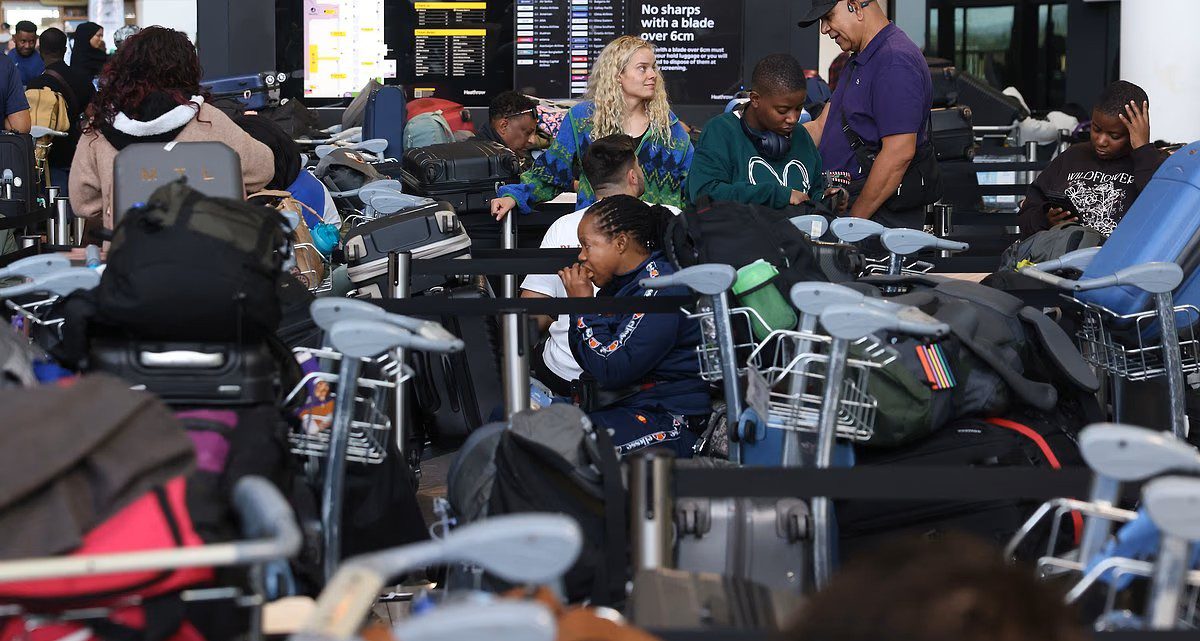
A legacy software defect in the United Kingdom’s air traffic control system corrupted vital flight data in a single millisecond, triggering a six-hour system outage that disrupted travel plans for hundreds of thousands of passengers across the country.
A preliminary report released by National Air Traffic Services (NATS) detailed the technical cause and timeline of the incident, which began on Tuesday, September 8, and led to the cancellation or delay of more than 2,000 flights over two days.
According to NATS, the glitch originated within the National Airspace System, which assigns identification codes to individual aircraft for radar tracking. At 10:00 AM, a manual request for an aircraft code was momentarily paused by the system to process a higher-priority task.
Upon resuming, the software defect failed to process the request correctly, corrupting data within milliseconds and dropping the link between the national system and London Area Control. Although engineers initially believed the system had recovered by 10:06 AM, a repeat failure occurred at 12:32 PM, prompting officials to declare a major incident as air traffic controllers were forced to handle flight data manually.
The system failed completely by 1:32 PM, leading to strict flight restrictions before full operational capacity was finally restored at 7:30 PM following a complete reboot.
UK Transport Secretary Heidi Alexander confirmed that the Civil Aviation Authority will conduct an independent review to verify the findings and assess the overall operational resilience of NATS.
Meanwhile, major airlines have expressed strong frustration over the disruption, which marks the third significant air traffic control failure in the UK since summer 2023. Carrier executives have called for compensation mechanisms and stronger operational oversight, with Ryanair demanding the resignation of NATS Chief Executive Officer Martin Rolfe.
In response, Rolfe clarified that the glitch was an isolated software defect rather than human error or a repeat of previous technical failures, adding that temporary safeguards have been deployed while a permanent software fix undergoes safety testing.