
























































US President Donald Trump has warned that countries and institutions that continue providing economic support to Iran could face severe consequences from Washington, as the conflict between the two countries enters another prolonged phase.
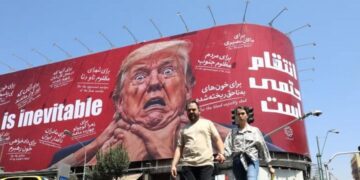
Trump issued the warning on Wednesday, threatening what he described as unprecedented economic isolation against any country that gives Iran financial, commercial or institutional support.
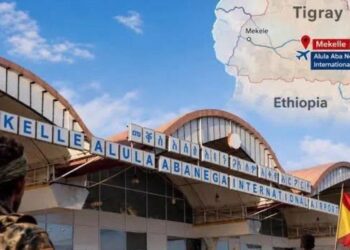
He said businesses, banks, airports and government agencies that provide what he called a “lifeline” to Tehran would face major economic penalties from the United States.
The warning comes after months of conflict that has killed thousands of people, disrupted energy markets and severely affected shipping through the Strait of Hormuz, a major route for global oil and gas supplies.
Before the conflict began, roughly one-fifth of internationally traded oil passed through the strategic waterway.
Trump threatens wider economic pressure
In a social media post, Trump said Washington would pursue an expanded campaign of “Economic Warfare and Isolation” against Iran.
He did not provide details of the measures that could be imposed or explain how countries supporting Tehran would be targeted.
The threat could create difficulties for countries that maintain economic ties with Iran or have attempted to mediate between Washington and Tehran.
Iran has already lived under extensive US sanctions for decades, with successive American administrations imposing restrictions on its banking, oil and other economic sectors.
Iranian Foreign Minister Abbas Araqchi criticized Trump’s latest warning, accusing Washington of using economic pressure to distract attention from its own domestic economic challenges.
Araqchi said the continued use of sanctions would damage the global economy and interfere with the sovereignty of other countries.
UAE takes action against Iran
The latest threat comes as tensions between Iran and some of its Gulf neighbours increase.
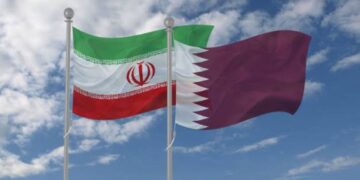
The United Arab Emirates announced on Tuesday that it was suspending trade, commercial exchanges and financial transactions with Iran until further notice.
The decision followed an announcement by the UAE defence ministry that two missiles launched from Iran had been detected before falling into the sea. Tehran rejected the report as baseless.
The UAE hosts a major US military presence, making its position particularly significant as Washington intensifies pressure on Tehran.
China faces a difficult choice
China could be among the countries most exposed to any expansion of US economic pressure against Iran.
Kpler data showed that China bought more than 80 per cent of Iran’s exported oil in 2025, making it the country’s dominant oil customer.
Any attempt by Washington to impose additional penalties on Chinese companies involved in Iranian trade, however, could trigger a broader confrontation between the world’s two largest economies.
China is also an important supplier to the United States of products such as rare earth minerals, giving Beijing potential leverage in any escalation of economic tensions.
Tehran says pressure will not force surrender
Iran has continued to signal that it is willing to engage in diplomacy but will not accept negotiations on terms it considers equivalent to surrender.
Mohammad Mokhber, an adviser to Iran’s Supreme Leader, said Iran remained open to dialogue with Washington but insisted that military action and sanctions would not force Tehran to abandon its position.
The comments came shortly after Trump said no talks with Iran were currently taking place or scheduled.
That claim appeared to contrast with comments from Jared Kushner, Trump’s son-in-law and special envoy, who said a day earlier that discussions involving US and Iranian officials remained active and were perhaps more extensive than previously.
Nuclear issue remains central
Beyond the economic and military confrontation, Washington is seeking a new agreement to replace the 2015 nuclear deal from which Trump withdrew the United States in 2018.
Trump has demanded tighter restrictions on Iran’s nuclear programme and wants control over the country’s stockpile of highly enriched uranium.
Iran, which is a signatory to the Nuclear Non-Proliferation Treaty, has consistently maintained that its nuclear programme is intended for peaceful purposes.
With diplomatic contacts uncertain and economic pressure increasing, the latest US warning signals the possibility of a broader sanctions campaign that could extend beyond Iran and affect countries and companies doing business with Tehran.