






































































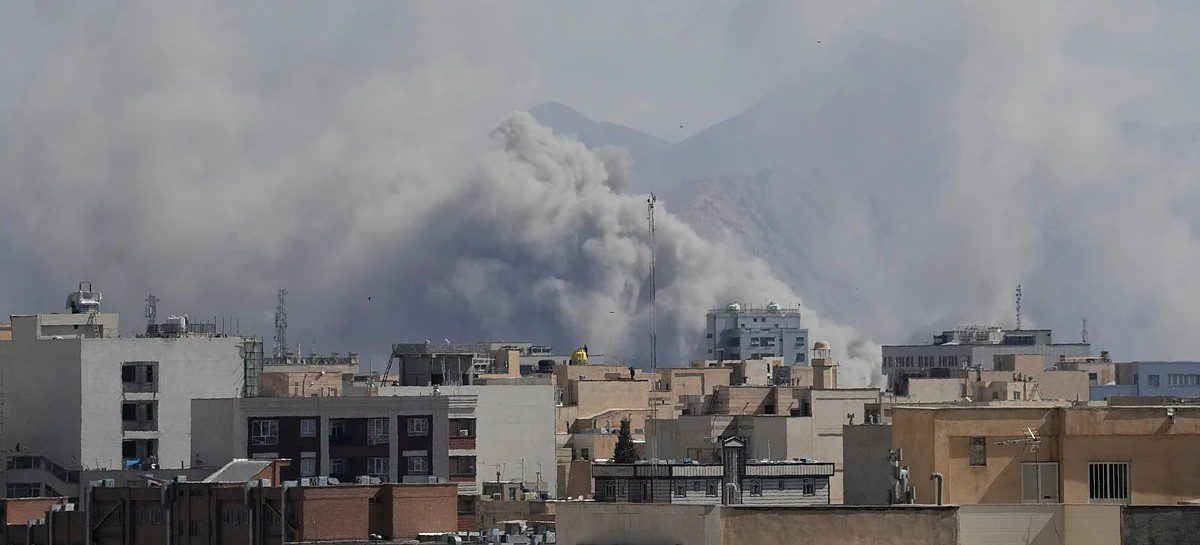
Iran has launched attacks on US military installations in Kuwait following American airstrikes on an Iranian island in the Strait of Hormuz, while Bahrain reported intercepting another wave of Iranian aerial attacks as tensions spread across the Gulf.
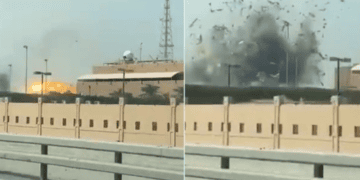
The Iranian army said it targeted US drone and missile facilities at Kuwait’s Ali Al Salem air base overnight. Kuwait had earlier announced that its air defence systems were responding to hostile drone activity.
The attack marked Iran’s first reported strike on the US-allied Gulf country since September.
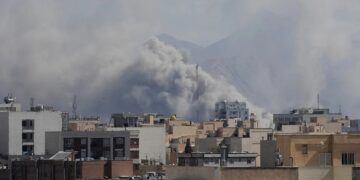
The escalation followed US airstrikes on Tuesday evening against a missile launch site on Qeshm Island. A US military official said the operation was carried out in response to Iranian attacks on American personnel and assets. Iranian media, citing an official, reported that the strikes caused no damage to infrastructure.
Kuwait condemned the threat to its territory and said it reserved the right to take all necessary steps to defend its sovereignty, population and critical facilities.
Bahrain also said on Wednesday that it had intercepted Iranian aerial attacks for the third time in a week. The kingdom accused Tehran of pursuing a systematic hostile campaign. Bahrain hosts the headquarters of the US Navy’s Fifth Fleet.
Tehran warns of stronger retaliation
Iranian Army Commander-in-Chief Amir Hatami issued a fresh warning to Washington in videos released by state media on Wednesday, saying the military was prepared to respond more forcefully if the United States launched further attacks.
Hasan Al Hasan, a senior fellow for Middle East Policy at the International Institute for Strategic Studies, described Iran’s latest actions as a cautious escalation. He warned that the situation could deteriorate further if Washington expanded its operations beyond coastal military facilities to targets deeper inside Iran.
The United States and Israel began their military campaign against Iran on February 28. Tehran responded with attacks on Israel and Gulf countries hosting American military bases.
The conflict has since extended to Lebanon, where Israel has fought Iran-backed Hezbollah, and Yemen, where the Iran-aligned Houthis have targeted Saudi energy facilities, airports and other sites. Iran has also attacked US forces in Jordan.
The fighting has severely disrupted international shipping through the Strait of Hormuz after Iran declared the waterway closed. Washington has also imposed a naval blockade on Iran, adding pressure on the country’s economy.
Rising hostilities have pushed global oil and gas prices higher and increased concerns about the security of energy supplies.
Qatar pursues diplomatic contacts as attacks spread
Qatar is continuing efforts to reduce tensions through negotiations. Officials from Doha and Tehran held discussions on Tuesday aimed at narrowing differences between proposals presented by the parties, according to Qatari spokesperson Majed Al Ansari.
The diplomatic engagement comes as attacks on regional targets and commercial shipping continue.
A Saudi-led coalition said on Wednesday that it had intercepted a cruise missile fired by Yemen’s Houthis towards Riyadh. The group had not immediately confirmed the reported launch.
Shipping incidents have also increased since October, raising further concerns about disruptions to global oil supplies.
On Tuesday, the crew of a liquefied petroleum gas tanker abandoned the vessel off Khasab in Oman. Abu Dhabi National Oil Company Logistics and Services said one crew member was missing and 11 others were injured after one of its vessels came under attack in the Strait of Hormuz.
Saudi Arabia condemned Iran’s latest attacks and called for an end to hostilities, respect for international law and renewed diplomatic efforts to resolve the crisis through negotiations.
U.S. says no immediate threat to Washington
The conflict has also raised concerns in the United States about possible attacks on its own territory.
President Donald Trump said on Tuesday that Washington was taking seriously the possibility that Iran could be planning an attack on the US capital. His comments followed a CNN report citing intelligence assessments about an alleged Iranian plot involving a so-called dirty bomb.
However, Secretary of State Marco Rubio said on Wednesday that he did not believe Washington faced an imminent threat.
Speaking to reporters in Manila, Rubio said he was not concerned about an immediate attack on the capital.
Iran’s Foreign Ministry rejected the allegations, describing them as baseless.
A dirty bomb combines conventional explosives with radioactive material to spread contamination. Unlike a nuclear weapon, it does not trigger a nuclear explosion, but can cause significant disruption, contamination and public alarm.