









































































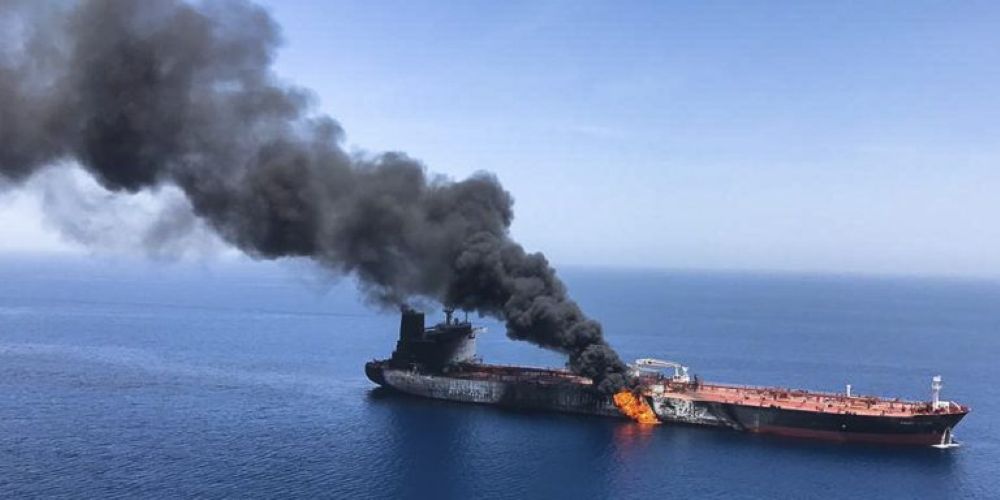
Attacks on commercial vessels in and around the Strait of Hormuz have increased to their highest levels since the Iran war began, according to maritime monitoring data, as Tehran steps up pressure over the strategic waterway amid declining oil prices and mounting constraints on its crude exports.
Figures from the United Kingdom Maritime Trade Operations Centre (UKMTO), which is affiliated with the Royal Navy, show that reported incidents exceeded 30 in October for the first time since the conflict between Iran and the United States began in late February.
At least 22 attacks had also been reported by Sunday in November, making it the second-highest monthly figure since the war started, according to an analysis of UKMTO data. The monitoring area includes the Strait of Hormuz, the Persian Gulf and the Gulf of Oman.
The actual number of incidents could be higher. UKMTO only records attacks it can verify through primary sources and has acknowledged that additional cases remain unconfirmed.
The organization has also struggled to obtain accurate reports as some vessels targeted in the region avoid notifying authorities. In an earlier assessment published in October, it said many attacked ships were not reporting incidents, making it difficult to establish the true scale of the attacks.
Some commercial vessels are also believed to have switched off their tracking systems to avoid detection as security risks increase.
Iran’s military, meanwhile, has reported almost daily incidents involving commercial ships passing through the strait, frequently attributing them to sea mines rather than missile or drone strikes.
Before October, reported attacks in the region averaged about 10 a month. Data from the International Maritime Organization also identifies October as the month with the highest number of confirmed incidents so far this year.
The escalation has further disrupted shipping through the Strait of Hormuz, a vital passage through which approximately one-fifth of the world’s oil supply travelled before the conflict.
Iran steps up pressure as oil revenues come under strain
Iran began attempting to restrict shipping through the waterway following US and Israeli attacks that triggered the war. Washington subsequently imposed a blockade on Iranian ports, while Gulf oil producers have sought alternative ways to move their exports through the region.
Commercial shipping remains significantly below its 2025 levels, despite efforts by regional producers to maintain supplies.
Analysts say Tehran may be intensifying attacks partly because its influence over the waterway is weakening as oil prices fall and restrictions on its exports take a growing toll on government revenue.
The International Energy Agency has linked the recent decline in oil prices partly to the recovery of Gulf exports. Prices also eased after the US midterm election results reduced concerns about another round of American military action in the region.
Hamidreza Azizi, a senior Iran analyst at the International Crisis Group, said oil markets appeared to be pricing in the likelihood that a return to full-scale fighting could be avoided and that supplies would gradually recover. However, he warned that the outlook could change quickly if Iran escalated its confrontation with the United States.
Iran’s own oil earnings are also facing increasing pressure from the American blockade. Maritime tracking company Kpler reported in late October that Iranian oil shipments outside the blockade zone had been exhausted, with the last cargoes delivered to China earlier that month.
The company warned that Iran’s oil revenues could fall to zero by the middle of December if the restrictions continued.
US President Donald Trump has indicated that Washington is not interested in negotiating a new agreement with Tehran. Earlier this month, he said the United States no longer needed a deal with Iran and directed Vice President JD Vance to focus on other matters.
Trump also claimed that Washington had gained control over Iran’s financial resources and the Strait of Hormuz. He has subsequently indicated that he remains prepared to resume military strikes if necessary.
Three tankers hit in latest attacks
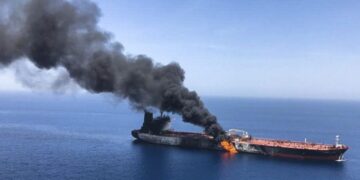
The latest escalation has included attacks on three tankers travelling out of the Strait of Hormuz on Friday and Saturday, according to maritime risk management company Marisks.
The company has not confirmed responsibility for the incidents but assessed Iranian involvement as likely.
The first vessel, the Marshall Islands-flagged chemical and oil tanker Captain Leon, was struck near its bow at about 3pm UTC on Friday. A fire broke out, but all crew members were reported safe.
A second vessel, the Hong Kong-flagged crude oil tanker Torkel, was hit near its stern at approximately 5am UTC on Saturday, triggering another fire.
Less than an hour later, the Hong Kong-flagged tanker Arina was struck by a missile in its engine room.
Marisks said the incidents highlighted the continuing danger facing commercial shipping in the region, particularly along the southern passage close to Oman’s coastline. Iran has strongly opposed the use of that route.
With attacks increasing and shipping still operating below pre-war levels, the security situation in the Strait of Hormuz remains a major concern for global energy markets and international trade.