









































































A forensic expert has challenged the official finding that convicted American sex offender Jeffrey Epstein died by suicide in a New York prison in 2019, arguing that injuries documented in his autopsy records are more consistent with homicide.
Professor Michael Freeman, who reviewed photographs and medical records from Epstein’s autopsy, told the BBC’s Newsnight on Monday that he believed Epstein was killed, most likely through strangulation from behind.
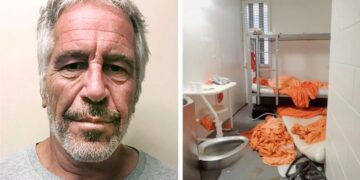
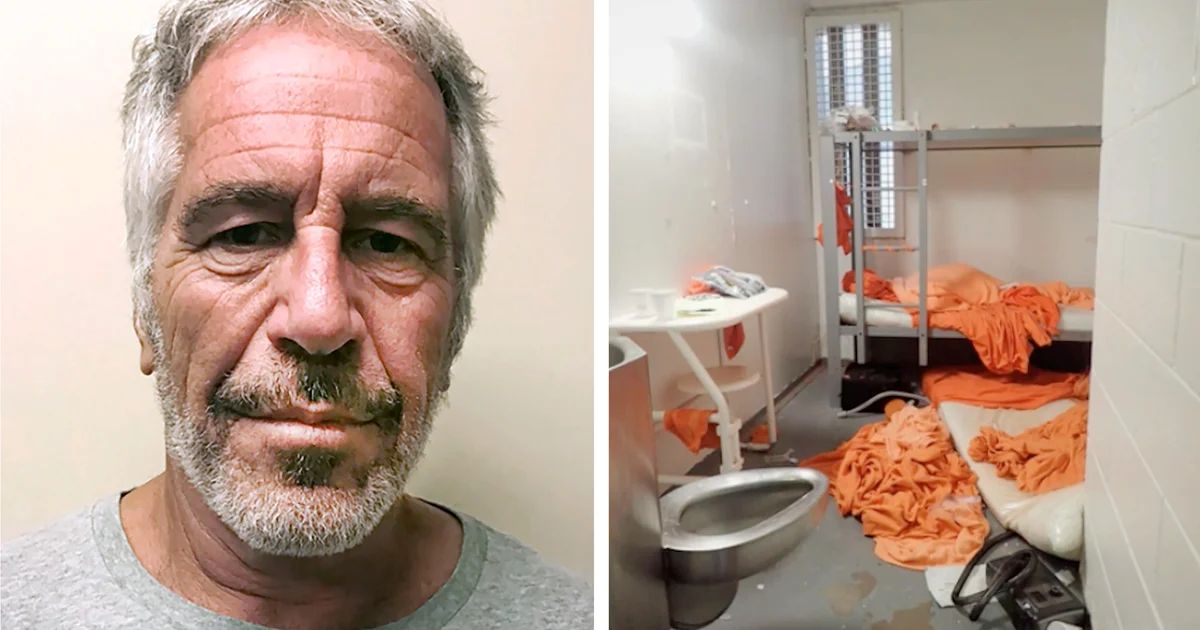
Epstein was found dead in his cell at the Metropolitan Correctional Centre in New York on 10 August 2019, while awaiting trial on federal sex trafficking charges.
The medical examiner who conducted the autopsy concluded that Epstein’s injuries were consistent with suicide by hanging. The examiner also said there was no evidence of the defensive wounds typically associated with homicide by strangulation.
Freeman, however, said his assessment of the available records identified injuries that raised serious questions about the official conclusion.
Among the findings he highlighted were a deep haemorrhage in Epstein’s left shoulder and marks that he said appeared consistent with blows to the face.
He suggested that a ligature may have been used to strangle Epstein before the same material was used to suspend his body from the bunk bed.
Freeman also drew attention to what he described as fingernail marks above the ligature mark on Epstein’s neck. He said these could indicate that Epstein had tried to remove a ligature from his neck while being strangled, possibly from behind.
According to the forensic expert, the injuries and the position in which the body was found did not fit the explanation of suicide by hanging.
He said the available evidence pointed to homicide, although he acknowledged that he had no information about who could have been responsible.
Expert’s findings based on autopsy records
Freeman also questioned the investigative procedures surrounding Epstein’s death, saying he would have expected investigators handling a custodial death involving hanging to photograph the body before it was removed.
The professor has previously served as a cause-of-death expert for US attorneys-general in cases involving deaths in police custody, including the death of George Floyd.
He presented his findings in London on Monday and subsequently published his research alongside the medical examiner’s files.
However, Freeman did not examine Epstein’s body. His conclusions were based on autopsy photographs and documents provided by Epstein’s brother, Mark Epstein, who has consistently maintained that his brother was murdered.
Freeman said his work was independent and that he had not received payment from Mark Epstein. His findings have not yet been peer-reviewed.
When asked who might have killed Epstein if his interpretation was correct, Freeman said he had no idea and stressed that identifying a perpetrator was outside the scope of his work.
He also rejected suggestions that his conclusions should be dismissed as conspiracy theories, saying the evidence should be open to examination by other experts.
Freeman invited critics to identify any errors in his interpretation, adding that he was willing to consider informed alternative explanations.
Medical examiner stands by suicide ruling
The medical examiner who performed Epstein’s autopsy, Dr Barbara Sampson, has maintained that the original determination was correct.
In an earlier interview with the BBC, Sampson said she stood firmly by the conclusion on both the cause and manner of Epstein’s death.
She also told the US Department of Justice’s Office of the Inspector General that the injuries were more consistent with suicide by hanging than homicide by strangulation.
Sampson said investigators had found no evidence of defensive injuries typically associated with victims of strangulation.
A separate Justice Department investigation into Epstein’s time in custody documented the events surrounding the discovery of his body. According to the report, a prison guard who found him called another colleague for assistance. The officers then lowered Epstein to the floor and attempted to resuscitate him.
The report also disclosed that Epstein had been placed on suicide watch briefly about a month before his death.
Epstein’s case continues to attract scrutiny
Epstein was convicted in 2008 of soliciting prostitution from a minor and was registered as a sex offender. He avoided a lengthy prison sentence through a plea agreement.
In 2019, federal prosecutors charged him with running a sex trafficking operation involving underage girls. He was awaiting trial on those charges when he died.
His death has remained a subject of international attention, partly because of his relationships with influential figures in politics, business and royalty.
His longtime associate, Ghislaine Maxwell, was convicted in 2021 of helping Epstein sexually abuse underage girls and was sentenced to 20 years in prison.
Records released during investigations into Epstein’s activities have also mentioned prominent figures, including former US President Bill Clinton, US President Donald Trump and Britain’s former Prince Andrew.
However, the appearance of a person’s name in the documents does not, by itself, establish criminal wrongdoing.