









































































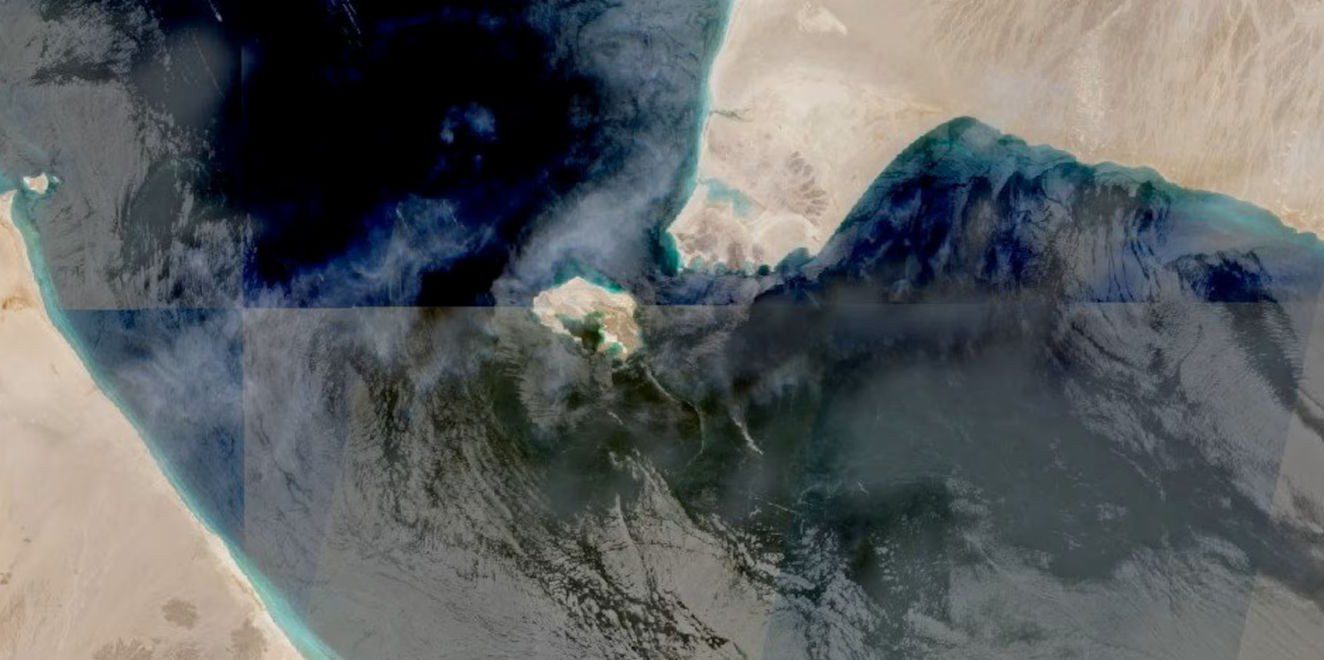
Yemen’s Houthi movement on Monday announced a naval blockade against Saudi Arabia, dramatically expanding the regional fallout from the escalating conflict between the United States and Iran and raising fresh concerns over global energy supplies and international shipping.
The Iran-backed group said the blockade would take immediate effect, threatening vessels linked to Saudi Arabia and potentially extending the conflict beyond the Gulf into another of the world’s most critical maritime corridors.
The announcement came as Washington and Tehran exchanged another round of military strikes despite growing diplomatic efforts aimed at reviving a ceasefire that collapsed last week.
Saudi coalition vows military response
Shortly after the Houthis’ declaration, the Saudi-led coalition said it would respond decisively to any threat against maritime navigation.
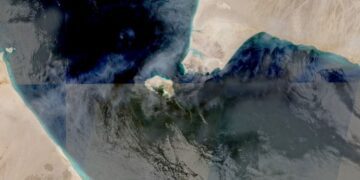
The coalition also announced enhanced security measures for vessels passing through the Bab el-Mandeb Strait, a strategic waterway connecting the Red Sea to the Gulf of Aden and a vital export route for Saudi crude, particularly as traffic through the Strait of Hormuz remains severely disrupted.
The Houthis said the blockade was a response to what they described as years of Saudi aggression against Yemen.
In a statement, the group’s armed forces declared a “maritime embargo” against Saudi Arabia, saying the move was based on “an eye for an eye” and would remain in force until further notice.
New threat to global oil markets
The development threatens to deepen an already severe disruption to global energy markets.
Iran has effectively restricted shipping through the Strait of Hormuz following renewed hostilities with the United States, sharply reducing oil exports from the Gulf.
A Houthi blockade of Bab el-Mandeb would place another major energy corridor at risk, potentially affecting Saudi exports that rely on the Red Sea route to bypass Hormuz.
Analysts estimate that a prolonged closure of Bab el-Mandeb could remove roughly seven per cent of global oil supply from international markets, compounding existing shortages caused by the Gulf conflict.
Oil prices initially climbed following the Houthi announcement before retreating later in the day amid renewed hopes that diplomatic negotiations could still prevent a broader regional war.
However, marine insurers increased premiums for ships operating in the Red Sea due to the heightened security risks.
Diplomatic efforts continue
Despite the military escalation, diplomatic contacts between Washington and Tehran appear to be continuing.
Iran’s Foreign Ministry confirmed that international mediators had presented fresh proposals aimed at reducing tensions, although officials declined to disclose details.
A senior Iranian official also said Tehran had received a proposal for a 10-day ceasefire designed to revive the collapsed interim agreement and create space for broader negotiations.
Separately, Pakistani government sources disclosed that Iranian Interior Minister Eskandar Momeni had requested Islamabad to resume mediation efforts before travelling to Pakistan for further consultations.
US and Iran continue exchanging strikes
The diplomatic push followed another night of intense military operations.
The United States launched fresh attacks on multiple Iranian targets, with U.S. Central Command confirming a new wave of strikes intended to further weaken Iran’s military capabilities and its ability to threaten commercial shipping.
Iranian media reported explosions in several cities, including Tabriz, Chabahar, Konarak, Bandar Mahshahr and Bandar Imam Khomeini.
State news agency IRNA said at least one person was killed and several others injured in strikes near Tabriz.
Iran’s Islamic Revolutionary Guard Corps (IRGC) responded by announcing attacks on U.S. military positions across the region.
The IRGC said ballistic missiles targeted American aircraft stationed at Jordan’s Aqaba airport, while additional strikes were launched against U.S. facilities at Kuwait’s Al-Adiri Camp, Ali Al Salem Air Base and military positions in Syria.
Air raid sirens sounded across Bahrain, while Kuwaiti authorities said their air defence systems intercepted multiple Iranian drones overnight.
Trump vows tougher military response
U.S. President Donald Trump defended the continued strikes on Iran, saying they were retaliation for recent attacks that killed American troops.
Writing on his Truth Social platform, Trump declared that every attack on U.S. service members would bring an overwhelming response.
“Every time Iran kills an American soldier they will pay many times over,” he said, adding that military leaders had been instructed to continue operations.
Earlier in the day, the Pentagon identified two U.S. soldiers killed during Iran’s missile attack on an American base in Jordan on Friday.
Military officials also confirmed that unidentified remains recovered at the site may belong to a third soldier previously listed as missing.
Separately, another American service member was killed in northern Iraq while disposing of unexploded ordnance from a downed Iranian drone.
The latest casualties raised the number of U.S. military personnel killed since the conflict resumed to 17, while more than 420 others have been wounded.
Iran reports tanker explosions in Hormuz
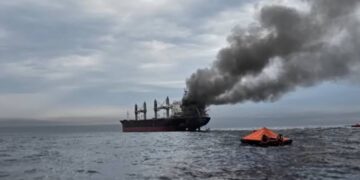
The IRGC also claimed that two oil tankers exploded after attempting to pass through what it described as an unsafe route in the Strait of Hormuz.
Iran alleged the vessels had been encouraged by the U.S. military to use the southern shipping lane.
Authorities did not disclose the identities of the vessels or report any casualties, and the claims could not be independently verified.
Separately, the United Kingdom Maritime Trade Operations agency reported that another vessel had been struck by an unidentified projectile off the coast of Oman near the entrance to the Strait of Hormuz.
The incidents have intensified fears over the security of one of the world’s busiest oil shipping lanes.
Regional tensions continue to rise
The conflict, which began after U.S. and Israeli attacks on Iran in February targeting its nuclear and missile programmes, has evolved into a wider regional confrontation involving multiple countries and armed groups.
Attention is now turning to diplomatic efforts to prevent further escalation, even as military operations continue across Iran, the Gulf and the Red Sea.
Meanwhile, Lebanese President Joseph Aoun is expected to meet President Trump in Washington on Tuesday to discuss proposals aimed at disarming Hezbollah and securing an Israeli withdrawal from southern Lebanon, while fighting also continues in Gaza, underscoring the increasingly interconnected nature of conflicts across the Middle East.