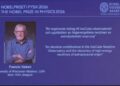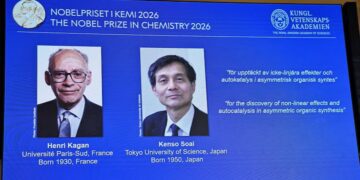





























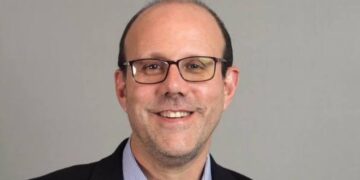



























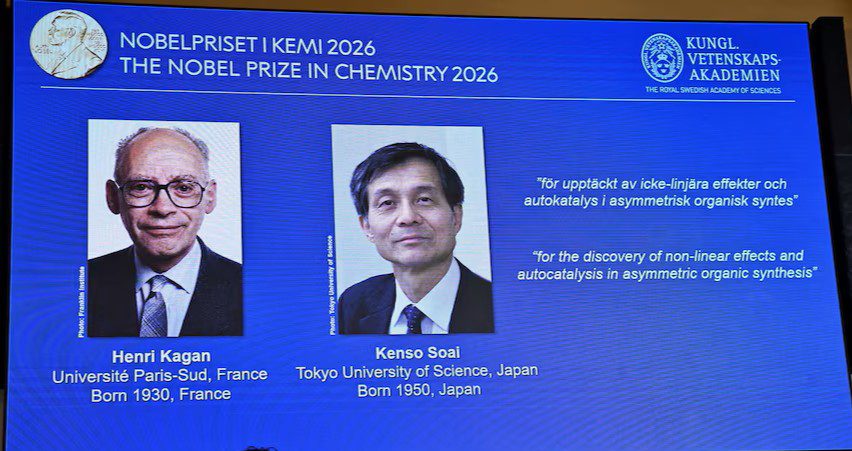
French scientist Henri Kagan and Japanese chemist Kenso Soai have been awarded the 2026 Nobel Prize in Chemistry for their work on non-linear effects and autocatalysis in asymmetric organic synthesis.
The Royal Swedish Academy of Sciences announced the laureates on Wednesday, making chemistry the third Nobel prize to be unveiled this year after the medicine and physics awards.
The Nobel Committee said Kagan and Soai were recognized for discoveries that advanced the understanding of how molecules can reproduce and amplify their own asymmetry during chemical reactions.
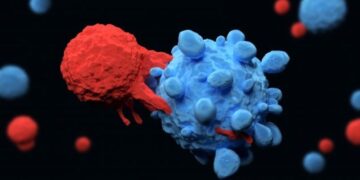
The research centres on chirality, a property found in many molecules that exist in two forms that are mirror images of each other. Although the two forms may look similar, they can behave differently in chemical and biological systems.
Explaining the significance of the work, Heiner Linke, chair of the Nobel Committee for Chemistry, compared chiral molecules to human hands, which are mirror images but cannot be perfectly superimposed.
The laureates’ discoveries have contributed to the broader field of asymmetric synthesis, an area of chemistry concerned with producing molecules in a specific three-dimensional form. Such processes are particularly important in the development of pharmaceuticals and other chemical products.
The Nobel Prizes were established through the will of Swedish inventor and businessman Alfred Nobel and have been awarded since 1901, with interruptions during periods of major conflict. Nobel, a chemist and inventor, accumulated much of his fortune from inventions including dynamite.
The economics prize was created separately and is funded by Sweden’s central bank.
Chemistry laureates have been recognized for discoveries that have significantly influenced science and industry. Previous awards have included research into nuclear fission, genetic sequencing and advanced molecular materials.
Last year’s chemistry Nobel was awarded to Susumu Kitagawa, Richard Robson and Omar Yaghi for developing metal-organic frameworks, molecular structures with potential applications ranging from carbon capture to water purification.
Kagan and Soai will receive their Nobel medals from Sweden’s King Carl XVI Gustaf at a ceremony in Stockholm on December 10, the anniversary of Alfred Nobel’s death.
The laureates will also share the 12 million Swedish kronor prize, worth about $1.2 million.
The Nobel Peace Prize, the only Nobel awarded outside Sweden, will be presented separately in Oslo, Norway.