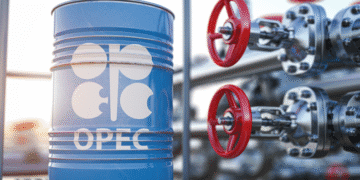






































































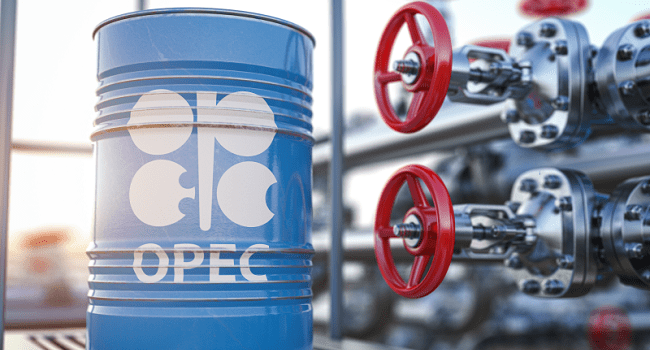
OPEC+ has maintained its oil production targets for December, leaving major changes to its supply policy until next year as the group continues to deal with disruptions caused by the Iran war.
The decision was reached on Sunday during a virtual meeting of seven key members: Saudi Arabia, Russia, Iraq, Kuwait, Algeria, Kazakhstan and Oman, according to a statement from the oil-producing alliance.
Although Gulf producers have been working to increase exports after months of disruption linked to the conflict, most are still producing below their agreed targets.
The latest decision was widely expected, with attention now shifting to a ministerial meeting scheduled for November 29, when all 21 members of the alliance are expected to consider production quotas for 2027.
Jorge Leon, an analyst at Rystad Energy, described Sunday’s decision as relatively straightforward, saying the more difficult task would be agreeing on the group’s production framework for next year.
OPEC+ includes members of the Organization of the Petroleum Exporting Countries and other producers, notably Russia. In recent years, monthly production decisions have largely been handled by the seven countries involved in Sunday’s meeting, alongside the United Arab Emirates before it left OPEC in May.
Oil prices rose by more than two per cent on Friday, with Brent crude settling close to $118 per barrel, its highest level since April. The increase came as traders considered the possibility of a further escalation in the Iran conflict following the US midterm elections.
However, the prospect of higher supply remains a concern for the market. The International Energy Agency and other forecasters have warned that oil production could exceed demand in 2027 if exports from the Gulf return to normal levels.
Leon said OPEC+ would face a difficult decision over next year’s output, given uncertainty surrounding the conflict, the pace at which shipments through the Strait of Hormuz could recover and the possibility of a significant supply surplus once disrupted exports resume.
Production capacity review delays 2027 planning
OPEC+ members have been gradually increasing their production targets throughout 2026. In September, they completed the phased reversal of a supply cut of 1.65 million barrels per day, which had been introduced in 2023.
The alliance had previously kept production targets unchanged for October and November.
A separate round of cuts, amounting to about two million barrels per day and covering most members, remains in place until the end of 2026.
Before setting new quotas for 2027, the group must complete an assessment of members’ production capacity. The review, expected to be concluded in the fourth quarter, will establish the production baselines used to determine individual quotas and guide decisions on easing the remaining supply restrictions.
Sources told Reuters that the assessment is now expected to be completed by mid-November.
The Iran war has complicated the process by disrupting projects aimed at expanding oil production capacity across the Middle East. The conflict has created uncertainty over how much some producers will be able to supply in the coming years.
The outcome of the review is expected to play a central role in OPEC+’s November 29 meeting, where members will face the more challenging task of balancing production plans against uncertain market conditions and the risk of excess supply.