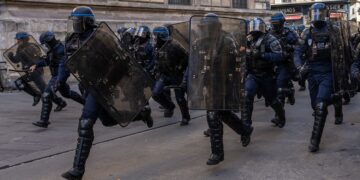










































































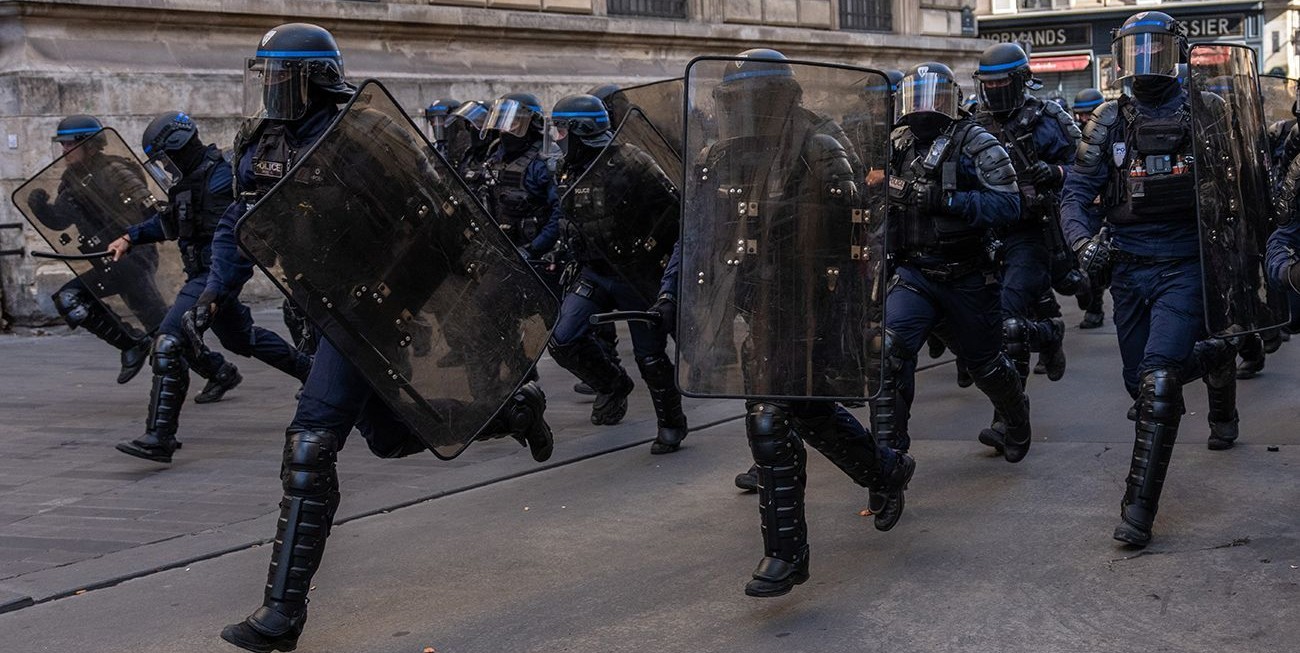
France has mobilized about 70,000 police officers and gendarmes ahead of nationwide demonstrations on Saturday, as the government prepares for possible violence during a third consecutive week of protests over the cost of living, public services and President Emmanuel Macron’s administration.
The latest rallies, taking place on Halloween, follow unrest two weeks ago when riots and looting left shops, businesses and public buildings damaged in several French cities. The security forces were caught off guard during those disturbances.
Interior Minister Laurent Nunez has promised a strong response to any fresh outbreak of violence, describing Saturday’s demonstrations as carrying a “very high risk” of unrest.
“Everyone is on deck to ensure an extremely firm response to any trouble,” Nunez said earlier in the week while announcing the security arrangements.
France’s highest administrative court on Saturday upheld a ban on a planned march through central Paris, dismissing a challenge by trade unions. Organizers had intended to march between Place de la République and Place de la Bastille. Demonstrations will instead be restricted to boulevards along the eastern edge of the capital, away from major shopping districts.
Authorities are also concerned that some protesters could wear Halloween masks to hide their identities. Nunez said existing laws allow police to prohibit face coverings where there is a risk to public order.
The Interior Ministry said about 150 gatherings were expected across the country. The US Embassy in France also urged travellers to stay away from locations where protests and large crowds were planned.
The demonstrations gained momentum in late September as Macron’s minority government began negotiations over the 2027 budget. France’s public debt is approaching 120 per cent of gross domestic product, while rising borrowing costs have increased pressure on the government to control expenditure.
The financial strain has limited the administration’s ability to offer new funding to address public grievances.
Students protesting poor conditions in schools, overcrowded classrooms and an admissions system they consider unfair have joined forces with trade unions and members of the Yellow Vest movement, which has returned to the streets over rising living costs.
The government’s recent pledges to reform education and reduce fuel expenses have done little to ease public anger.
Aaron Berthier de Grandry, a 15-year-old student from Nogent-sur-Marne, a suburb of Paris, said he planned to take part in his third consecutive weekend of demonstrations.
He said young people had long been described as France’s future, but warned that a lack of resources for the younger generation could undermine the country’s prospects.
The French unrest has also encouraged youth-led demonstrations elsewhere in Europe, with rallies scheduled in more than 30 German cities on Saturday.
The protests have added to political pressure on Macron’s government and strengthened the position of far-right leader Marine Le Pen, who is leading opinion polls ahead of the presidential election scheduled for April. Potential centrist candidates seeking to succeed Macron remain divided.
France’s economic difficulties have compounded the challenge. Figures released on Friday showed that the economy unexpectedly contracted in the third quarter, adding to concerns about the impact of the unrest.
The Chamber of Commerce estimates that retailers have suffered losses exceeding €1 billion, while other assessments put the overall cost at twice that amount when uninsured damage and lost business are included.
In Paris, Christmas lights have begun appearing along major shopping streets, but some shopfronts remain boarded up or protected by security grilles following previous attacks. Businesses belonging to luxury brands such as Hermès, Louis Vuitton and Burberry were among those targeted during earlier disturbances.
The government is also pursuing a disputed law that would make rioters liable for compensation of up to €10,000 for damage caused by themselves or by groups they are considered to belong to.
Rights organizations and some legal experts have criticized the proposal, arguing that it could weaken protections for peaceful protest.