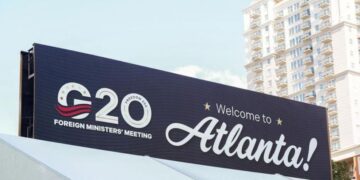




























































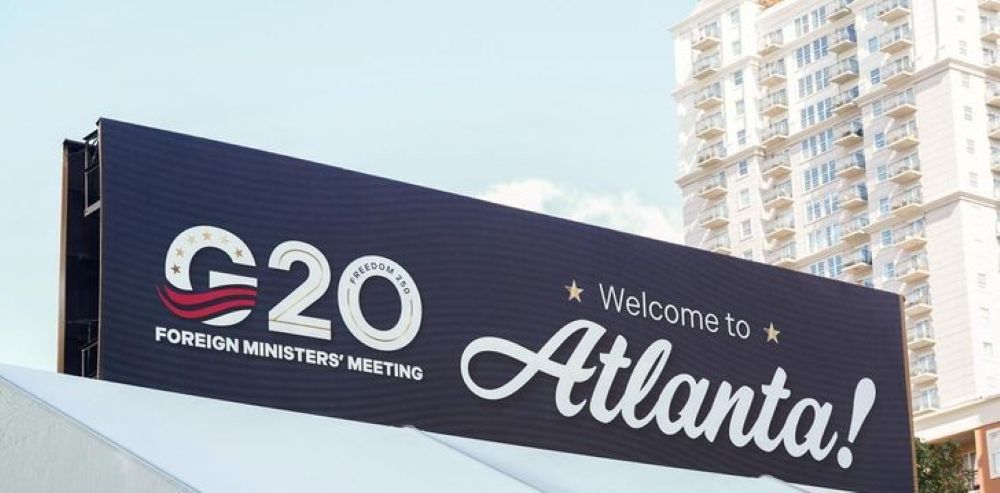
Deep disagreements over the wars in Ukraine and the Middle East are expected to overshadow a two-day meeting of foreign ministers from the Group of 20 (G20) countries in Atlanta, with diplomats and analysts warning that reaching a common position on major global issues could prove difficult.
The meeting, scheduled for October 30 and 31, comes as the United States holds the G20 rotating presidency. Washington has prioritized trade imbalances and efforts to reduce China’s dominance in critical mineral supply chains, but conflicts and their economic consequences remain major concerns for several member countries.
Tensions have also emerged over the guest list. South Africa was not invited to the ministerial gathering, while Russian Foreign Minister Sergei Lavrov is expected to attend. The arrangements have reportedly complicated plans for the traditional group photograph, with some European officials suggesting separate pictures, one including Lavrov and another without him.
The divisions reflect growing disagreements within the G20, particularly as Russia, China and influential middle powers such as Brazil and India navigate intensifying strategic competition between Washington and Beijing.
Heidi Crebo-Rediker, a former chief economist at the US State Department, said the level of division among members was greater than in previous years. She noted that G7 countries had traditionally worked towards a common position before major G20 meetings, but that coordination had become increasingly difficult.
US pushes energy and critical minerals agenda
A US State Department official said discussions in Atlanta would focus on energy and supply chain challenges, which Washington considers essential to the development of artificial intelligence.
The official said four ministerial-level G20 meetings held earlier this year had produced some areas of agreement, although further negotiations would be needed ahead of the leaders’ summit scheduled for December 14 to 16 in Miami.
US Secretary of State Marco Rubio, who is hosting the meeting, has promoted the Pax Silica initiative, which seeks to bring countries together over concerns about China’s influence in the supply of rare earths and other critical minerals.
However, analysts believe a broader agreement on such strategic issues may be difficult to secure during the meeting. They pointed to an earlier US-led statement on excess industrial capacity, which some G20 trade ministers signed after the wider group failed to reach a consensus.
Elaine Dezenski, a former US official who heads the Center on Economic and Financial Power at the Foundation for Defense of Democracies, said Washington may need to pursue cooperation with smaller groups of countries when agreement among all G20 members is not possible.
She also noted that the Quad, comprising the US, India, Japan and Australia, was due to meet in Atlanta in the coming days.
Ukraine war creates fresh tensions
Disagreements over Washington’s approach to Russia are also expected to feature in discussions. Recent decisions by US President Donald Trump, including arrangements involving Russian diesel purchases and the easing of some sanctions, have raised concerns among European officials.
The reported disruption to Ukraine’s access to Starshield satellite services could add to the tensions.
Crebo-Rediker said US policy towards Moscow and its implications for Ukraine would remain a major concern, even if participants avoided raising the issue publicly.
European Union foreign policy chief Kaja Kallas said she intended to press for increased support for Ukraine and progress on accountability measures through the proposed Special Tribunal and Claims Commission.
In a post on X on October 29, Kallas said Russia must be held accountable.
A G20 diplomat, who spoke anonymously, said some countries, including Canada, Mexico and India, could avoid taking strong positions on contentious issues because they were still negotiating trade arrangements with Washington.
The meeting is also taking place against a challenging economic and political backdrop. Recent US Commerce Department figures showed that the American economy grew at its fastest pace in a year during the third quarter, supported by investment in artificial intelligence despite higher oil prices linked to the Middle East conflict.
Other economies, however, are facing slower growth, with some at risk of contraction.
The gathering comes days before the November 3 US midterm elections, which could cost Trump’s Republican Party its majorities in Congress, according to opinion polls. It also coincides with reports that Washington could launch further military action against Iran.
Although Ukraine has not been invited to the Atlanta ministerial meeting, Trump has continued to push for a ceasefire in the war between Russia and Ukraine. Technical-level talks involving the three countries are expected to take place in Abu Dhabi next month.
With major disagreements over security, trade and the global economic order, diplomats are entering the Atlanta meeting with limited expectations of a unified G20 position on the most contentious issues.