









































































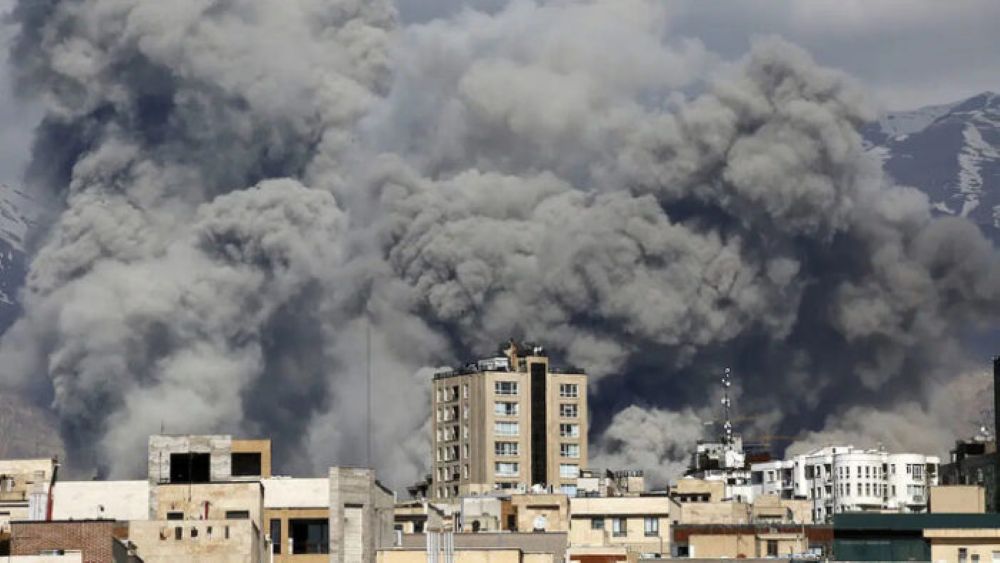
Tensions between the United States and Iran have surged dramatically, with both sides exchanging their heaviest attacks since July and raising fresh fears that the conflict could spiral into a wider regional war.
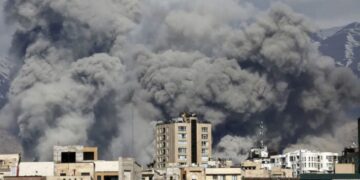
The latest confrontation began with US strikes on Iran’s southern coastline, where Washington said it targeted military infrastructure linked to the Islamic Revolutionary Guard Corps (IRGC), including air-defence systems, radar installations, maritime equipment, mine-laying capabilities and communications facilities.
Iran responded with attacks on US military positions and other American-linked assets across Bahrain, Jordan, Iraq and Kuwait.
The renewed fighting comes after several weeks in which the two sides had largely refrained from direct attacks.
Iranian authorities warned that the response would intensify, saying Tehran’s objective was to force American forces out of their extensive military presence across the Middle East.
Iran’s military command threatened “heavier, more widespread” retaliation against the United States and countries that cooperate with American forces in the region.
Washington, meanwhile, warned that further attacks could follow.
Strait of Hormuz becomes key flashpoint
The latest escalation has placed the Strait of Hormuz at the centre of the confrontation.
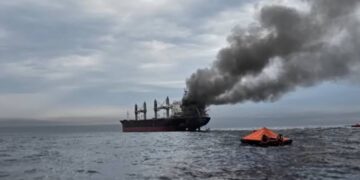
Iran reported attacks on several targets near the strategic waterway and claimed that two oil tankers were struck by mines while being escorted through the strait by US personnel.
The United States maintains that it is continuing efforts to keep commercial shipping moving through the waterway. US Energy Secretary Chris Wright said more than 17 million barrels of oil had passed through the strait on Monday.
The incident comes amid growing concerns over the safety of maritime traffic. Saudi shipping company Bahri said two Filipino crew members were killed aboard an oil tanker following an incident in the strait two days earlier.
Iran has also claimed responsibility for attacks targeting US facilities in Bahrain, Jordan, Kuwait and Iraq.
In Kuwait, Iranian forces reportedly launched missiles and drones at the Ali Al Salem Air Base and targeted accommodation used by a senior US commander. Kuwaiti authorities said a drone strike caused a fire at a residential complex.
Bahrain, which hosts the US Navy’s regional headquarters, said its forces intercepted Iranian drones, while Qatar condemned the attacks and held Tehran responsible for their consequences.
US officials disputed Iranian claims that American personnel were killed in Jordan and northern Iraq, saying initial assessments showed no US casualties.
Claims of Civilian Casualties
The renewed attacks have also heightened concern over civilian deaths.
Iranian authorities said at least 12 people were killed during the latest US strikes, including four people who were reportedly attending a wedding gathering in a home in Sirik, southern Iran. One of those reported killed was a four-year-old child.
Iranian media reported that up to 68 people were injured and published images purporting to show wounded children receiving treatment.
The claims have not been independently verified.
US Central Command said it was aware of the reports but maintained that American forces do not deliberately target civilians.
Footage released by Iranian media appeared to show extensive damage to a residential property, with debris scattered through rooms and a courtyard.
The reported strike has intensified public anxiety in southern Iran, where residents fear the latest confrontation could mark the beginning of another sustained bombing campaign.
“We don’t know when America will strike,” one resident of Bandar Abbas told Reuters, describing the uncertainty facing families in the region.
Economic Fallout
Financial markets reacted negatively to the escalation.
Asian and European equities fell, while oil prices climbed to their highest levels since July as investors assessed the potential consequences of prolonged disruption around the Strait of Hormuz.
The waterway is one of the world’s most important energy corridors, carrying a substantial share of global oil supplies. Any sustained disruption could therefore have consequences far beyond the Middle East, affecting energy prices, transportation costs, inflation and global economic growth.
The United States is also considering expanding its economic pressure campaign against Tehran.
Treasury Secretary Scott Bessent said Washington was examining additional measures involving airlines, maritime companies and digital assets as part of efforts to intensify economic pressure on Iran.
Conflict enters a new phase
The latest exchange represents the most serious US-Iran confrontation since July, when President Donald Trump halted an intense two-week US bombing campaign against Iran.
At the time, US military officials had reportedly raised concerns over dwindling ammunition supplies and the diminishing number of viable targets.
Trump has continued to insist that Washington is moving towards victory and that US forces now have extensive control over the Strait of Hormuz while Iran’s economy is under severe pressure.
The US president’s original objectives for the campaign included disabling Iran’s nuclear capabilities, reducing its ability to attack neighbouring countries and creating conditions for political change inside Iran.
Those objectives, however, remain unresolved.
Iran, for its part, appears determined to use the latest confrontation to strengthen its position. Tehran is seeking relief from sanctions, the release of frozen financial assets and greater leverage over maritime traffic through Hormuz.
The renewed fighting also presents a difficult political challenge for Washington. Reports indicate that some Trump administration officials are concerned that an increasingly visible war could damage Republican prospects in the November congressional elections.
With both governments signalling that they remain prepared to escalate, the latest confrontation has raised a fundamental question: whether the exchange will remain a limited demonstration of military strength or become the beginning of a much broader and more destructive phase of the conflict.