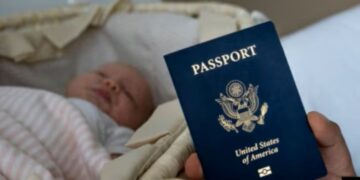









































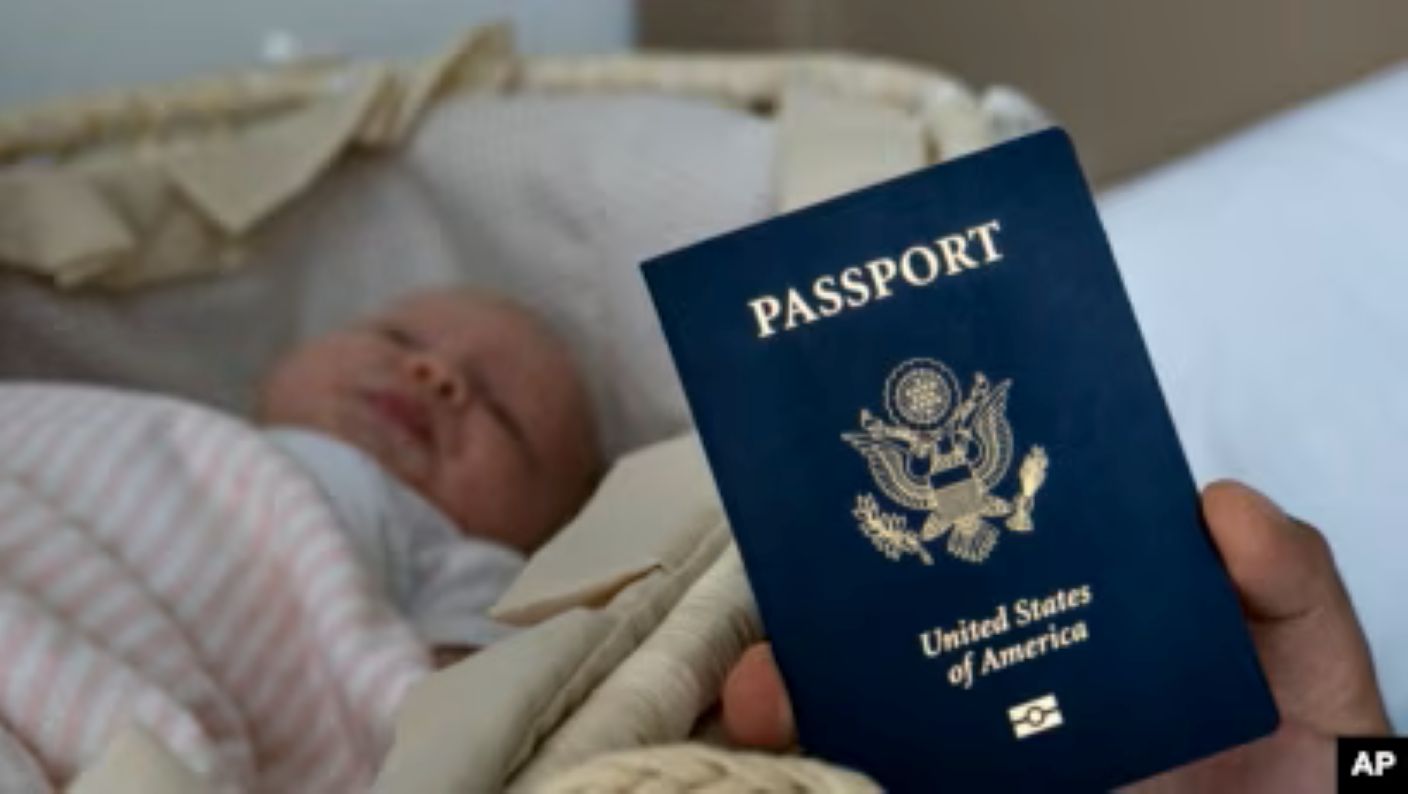
The Trump administration has intensified its warning against so-called birth tourism, saying foreign nationals will no longer be permitted to obtain U.S. visas for the purpose of travelling to the country to give birth.
The White House revived the issue on Saturday by highlighting comments from Deputy Chief of Staff for Policy and Homeland Security Adviser Stephen Miller, who said President Donald Trump’s latest executive order effectively ended the practice.
Miller described the move as one of the administration’s most consequential immigration measures, arguing that it would prevent foreigners from exploiting the U.S. immigration system to secure citizenship for children born on American soil.
“Birth tourism” generally refers to the practice of foreign nationals travelling to the United States primarily to have a child there, with the expectation that the child will acquire U.S. citizenship.
In a statement shared by the White House on X, Miller said the practice had been prohibited by the executive order and that people could no longer obtain visas for what he characterized as a fraudulent purpose.
He said the policy ranked among the administration’s top priorities because it addressed what he described as a serious abuse of the U.S. system.
How the administration plans to identify birth tourists
The policy follows two executive orders signed by Trump on Thursday, including measures targeting birthright citizenship and the practice of travelling to the United States specifically to give birth.
The administration’s position comes after an earlier attempt by Trump to restrict birthright citizenship faced a major legal setback when the U.S. Supreme Court rejected his previous approach.
Miller said immigration officials would rely on existing provisions of the Immigration and Nationality Act when assessing whether a visa applicant was genuinely travelling as a tourist or had concealed an intention to give birth in the United States.
He argued that applicants who misrepresent their purpose to consular officials could be treated as committing immigration fraud.
The administration has claimed that large numbers of foreign nationals have used birth tourism arrangements, with Trump previously saying that “hundreds of thousands” of people were involved.
However, estimates cited by government lawyers during earlier Supreme Court proceedings have varied significantly. Solicitor General John Sauer referenced figures from media reports suggesting the practice could involve more than one million people, while also pointing to reports concerning wealthy Russian nationals and birth tourism businesses serving Chinese clients.
Broader changes to birthright citizenship
The administration’s wider immigration policy would also affect certain categories of people whose children are born in the United States.
Miller said the proposed restrictions could cover children of people classified as enemies of the United States, members of foreign terrorist organizations and certain individuals acting on behalf of foreign governments.
Trump has repeatedly criticized birthright citizenship, arguing that the policy has been exploited by foreigners.
Speaking about the Supreme Court’s earlier ruling, he called the decision disappointing and said his administration was adjusting its approach in response to the judgment.
The issue remains politically and legally contentious, particularly because birthright citizenship has long been associated with the interpretation of the 14th Amendment to the U.S. Constitution.
Countries around the world take different approaches to citizenship. Some primarily use jus soli, under which citizenship is linked to birthplace, while others rely mainly on jus sanguinis, which bases citizenship on parentage. Some countries combine elements of both systems.
Miller ties New York education concerns to immigration
In a separate social media post on Saturday, Miller also drew immigration into a debate over reading performance among children in New York.
His comments followed a New York Post report claiming that a significant proportion of pupils in grades three through five failed to reach the required standard in a basic reading assessment.
Miller responded by asserting that a large share of children in New York were either foreign-born or had migrant parents. He further claimed that most of those children came from developing countries.
He used the figures to argue that discussions about education were obscuring what he described as a broader immigration debate.
Miller did not provide a source for the statistics cited in his post.
His response also did not establish a direct causal relationship between immigration and the reading performance reported by the newspaper.
The comments are likely to add another dimension to the broader political debate in the United States over immigration, education and the integration of migrant families.