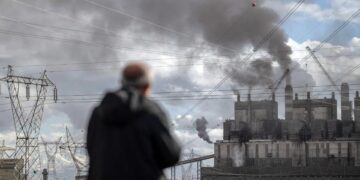













































































As world leaders prepare to gather in Turkey for the COP31 climate summit, residents of a village near an expanding coal mine are calling on delegates to visit their community and see the environmental damage caused by decades of mining.
Nejla Isik, an elected local official in Ikizkoy, near the Akbelen forest in southwestern Mugla province, wants government leaders and United Nations officials to travel beyond the conference venue in Antalya and inspect the impact of lignite extraction on forests, farmland and local communities.
The climate talks, which begin on Monday and run until November 20, are expected to address the shift towards cleaner energy. But Isik argues that delegates cannot properly discuss the transition without seeing the consequences of continued coal production.
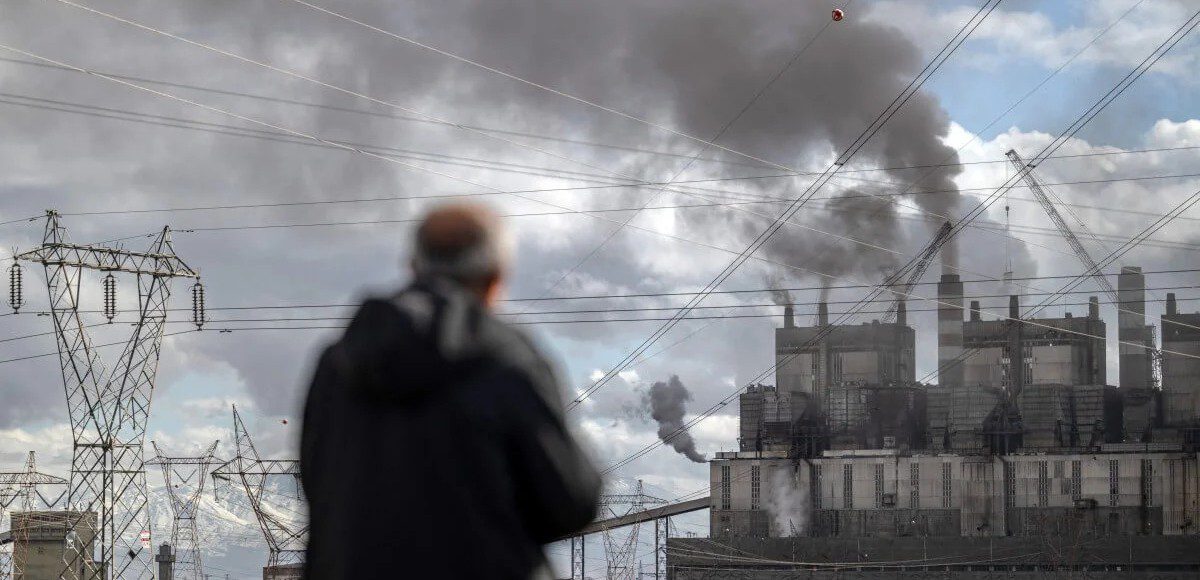
Her home is only a few hundred metres from a lignite mine that has gradually expanded towards the village over several decades. Lignite is the lowest grade of coal and releases more carbon dioxide when burned than higher-grade coal.
Villagers have spent years opposing the expansion of mining operations, arguing that it has destroyed woodland and placed olive groves, agricultural land and nearby settlements at risk. Their protests have also brought arrests and financial penalties.
Isik says world leaders should visit Akbelen and Ikizkoy rather than remain in Antalya throughout the summit.
Coal remains central to Turkey’s electricity supply
Turkey has proposed that COP31 delegates agree on a voluntary target for expanding electrification. However, campaigners warn that increasing electricity use will not significantly reduce emissions unless power generation also moves away from fossil fuels.
Coal accounted for 34 per cent of Turkey’s electricity generation last year, making the country Europe’s largest producer of coal-fired electricity, according to energy think tank Ember.
The mines around Akbelen supply the nearby Yenikoy and Kemerkoy power stations, which together generate slightly more than two per cent of Turkey’s electricity, according to the operator’s website.
The plants are operated by Yenikoy-Kemerkoy Energy, a joint venture involving Limak and IC Ictas. Limak declined to comment, while IC Ictas did not respond to a request for a statement.
The dispute has also affected members of the Isik family. Esra Isik, Nejla’s 26-year-old daughter, spent 42 days in pretrial detention after taking part in a demonstration against plans to expropriate land for mining.
In July, a court sentenced her to two years in prison for resisting public officials. She remains free while awaiting the outcome of her appeal.
Esra said the punishment was intended to discourage people across Turkey from defending their rights, land and communities.
Her mother says residents have endured the effects of coal mining for about 40 years, describing the dust and pollution as a constant presence in their daily lives.
Government says cleaner energy transition is under way
Turkey’s Energy Minister, Alparslan Bayraktar, said at a meeting with foreign media on Thursday that the government was pursuing a just transition towards cleaner energy.
He acknowledged, however, that the process was difficult because the coal mines provide employment for thousands of people.
Bayraktar identified nuclear power as the most viable alternative and said Turkey was targeting 10 gigawatts of nuclear generation capacity by 2040. Reuters calculations suggest that this would be roughly equivalent to the country’s current coal-fired electricity production.
For residents around Akbelen, however, the immediate concern remains the continued expansion of mining and its impact on the surrounding environment.
The confrontation became more intense in 2023 when tree-felling resumed in the area. Villagers said security forces used water cannon and pepper spray against demonstrators attempting to enter the forest.
Nejla Isik said protesters faced water cannon, pepper spray and detention. She added that fines and legal cases followed because residents refused to leave the area.
Another villager, Hasan Yorulmaz, said demonstrators had marched to prevent pine trees from being cut down when soldiers blocked their way. He alleged that security personnel sprayed men and women, including young and elderly protesters, before detaining some of them.
Rights groups raise concerns over protest restrictions
The treatment of environmental campaigners has attracted criticism from human rights organizations, which have raised concerns about restrictions on demonstrations, mass arrests and the use of force by security agencies.
In an October report, Human Rights Watch said Turkish authorities had arbitrarily arrested and prosecuted environmental protesters in Akbelen and other parts of the country.
The organisation said security forces had forcibly dispersed peaceful demonstrations, while protesters, lawyers and journalists faced charges including illegal assembly, obstructing public officials, trespass and spreading false information.
Deniz Bayram, an assistant researcher for Europe and Central Asia at Human Rights Watch, said Turkey’s record on environmental protests raised concerns about its tolerance of dissent as it prepares to host the annual UN climate summit.
The Turkish government maintains that police intervene when demonstrations are unlawful or threaten public order. The country’s interior and justice ministries did not respond to requests for comment.
As COP31 approaches, the villagers’ demand places the conflict between coal production, environmental protection and the transition to cleaner energy in sharp focus. They want delegates to see the effects of mining firsthand, rather than discuss climate commitments without confronting the damage experienced by communities living beside the mines.