































































The latest escalation marks the first direct exchange of fire between the United States and Iran in more than a month and has raised fresh concerns over the security of the Strait of Hormuz, one of the world’s most important energy shipping routes.
The confrontation began after US forces carried out what Washington described as a limited and precise strike against Iranian Revolutionary Guard forces on Larak Island, targeting launchers that US officials said were being prepared for use in the strategic waterway.
The United States said the operation was intended to prevent an imminent threat from Iranian forces attempting to lay naval mines in the strait.
Iran subsequently reported attacks against US military positions in Jordan and the United Arab Emirates, while its Revolutionary Guards said they had shot down a US drone over Gulf waters.
Jordan said its forces intercepted missiles entering its airspace, while the UAE denied reports that its Al Minhad air base had been attacked.
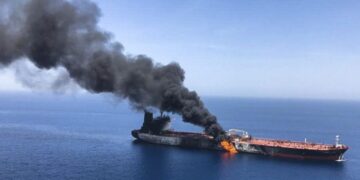
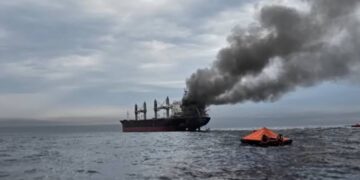
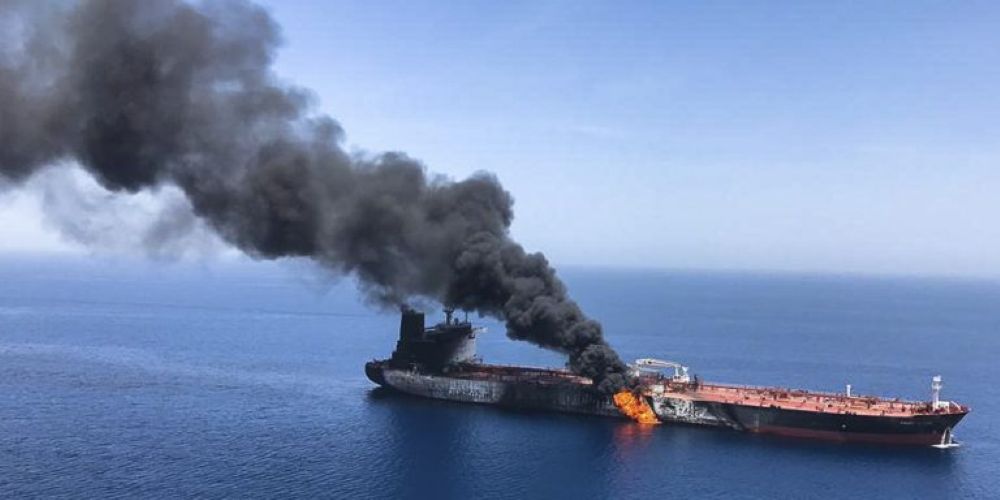
The renewed confrontation also coincided with an incident involving a supertanker in the southern Strait of Hormuz. Iranian state television reported that the vessel caught fire after striking two naval mines and was forced to stop.
The Revolutionary Guards claimed the tanker had attempted to enter the waterway in violation of Iranian regulations and warned other vessels against breaching its restrictions.
The identity of the tanker and the condition of its crew were not immediately clear.
Tensions rise around Hormuz
The Strait of Hormuz has become a major flashpoint during the months-long conflict between Iran, Israel and the United States.
The narrow waterway connects the Persian Gulf with the Gulf of Oman and is a critical route for international energy supplies. Before the current crisis, nearly one-fifth of the world’s crude oil and liquefied natural gas shipments passed through the strait.
Iran has repeatedly warned that it can restrict shipping through the waterway, while Washington has insisted that the strait must remain open to international navigation.
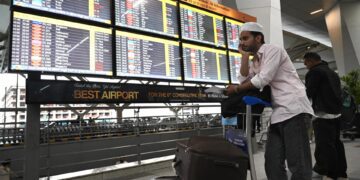
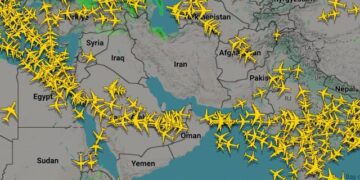
The latest military exchanges have heightened concerns among shipping companies and energy traders, with visible commercial traffic through the waterway falling sharply over the weekend.
Shipping data showed as few as five commodity vessels a day were visibly transiting the strait, although the actual number could be higher because some ships have switched off their automatic identification systems.
The United States has warned that any attempt by Iran to lay new mines in the international waters of the strait would face military retaliation.
Iran’s Revolutionary Guards, meanwhile, have rejected US claims that the waterway is fully open and said ships would require Iranian permission to pass.
Iran disputes claim of attack on Kharg Island
The latest escalation also followed a controversial social media post by US President Donald Trump claiming that Iran’s Kharg Island had been “blown to smithereens”.
Trump posted an AI-generated video depicting dramatic explosions on the strategically important island.
Iranian officials rejected the claim.
Hamid Bovard, chief executive of the state-run National Iranian Oil Company, described Trump’s post as “laughable” and said conditions on Kharg remained calm.
Bovard said oil operations on the island had continued and that workers were repairing damage from previous attacks while also carrying out modernisation work.
There was no independent evidence immediately supporting Trump’s claim that Kharg Island had been attacked.
The island is particularly important to Iran’s economy because it has historically handled the vast majority of the country’s oil exports. Any major attack on its infrastructure could significantly disrupt Iranian energy exports and place additional pressure on an economy already weakened by sanctions and war.
US says Larak strike was defensive
The US military said its forces targeted Iranian minelaying units on Larak Island after observing preparations to launch rockets and deploy mines in the Strait of Hormuz.
A US official said Iranian Revolutionary Guard forces had been preparing to launch rockets and place sea mines in the waterway.
US Central Command described the operation as “limited” and “precise”, saying the targeted forces represented an imminent threat.
The strike was the first publicly known US military action against Iran since late July.
Iranian officials said the United States had escalated the confrontation and warned that Tehran would respond to any further aggression.
President Masoud Pezeshkian said Iran was not seeking war but would not remain silent in the face of attacks.
“We will never remain silent in the face of any aggression and will respond decisively to the aggressors,” Iranian state media quoted him as saying.
Iran reports attacks on US-linked bases
Iranian media reported that Tehran subsequently launched attacks against two US bases in Jordan, saying the facilities had been involved in supporting the American operation against Larak.
Jordan’s armed forces said they intercepted eight missiles that entered its airspace.
Iran’s military also claimed to have attacked the Al Minhad air base in the UAE, saying the facility was being used by US forces and helicopters.
The UAE defence ministry rejected the report and said there had been no such attack.
Iran’s Revolutionary Guards separately said one of its air-defence systems had shot down a US drone that later crashed into Gulf waters.
The competing claims could not immediately be independently verified.
Washington prepares further sanctions
The military escalation came as the Trump administration continued its campaign of economic pressure against Tehran.
US Treasury Secretary Scott Bessent said Washington expected to impose new secondary sanctions on Iranian-linked financial institutions on a regular basis, potentially unveiling additional measures every week.
“We’re starting with the banks,” Bessent said, adding that the United States wanted financial institutions to understand that dealing with Iranian funds could expose them to penalties.
The administration has already targeted financial institutions in the UAE over alleged links to Iran.
Bessent said Washington could go further by cutting institutions off from the US dollar-based financial system.
The sanctions campaign represents a broader effort by the Trump administration to pressure Tehran without relying exclusively on military action.
Risk to global energy markets
The latest developments have renewed fears about the potential economic consequences of prolonged disruption in the Strait of Hormuz.
Any sustained closure or significant reduction in shipping through the waterway could affect global oil and gas supplies and push up energy prices.
Iran is one of the world’s major oil producers and a leading member of OPEC, making the security of its export infrastructure particularly important to international energy markets.
The possibility of naval mines in the strait has added another layer of risk for commercial shipping. Even limited mining could force vessels to slow down, divert routes or wait for clearance operations.
The United States and Iran have traded increasingly sharp warnings over the waterway, raising the prospect that a confrontation involving one of the world’s busiest energy corridors could widen beyond the immediate military targets.
For now, both sides have signalled that they remain prepared to respond to further attacks, leaving the region facing another period of heightened uncertainty.