






















































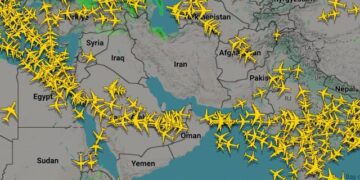




















Iran says it is close to reaching an agreement with Oman on a new arrangement for shipping through the Strait of Hormuz, but Tehran insists that the deal alone will not guarantee the waterway’s reopening.
The development comes as the United Arab Emirates accused Iran of launching another attack on a vessel in the strategic strait, adding to concerns over the safety of one of the world’s most important energy routes.
Iranian Foreign Minister Abbas Araqchi said on Saturday that discussions with Oman had made significant progress and that the two countries were close to agreeing on a temporary shipping route.
However, he stressed that restoring normal traffic would depend on other unresolved issues, including demands that the United States compensate Iran.
Araqchi said Tehran no longer accepted the previous traffic separation arrangement used by ships passing through the strait. Iran and Oman are instead working on an interim route while technical and legal questions surrounding a permanent system are addressed.
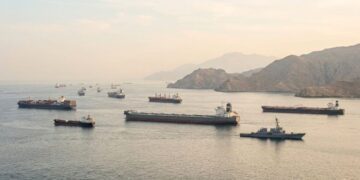
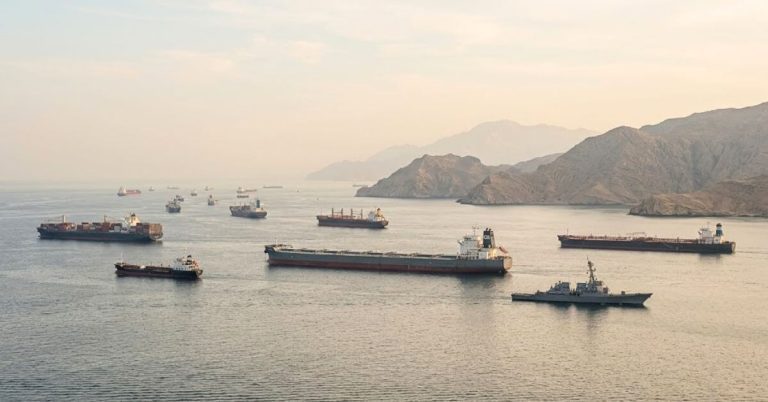
The Strait of Hormuz has become a central point of contention in the conflict that began with U.S. and Israeli attacks on Iran on February 28. Before the war, the waterway carried roughly one-fifth of global oil and gas shipments.
A senior U.S. official said on Friday that Washington expected Iran and Oman to reach an agreement soon, potentially allowing commercial shipping to resume.
According to the official, the United States would lift its blockade of Iranian ports once an agreement was formally announced and commercial vessels could move through the strait without restrictions.
The official said U.S. measures would remain dependent on Iran fulfilling its commitments under any agreement.
Washington and Tehran have repeatedly appeared to move closer to an arrangement in recent weeks, only for disagreements over negotiations and the terms of reopening the strait to emerge again.
Iran’s Revolutionary Guards offered a different interpretation of the negotiations on Saturday, saying the reopening of Hormuz would ultimately depend on Washington accepting Tehran’s conditions.
Guards spokesman Hossein Mohebbi said the issue was separate from the talks between Iran and Oman and accused the United States of interfering in regional negotiations.
“Whenever the United States accepts Iran’s conditions, the Strait of Hormuz will certainly be reopened,” he said, according to Iranian media.
Mohebbi did not publicly detail the conditions.
The conflicting statements raise questions over whether an agreement between Tehran and Muscat would be sufficient to restore international shipping or whether a broader understanding involving Washington would be required.
The uncertainty was compounded by a fresh incident involving commercial shipping.
The UAE government said Iran had used a missile to strike a vessel affiliated with its state-owned oil company while it was travelling through the Strait of Hormuz. No injuries were reported.
Iranian authorities had not immediately commented on the accusation.
The reported attack came as regional energy companies continued to warn of mounting disruption. Abu Dhabi National Oil Company said 15 of its vessels had been attacked while transiting the strait since the conflict began. The company said one crew member had died and 20 others had been injured.
Earlier reports indicated that a potential Iran-Oman arrangement could give Tehran greater control over vessels entering the Gulf through Hormuz, a major concession that has raised concerns in Washington and other energy-importing countries.
U.S. officials have previously rejected the idea of Iran controlling access to the critical energy corridor.
The conflict has already caused severe disruption to international shipping. Iran has used the fighting to justify imposing charges on some oil tankers and has attacked vessels it says breached its instructions, contributing to higher energy prices and renewed inflationary pressure.
The disruption has also extended beyond Hormuz. Iran-aligned Houthi forces in Yemen have stepped up attacks on shipping around the Bab el-Mandeb Strait, another vital passage for global energy and commercial trade.
With negotiations continuing, the prospect of an Oman-mediated shipping arrangement offers a possible path toward restoring traffic. But Iran’s insistence that wider U.S. concessions are required means a deal between Tehran and Muscat may not, by itself, be enough to reopen the waterway.