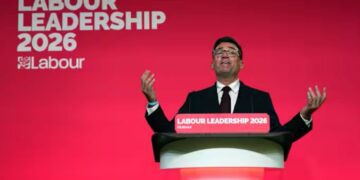




































































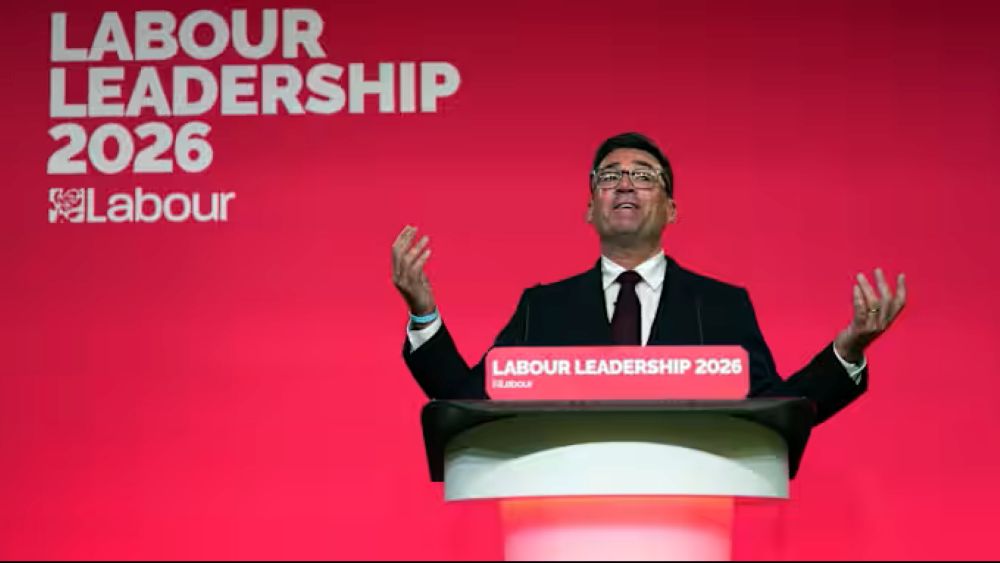
Andy Burnham will officially become Britain’s new prime minister on Monday, succeeding Keir Starmer and pledging to overhaul government priorities to address the country’s cost-of-living pressures, struggling public services and sluggish economic growth.
The former Greater Manchester mayor, widely known as the “King of the North,” will become the United Kingdom’s seventh prime minister in just a decade after Starmer formally tenders his resignation to King Charles III.
Following Starmer’s farewell address outside 10 Downing Street, Burnham is expected to travel to Buckingham Palace, where the King will invite him to form a new government.
The 56-year-old Labour leader assumes office at a time of mounting political and economic challenges, with expectations already growing over the composition of his Cabinet and the direction of his administration.
Burnham promises sweeping political reset
Burnham has described his rise to the Labour leadership as one of the most significant moments in British politics in decades, promising to reshape government around issues that directly affect ordinary citizens.
Speaking after his election as Labour leader, he pledged to build a country where living standards improve and economic opportunities are shared more evenly across all regions.
“The government I lead will confidently set out that path,” Burnham said.
“It will take us to a country where life is more affordable and where all people and every part of Britain can move forward.”
His supporters believe his political appeal, particularly in northern England, positions him as one of Labour’s strongest figures to counter the growing popularity of Nigel Farage’s Reform UK, whose rise has unsettled many within the governing party.
Cabinet appointments under close watch
One of Burnham’s first major tasks will be selecting his Cabinet, particularly the appointment of a Chancellor of the Exchequer, a position regarded as central to the success of any British government.
The race for the role has already generated intense speculation within Labour.
Energy Security and Net Zero Secretary Ed Miliband had initially emerged as a leading contender, although recent reports suggest Home Secretary Shabana Mahmood has become the favourite.
Burnham has urged party members and the public to ignore speculation, insisting no final decisions had yet been made regarding his ministerial team.
Early policy changes begin
Even before formally entering office, Burnham’s incoming administration has signalled its willingness to reverse several existing government policies.
One of the first decisions announced was the cancellation of plans requiring all workers to carry digital identity documents, a proposal originally introduced to combat illegal migration but heavily criticized by lawmakers across party lines.
His government is also expected to move quickly on broader reforms touching taxation, public spending, energy policy and public utilities.
Labour deputy leader Lucy Powell indicated on Sunday that Thames Water, Britain’s heavily indebted water supplier, could be placed under special measures, allowing the government to take temporary control of its operations.
The proposal reflects Burnham’s broader commitment to increasing public oversight of essential services that have faced criticism over poor performance and financial instability.
Focus on living standards
Burnham has repeatedly argued that Britain needs a government more focused on everyday concerns than political disputes.
According to close allies, his administration intends to redirect government resources toward easing household financial pressures, improving public services and delivering stronger regional economic growth.
Lucy Powell said the incoming prime minister wants to fundamentally rethink how government operates.
“He wants to refocus and reprioritize the government’s resources and attention towards tackling the cost-of-living crisis and fundamentally rewiring how the economy works,” she said.
Burnham’s administration now faces the immediate challenge of translating those ambitions into policy as Britain grapples with weak economic growth, rising pressure on public services and increasing political competition ahead of future elections.