




































































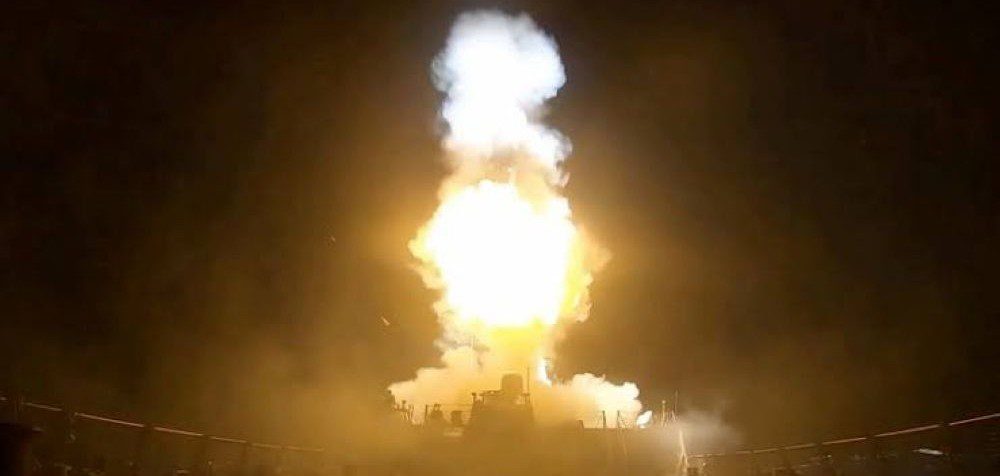
The United States has carried out another wave of military strikes against Iran after two American service members were killed and another reported missing following an Iranian attack in Jordan, further intensifying a conflict that has spread across the Gulf region.
U.S. Central Command (CENTCOM) said the latest operation marked the eighth consecutive night of military action against Iranian targets since hostilities resumed following the collapse of a month-old ceasefire agreement.
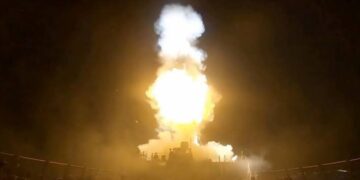
According to CENTCOM, the strikes began on Saturday evening under the direction of President Donald Trump and were aimed at degrading Iran’s ability to threaten commercial shipping through the Strait of Hormuz while retaliating against forces linked to the attack on U.S. personnel in Jordan.
Military officials said the operation targeted Iranian coastal surveillance systems, air defence installations and other military infrastructure used to support operations along the strategic waterway.
Iranian media reported explosions near Sirik in Hormozgan Province and around Shadegan in southwestern Iran, although authorities claimed there were no casualties or significant damage to civilian infrastructure.
Two US troops killed, another missing
The Pentagon confirmed that two American service members died following Friday’s Iranian strike in Jordan, while another remains missing.
The latest fatalities increase the number of U.S. military personnel killed since the conflict erupted to 16, with more than 420 others reported wounded.
U.S. Defence Secretary Pete Hegseth paid tribute to the fallen troops, saying their deaths would strengthen America’s resolve.
Iran expands attacks on US positions
Hours after the U.S. operation, Iran announced fresh drone attacks targeting American military facilities in Kuwait.
Iranian state television, citing the country’s armed forces, reported strikes on Al-Adiri Camp and Ali Al Salem Air Base, describing them as part of ongoing operations against U.S. military assets in the Gulf.
The attacks came as Tehran continued retaliatory operations launched after the ceasefire collapsed last week.
Gulf states come under renewed pressure
Regional tensions continued to widen as reports emerged of Iranian attacks or attempted strikes involving several U.S. allies across the Middle East.
Kuwaiti authorities said their armed forces intercepted ballistic missiles and drones, while emergency responders and workers in the country’s oil sector sustained injuries during the attacks.
Iran’s Islamic Revolutionary Guard Corps (IRGC) claimed responsibility for strikes on Camp Arifjan and Ali Al Salem Air Base in Kuwait, saying radar systems and military facilities were among the targets.
Kuwait Petroleum Corporation later confirmed that one of its facilities suffered damage during repeated attacks.
Iranian media also reported strikes targeting Sheikh Isa Air Base in Bahrain, where U.S. military aircraft are stationed, as well as an intelligence facility.
The IRGC further claimed it had destroyed American military aircraft during missile and drone attacks on Al Azraq Air Base in Jordan.
Reuters said it could not independently verify those claims.
Saudi Arabia also activated early warning systems in Al-Kharj and Yanbu after missile threats were detected. Both locations host strategic military and energy infrastructure, including facilities used by U.S. forces.
Although sources indicated the alerts were triggered by an Iranian missile attack, Tehran did not officially acknowledge any operation against Saudi territory.
Washington and Tehran exchange warnings
Iran’s Supreme Leader Ayatollah Mojtaba Khamenei accused the United States of abandoning previous commitments, saying Washington’s actions demonstrated that President Trump’s assurances could no longer be trusted.
In a statement carried by Iranian state media, Khamenei warned the United States to expect heavier consequences if military operations continue.
The White House did not immediately respond to the remarks.
Strait of Hormuz remains flashpoint
The Strait of Hormuz continues to be at the centre of the conflict, with both sides competing for control of one of the world’s most critical maritime energy routes.
CENTCOM said recent strikes targeted Iranian surveillance facilities, military logistics hubs, underground weapons depots and maritime capabilities supporting operations around the strait.
Iranian state television reported that overnight U.S. strikes in Hormozgan Province killed three people, injured eight others and damaged two bridges and a road tunnel.
Iran’s Health Ministry said U.S. military operations over the past three weeks have killed 50 people and wounded more than 500 others.
Foreign Ministry spokesman Esmaeil Baghaei accused Washington of attempting to dominate the Strait of Hormuz, through which roughly one-fifth of global oil shipments normally pass.
The United States maintains it is enforcing a naval blockade against Iran, while Tehran insists it is acting against vessels it considers to have violated its navigation rules.
International concern grows
The conflict has increasingly disrupted shipping and energy markets, raising concerns over global oil supplies and inflation.
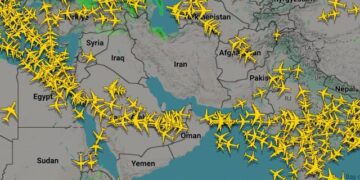
The U.S. State Department issued a worldwide travel advisory for American citizens, warning of heightened tensions across the Middle East, possible airspace closures and flight disruptions.
Meanwhile, the European Union and Gulf Cooperation Council states jointly called on Iran to cease all attacks affecting maritime navigation and urged that the Strait of Hormuz remain open to international shipping without restrictions or additional charges.