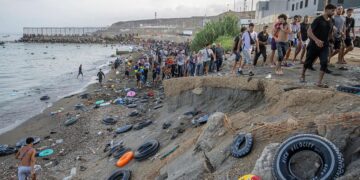







































































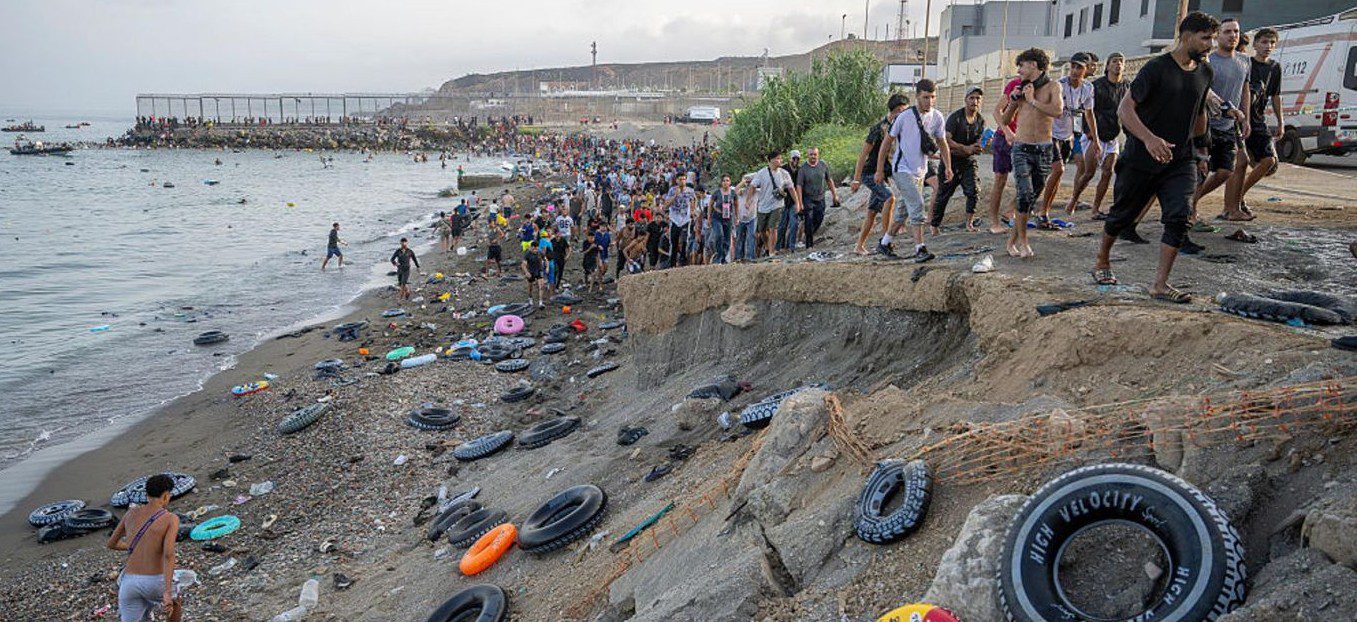
At least 57 migrants have lost their lives after an unprecedented rush into Spain’s North African enclave of Ceuta, where tens of thousands of people crossed from neighbouring Morocco within just 24 hours, triggering a humanitarian emergency and a fresh diplomatic row in Europe.
Spanish authorities estimate that around 50,000 migrants entered the enclave during the mass crossing, overwhelming local security forces and public services in the territory, which has a population of about 85,000.
The scale of the influx has been described as one of the largest border incidents in recent European history.
Spain declares emergency response
Spanish Prime Minister Pedro Sánchez, who travelled to Ceuta following the incident, described the mass crossing as a serious challenge to Spain’s territorial sovereignty and vowed to restore order.
He announced that the government would deploy additional police officers, military personnel and emergency responders to stabilize the situation while accelerating the identification and processing of migrants.
Authorities also plan to establish temporary reception centres where new arrivals will undergo registration, health screening and immigration assessments before decisions are made regarding asylum claims or repatriation.
Dozens killed during dangerous crossing
Many of those who died reportedly drowned while attempting to swim around border barriers separating Morocco from Ceuta.
Others are believed to have been caught in deadly stampedes and crushes as huge crowds tried to force their way through entry points along the coastal border.
Emergency teams have continued recovery operations while hospitals in Ceuta struggle to cope with the large number of injured migrants.
Legal ruling blamed for surge
Spanish officials linked the sudden increase in crossings to a recent Supreme Court ruling that changed how migrants intercepted at sea near Ceuta and Melilla should be treated.
Government officials claim criminal trafficking networks exploited the legal decision by spreading information that migrants would have a greater chance of remaining in Spain if they reached the enclave.
Madrid accused organized smuggling groups of encouraging thousands of people to make the dangerous journey.
Thousands already returned
Spain’s Interior Ministry said that a significant number of migrants had already voluntarily crossed back into Morocco as authorities worked to reduce pressure on the enclave.
Security forces continue to patrol the border while efforts are underway to identify vulnerable groups, including unaccompanied minors and families requiring humanitarian assistance.
European partners express concern
The incident has reignited debate across the European Union over migration management, border security and cooperation with North African countries.
Some European leaders have questioned Spain’s handling of the crisis, while others have called for stronger external border protection and closer collaboration with Morocco to prevent future mass crossings.
Morocco distances itself
Moroccan officials rejected suggestions that the government had deliberately relaxed border controls, insisting that criminal smuggling networks were responsible for organizing the mass movement of migrants.
Rabat also reaffirmed its commitment to working with Spain on migration and border security despite the latest tensions.
Humanitarian crisis unfolds
Aid organizations say thousands of migrants, including women and children, have been left without adequate shelter, food or medical care following the influx.
Parks, public spaces and temporary facilities across Ceuta have filled with exhausted migrants awaiting processing, while humanitarian workers continue to call for urgent assistance.
Ceuta and the nearby Spanish enclave of Melilla remain the European Union’s only land borders with Africa and have long been focal points for migrants hoping to reach Europe in search of safety and better economic opportunities.