
























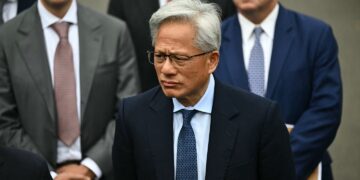

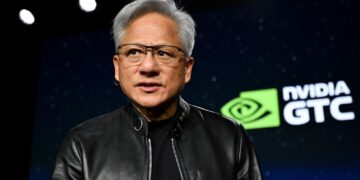
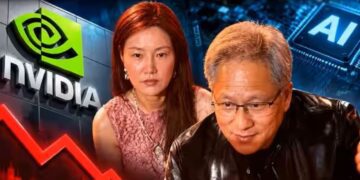





























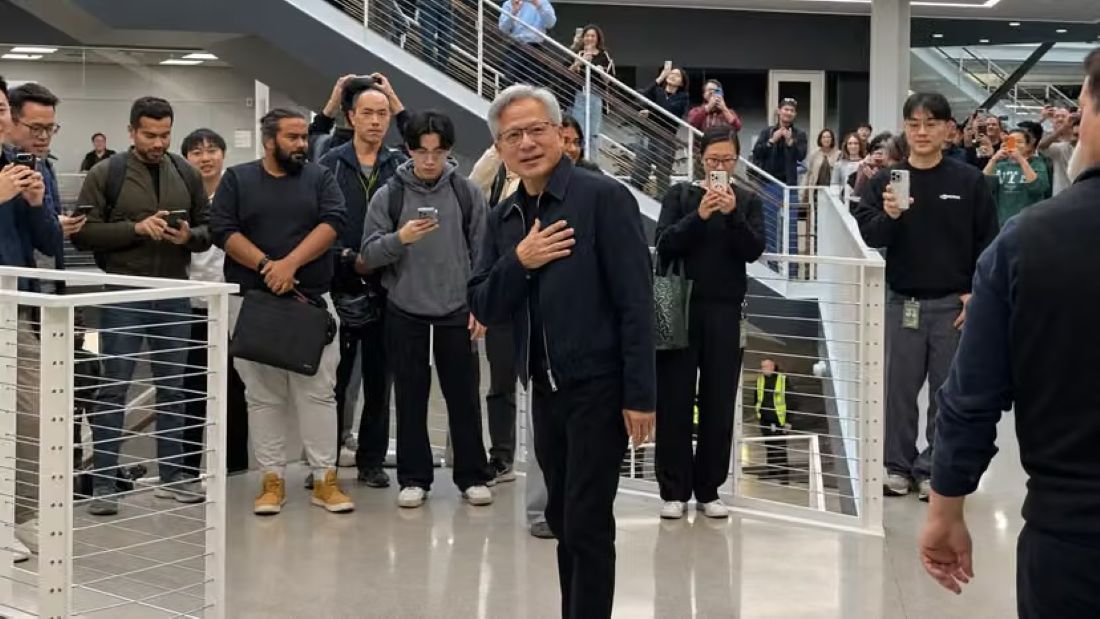
Jensen Huang has returned as chief executive of Nvidia following a dramatic boardroom reversal, promising employees that he would perform better in his second stint at the helm of the chipmaking giant.
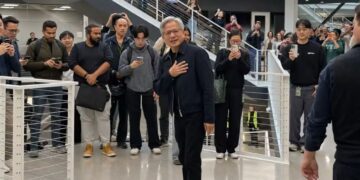
The 63-year-old pledged while addressing cheering staff gathered in an atrium and on balconies at the company’s headquarters. His reinstatement comes amid growing pressure from US President Donald Trump and shareholders, who had raised concerns about the leadership crisis.
Trump, who said his intervention helped secure Huang’s return, publicly defended the Nvidia co-founder, describing him as a genius who had done nothing wrong. Tesla and SpaceX chief executive Elon Musk also welcomed the development.
Investors initially reacted enthusiastically. Nvidia shares climbed 31.5 per cent on Monday, helping to drive a wider rally on Wall Street. However, the stock fell by more than four per cent in premarket trading on Tuesday.
Huang’s return, just days after his departure, has drawn attention to the extraordinary influence he wields over Washington, financial markets, the artificial intelligence industry and global technology supply chains.
Eric Schiffer, chairman of Los Angeles-based private equity firm Patriarch Organization, said Huang had become an exceptionally influential figure among technology investors.
As one of the central figures behind the AI boom, Huang’s influence extends well beyond his position at Nvidia. He has built relationships with politicians, business partners, customers and suppliers worldwide, helping to drive the industry’s rapid expansion.
His influence is also evident among some of the world’s wealthiest technology executives. Oracle chairman Larry Ellison said in 2024 that he and Musk had effectively been pleading with Huang to supply them with Nvidia graphics processing units (GPUs).
In parts of Asia, Huang has developed a celebrity-like following. Crowds have gathered around him in cities such as Taipei and Seoul, with admirers seeking autographs on books, posters and even their bodies.
His reinstatement, however, has revived concerns about how heavily Nvidia and the wider AI industry depend on one individual. It has also brought renewed scrutiny of the company’s financial support for AI startups that subsequently purchase its chips.
Questions over Nvidia’s investment strategy
Before leaving the company, Huang faced criticism from investors who wanted Nvidia to reduce the use of its own cash to support businesses and startups that fuel demand for its products.
Critics warned that the practice risked creating a cycle of financing in which Nvidia invested in companies that then used the money to buy Nvidia hardware. Huang rejected the concerns, maintaining that the investments supported genuine demand for the company’s technology.
His departure had raised questions about whether major players in the AI infrastructure market, including CoreWeave and Nebius, could maintain their growth without his backing. Shares in both companies rose sharply on Monday after his return was announced.
Bill Gunderson, a partner at GCG Advisory Partners, said the market’s reaction illustrated how closely investors had linked the fortunes of the AI industry to Huang’s leadership.
The sharp swings in market sentiment also highlighted the uncertainty surrounding Nvidia’s future without its co-founder.
Huang owns approximately 3.6 per cent of Nvidia, making him the company’s fifth-largest shareholder. Unlike some technology founders, including Meta Platforms chief executive Mark Zuckerberg and Musk, he does not hold special voting shares that give him effective control of the business.
He is also known for an unusually hands-on management approach. Huang personally gets involved in operational challenges and oversees about 60 direct reports, most of whom work in engineering. Their areas of expertise include memory chips, networking, graphics processing and central processing units.
Speaking on a podcast in March, Huang explained that he believed a company’s organizational structure should be shaped by the environment in which it operates, rather than follow a conventional corporate model.
His involvement with Nvidia-backed startups reportedly goes beyond financial investment. Founders, venture capitalists and a former company employee have said he takes an active role in helping these businesses attract customers and investors, including participating in fundraising calls.
Political backing and governance concerns
Trump’s public support for Huang was among the most striking aspects of the chief executive’s return. The US president said he had played an important role in bringing him back and dismissed the allegations that had surrounded the former CEO.
The decision nevertheless surprised many observers and drew strong objections from lawmakers in both major US political parties. Their criticism reflected wider concerns about Nvidia’s importance to the AI sector and the risks associated with its dependence on a single executive.
The episode has also raised questions about the ability of corporate boards to hold powerful founders and chief executives accountable.
Nada Kakabadse, a professor of corporate governance and ethics at Henley Business School in Britain, argued that when a chief executive becomes too influential to remove, the board must focus on establishing stronger limits on that person’s authority.
Her assessment points to a central challenge facing Nvidia: Huang’s leadership is widely regarded as essential to the company’s success, but that dependence could make effective oversight more difficult.