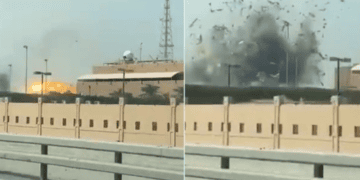




















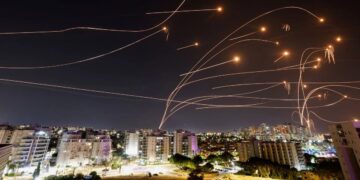





























































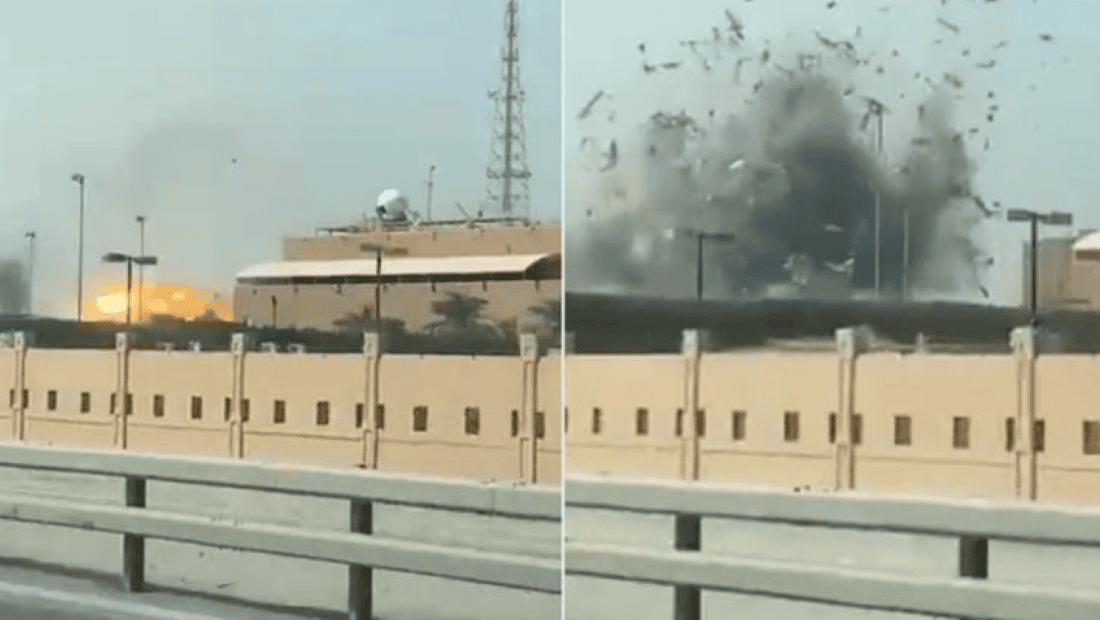
Iran launched drones at a United States military radar installation in Bahrain on Tuesday, as the conflict in the Middle East continued to threaten security across the Gulf and disrupt shipping through the strategically important Strait of Hormuz.
Iran’s Islamic Revolutionary Guard Corps (IRGC) said it had targeted a radar system at the Sheikh Isa air base in Bahrain, which hosts facilities associated with the US Fifth Fleet.
Bahrain said its air defences intercepted the incoming attack after authorities issued an air raid warning and instructed residents to seek shelter. No casualties or damage were reported.
The latest strike followed several Iranian aerial attacks intercepted by Bahrain on Sunday. Tehran said it had targeted a US radar installation at the Al-Rifaa helicopter base in response to what it described as hostile American actions.
The attacks underline the continuing instability in the Gulf, where the conflict has reached a stalemate after nearly nine months of fighting.
US President Donald Trump has indicated that he could refrain from launching further strikes against Iran if Tehran and its allies, including Yemen’s Houthi movement, avoid what he considers provocations.
However, Washington has maintained its naval blockade of Iran in response to the disruption of commercial shipping through the Strait of Hormuz, a critical passage for international energy supplies and global trade.
Iran and Oman discuss security of shipping routes
Amid the military tensions, Iranian Foreign Minister Abbas Araqchi travelled to Oman on Tuesday for talks on maritime security and efforts to prevent further escalation.
Araqchi met his Omani counterpart, Badr Albusaidi, to discuss protecting shipping corridors and maintaining the movement of international trade through the Strait of Hormuz.
The two ministers also considered ways to revive diplomatic channels and negotiations involving the parties to the conflict.
Oman’s Foreign Ministry said the discussions were intended to build mutual understanding, prevent the crisis from spreading and limit its wider consequences.
Oman, which lies across the Strait of Hormuz from Iran, has played a mediating role in the conflict that began with US and Israeli attacks on Iran on February 28.
Attacks on tankers threaten global energy supplies
Security concerns around the Strait of Hormuz have intensified as attacks on commercial vessels increase.
The waterway carried roughly one-fifth of the world’s energy supplies before the war and remains a major obstacle in efforts to reach an agreement to end the conflict.
Last week, Iran attacked shipping navigation systems on Oman’s Didamar Island, located in the strait, according to sources cited in reports. Gulf oil exporters have since explored alternative arrangements to maintain crude shipments through the disrupted route.
Iran and Oman have previously held intermittent discussions on managing maritime traffic through the waterway, with their most recent round of talks taking place in August.
Before the conflict, vessels moved freely through the strait. Although its waters fall within the territorial jurisdictions of Iran and Oman, the passage is generally treated as an international waterway.
The disruption has raised concerns over the reliability of global oil supplies and contributed to wider economic uncertainty.
The conflict has also spread beyond the immediate Gulf region. Iran has sought to increase pressure on Washington through its Houthi allies in Yemen, who have attacked Saudi targets and seized positions along the Yemeni coast near the Bab el-Mandeb Strait.
The waterway is another major international shipping route, and threats to access through it could further complicate exports from Gulf oil-producing countries.
Bahrain intensifies crackdown amid tensions with Tehran
Tuesday’s drone attack came a day after a Bahraini court sentenced 64 people, most of them Shi’ite clerics, to life imprisonment over allegations that they collaborated with Iran to undermine the state.
The ruling is part of a wider crackdown on Shi’ite religious figures since Iran began attacking Bahrain following the US-Israeli strikes earlier this year.
Bahrain is ruled by a Sunni Muslim family despite having a Shi’ite-majority population, and its authorities have long expressed concern about Iranian influence in the country.
Among those sentenced to life imprisonment was Sheikh Isa Qassim, a prominent religious figure widely regarded as the spiritual leader of Bahrain’s Shi’ite community. He has lived in Iran since 2018, according to the Bahrain Institute for Rights and Democracy.
Iran’s Foreign Ministry condemned the court ruling on Tuesday, describing the accusations against the defendants as baseless.
Tehran has repeatedly denied interfering in Bahrain’s domestic affairs.