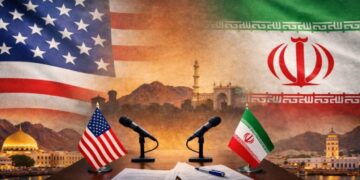





















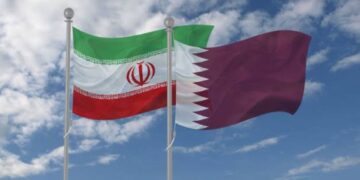







































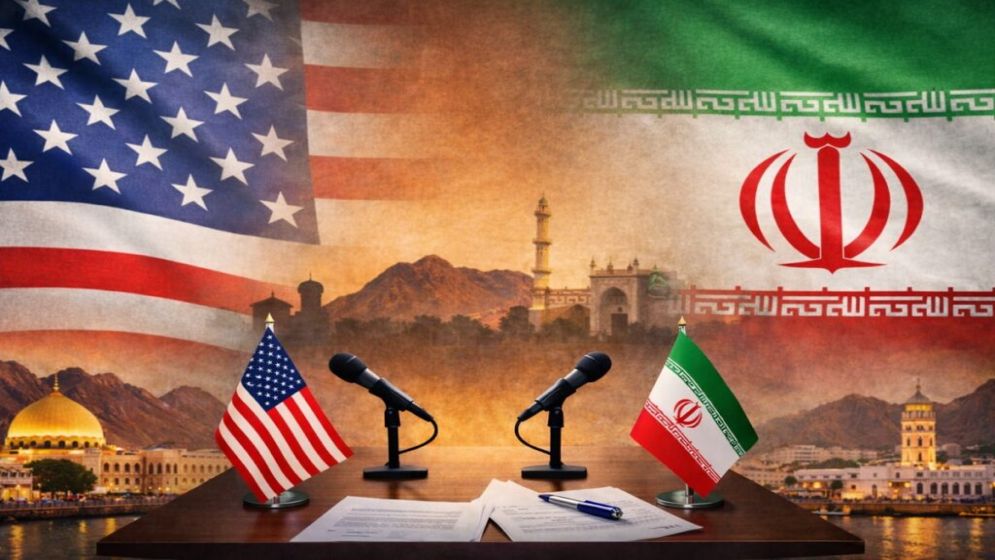
Iran and the United States remain far apart on an agreement to end their war, despite renewed diplomatic efforts by Qatar to bridge differences and prevent the conflict from escalating further after the US midterm elections.
A senior Iranian official told Reuters on Tuesday that mediators were working to narrow disagreements between Tehran and Washington, but warned that Iran would not accept what it considers excessive American demands.
The diplomatic push comes amid fresh military tensions. A US official said American forces carried out what Washington described as defensive strikes overnight on Iran’s Qeshm Island, targeting surface-to-air missile systems allegedly used against US assets.
Another US official said the operation appeared limited and did not indicate a resumption of major combat operations.
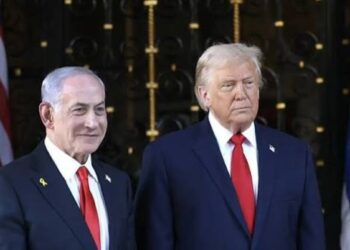
President Donald Trump, however, renewed his warning that military action remained an option. Speaking to Fox News on Tuesday, he said he did not want to cause widespread loss of life but would act if necessary.
Qatar has intensified its mediation efforts amid concerns that the conflict, launched by the United States and Israel in February, could erupt into another round of fighting.
The Iranian official said Qatari mediators travelled to Tehran on Monday night to discuss a revised version of a draft agreement that has been under consideration for more than a week.
Tehran insists that any deal must address its demands, including the removal of oil sanctions, an end to the US naval blockade and the release of frozen Iranian assets. The official said these conditions must be met before Iran agrees to reopen the Strait of Hormuz.
Mohsen Rezaei, secretary of Iran’s Supreme National Security Council, also criticized Washington’s response to Tehran’s proposals, describing it as unsatisfactory. He said the United States must clearly address all seven conditions put forward by Iran before the strategic waterway could reopen.
Qatar says negotiations remain alive
Trump had earlier expressed uncertainty about whether he would resume threatened military strikes against Iran, while suggesting that a diplomatic agreement remained possible.
Qatar’s Foreign Ministry spokesperson, Majed al-Ansari, said both Washington and Tehran were reviewing proposals presented by mediators. Although the Qatari delegation that travelled to Iran had returned to Doha, diplomatic contacts were continuing.
Al-Ansari said regional countries were making intensive efforts to prevent further escalation and that Qatar remained hopeful an agreement could create conditions for broader negotiations.
He argued that the continuation of talks showed there was still a possibility of progress, adding that mediators could not abandon hope while negotiations remained active.
An official familiar with the discussions said responses from Washington and Tehran were expected within 36 hours. However, a senior Iranian official later said there was no fixed deadline for exchanging messages or reviewing proposals through mediators.
The differences remain significant, particularly over the conditions Tehran wants fulfilled before discussions on its nuclear programme can begin.
The Iranian official said the country would reject what it viewed as unreasonable US demands and warned that any further American strikes would attract a forceful response both within the Middle East and beyond.
Iran warns of retaliation as oil prices rise
The diplomatic efforts have unfolded alongside renewed military warnings from both sides.
Iran’s Islamic Revolutionary Guard Corps said it had shot down a US MQ-9 drone and two Lucas drones near the Strait of Hormuz.
Parliament Speaker Mohammad Baqer Qalibaf said Washington now had to respond to what he described as a firm and reasonable Iranian position. He accused the United States of trying to force Iran into submission through threats and military pressure.
Qalibaf warned that any American miscalculation would trigger an unpredictable Iranian response that would not be restricted by geographical boundaries.
Ali Abdollahi, head of Iran’s armed forces general staff, said the military was updating its list of potential targets, including American and Israeli assets. He warned that Iran would respond immediately to any threat.
The statements followed an order by Iran’s Supreme Leader, Ayatollah Mojtaba Khamenei, directing the armed forces to respond immediately and without geographical restrictions to threats from its enemies.
Iranian hardline media have also raised the possibility of attacks on Western military facilities outside the Middle East. The newspaper Kayhan listed US facilities in Britain, Italy, Greece, Romania, Albania and Cyprus as possible targets if fighting resumes.
Oil prices rose by about 1.3 per cent on Tuesday after falling by more than seven per cent a day earlier on optimism that diplomatic efforts were making progress.
The movement reflects continued uncertainty in energy markets over the future of the conflict and the security of shipping through the Strait of Hormuz, a major route for global oil supplies.
Iran and Saudi Arabia pursue regional security talks
While Qatar continues to facilitate indirect exchanges between Tehran and Washington, other regional powers are pursuing separate diplomatic initiatives to prevent the conflict from spreading.
The fighting has already widened, with Yemen’s Iran-aligned Houthi movement stepping up attacks on Saudi Arabia.
Iranian Foreign Minister Abbas Araqchi said on Tuesday that discussions with Saudi Arabia were continuing over a new regional security framework that would not depend on foreign military involvement.
The latest engagement follows a meeting last week in Tehran involving senior officials from Saudi Arabia, Turkey and Pakistan and their Iranian counterparts. It was the first high-level contact of its kind since August.
The parallel diplomatic efforts highlight growing regional concern over the consequences of another escalation. However, with Tehran and Washington still divided over sanctions, the naval blockade, the Strait of Hormuz and Iran’s nuclear programme, a comprehensive agreement remains uncertain.