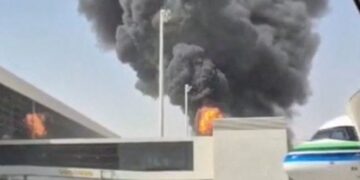






































































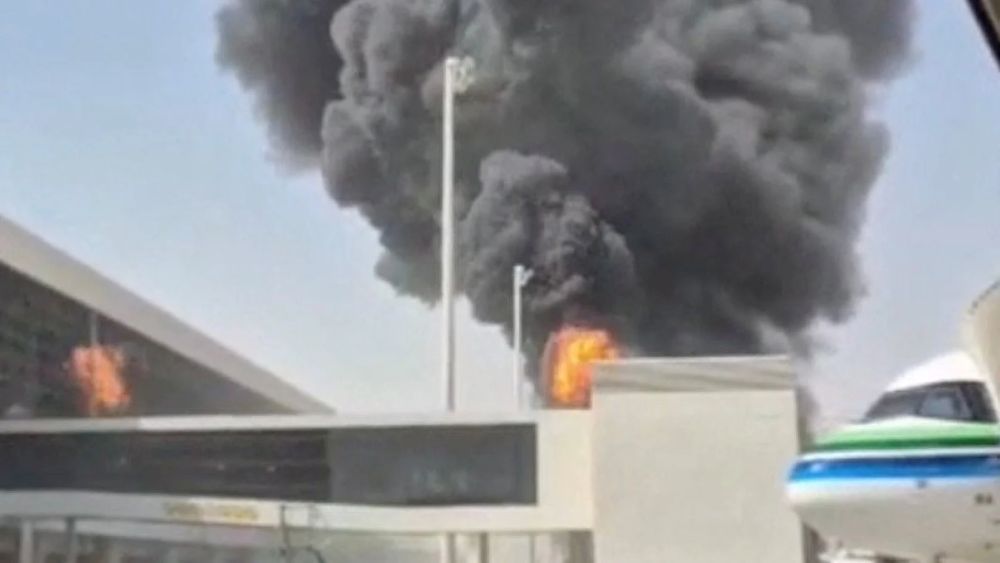
Three people were killed and several others injured in Houthi attacks on Riyadh airport, Saudi Arabia, as the Iran-aligned Yemeni group intensified missile strikes against the kingdom amid escalating regional hostilities.
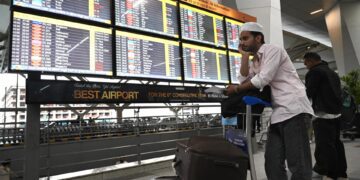
The attacks on Thursday damaged a Saudia Airlines aircraft, sent smoke rising over the airport and forced several airlines to cancel flights to the Saudi capital, raising concerns about civilian aviation and regional security.
Saudi authorities said flight operations had returned to normal by Friday, with tracking data showing a gradual resumption of services. Saudia Airlines confirmed that one of those killed was its employee.
The strikes came as Saudi Arabia stepped up military operations against the Houthis in Yemen. Houthi officials and affiliated media reported Saudi airstrikes on targets in the capital, Sanaa, overnight.
A Saudi-led coalition supporting Yemen’s internationally recognized government said it had destroyed three missile launch platforms used by the Houthis. The coalition warned that attacks on civilians would draw a firm response.
The Houthis had already killed three people in attacks on Saudi airports earlier in the week, bringing renewed attention to the threat posed by the group’s expanding missile campaign.
Fighting intensifies across Yemen
Yemen’s long-running civil war has become a major front in the wider regional conflict triggered by US and Israeli strikes on Iran on February 28.
The fighting has raised concerns about international energy supplies, with the Houthis targeting shipping in the Red Sea and around the Bab el-Mandeb Strait, a strategic passage connecting the Red Sea to the Gulf of Aden. The disruption comes as Iran’s partial blockade of the Strait of Hormuz has also constrained Gulf energy shipments.
The Houthis made rapid advances along Yemen’s Red Sea coast last month, gaining control of territory around the Bab el-Mandeb area. Their gains prompted Saudi Arabia to re-enter the conflict more directly and support a government counteroffensive.
Yemeni government forces recaptured territory near the strait on Monday following intense fighting and Saudi airstrikes. Clashes have continued as government troops seek to consolidate their gains.
Saudi Arabia’s ambassador to Yemen said in a social media post on Friday that the Bab el-Mandeb area had been cleared of Houthi forces. However, that claim could not be independently verified, and Houthi fighters remained in Mocha, further up the coast.
Government forces have since focused on fighting in nearby hills overlooking the coastal region.
Elsewhere, the Houthis have tightened their pressure on Taiz, Yemen’s third-largest city, which has a population of more than half a million and hosts thousands of pro-government fighters. The group has advanced through surrounding mountain districts and cut off a key road linking the city to other areas.
The territorial battles have added to concerns that the conflict could further destabilize Yemen while drawing neighbouring countries deeper into the fighting.
Houthis threaten Saudi airspace and oil facilities
The Houthi group has announced successive waves of ballistic missile attacks against Saudi Arabia and threatened to shut down the kingdom’s airspace.
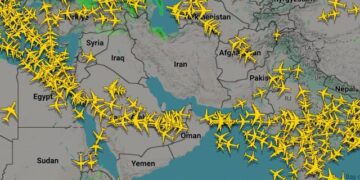
On Friday, the group renewed its warning to aircraft operating over Saudi territory, excluding airspace above the holy cities of Mecca and Medina, which it described as a zone of operations for its missile forces.
The Houthis have also threatened oil facilities, warning workers at energy installations that they could be targeted.
Saudi Arabia is seeking assistance from Pakistan and Turkey, its partners under a mutual defence pact, as it works to counter the attacks and reverse Houthi territorial gains in Yemen. Riyadh has also sought broader support from its allies.
The expanding threat has prompted aviation authorities and security agencies to issue warnings.
The European Union Aviation Safety Agency extended the area covered by its advice against flying, citing the attacks on Riyadh airport and the risks to civilian aircraft. Aviation risk monitoring group OPSGROUP also advised airlines against flying over Saudi Arabia.
Although some regional carriers continued operating through Riyadh, flight tracking data showed numerous cancellations and delays involving other airlines.
The US Embassy in the United Arab Emirates urged American citizens to exercise increased vigilance, citing Houthi attacks on civilian targets in Saudi Arabia and warning that the hostilities could escalate rapidly.
Oil industry gathering faces uncertainty
The security crisis comes days before Riyadh is scheduled to host the WPC Energy Congress, a major gathering of oil ministers, government officials and energy industry executives beginning on Sunday.
The event remained advertised on Friday despite the airport attacks and the wider regional instability.
Italian Energy Minister Gilberto Pichetto Fratin said he would participate remotely rather than attend in person. He did not give a reason for the decision.
The attacks have raised questions about the security of international travel to Saudi Arabia and the potential consequences for a major energy industry gathering.
With fighting continuing in Yemen, missile threats against Saudi territory and disruption to shipping routes, the conflict is adding pressure to an already volatile regional security and energy environment.