






















































Iran has rejected a claim by U.S. President Donald Trump that Kharg Island, the country’s main oil export hub, had been destroyed, calling the post “laughable” and saying operations at the facility remained normal.
Trump posted an AI-generated video on Truth Social showing dramatic explosions and wrote that Kharg Island had been “blown to smithereens”, but provided no details about an alleged attack. Hours later, there was no independent evidence that the strategic island had been struck.
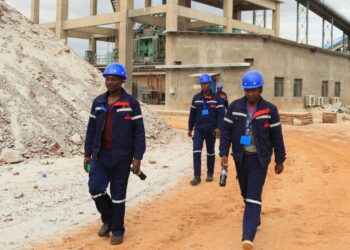
Hamid Bovard, chief executive of the National Iranian Oil Co., said conditions on Kharg were calm and that oil operations had continued.
“Trump’s tweets are laughable and conditions in Kharg are calm and appropriate,” Bovard said, according to Iran’s semi-official Nournews. He added that workers were repairing earlier damage and upgrading facilities.
Reuters analysis also found that the video accompanying Trump’s post was most likely AI-generated.
Kharg is a critical part of Iran’s oil industry and handled about 90% of the country’s oil exports before the war began with U.S. and Israeli attacks in February. Any major strike on the island could severely disrupt Iran’s energy exports and put additional pressure on its economy.
The dispute over Kharg came as fighting between the United States and Iran resumed after weeks of relative calm.
US strikes Iranian launchers
A U.S. official said American forces had carried out their first known military strikes against Iran since late July, targeting two rocket launchers on Larak Island in the Strait of Hormuz.
The official said Iranian Revolutionary Guard forces had been preparing to launch rockets and deploy sea mines in the strategic waterway.
U.S. Central Command described the operation as “limited, precise” action against Iranian minelaying forces that posed an imminent threat, but released few details.
Iran responded by saying it had attacked two U.S. bases in Jordan that were being used to support the Larak operation.
Iranian forces also said they had targeted the UAE’s Al Minhad air base with drones, although the UAE defence ministry denied that the facility had been attacked.
Iran’s Revolutionary Guards separately said they had shot down a U.S. drone over Gulf waters.
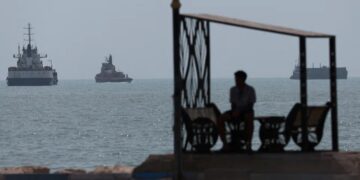
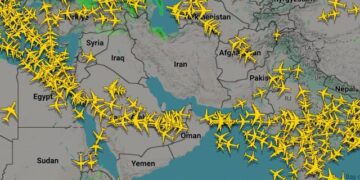
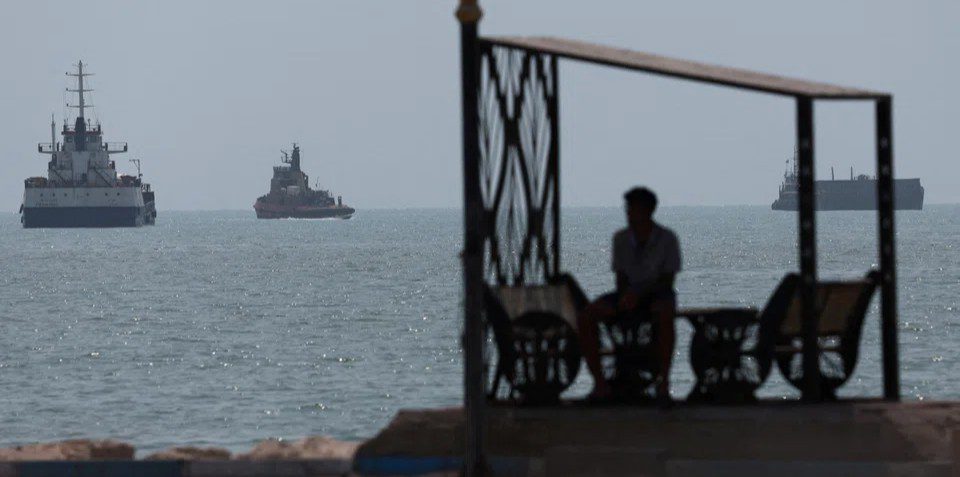
The escalating confrontation has also raised fresh concerns about shipping through the Strait of Hormuz, one of the world’s most important energy routes.
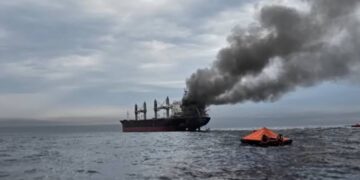
Iranian state television said a supertanker caught fire and stopped after striking two naval mines in the southern part of the strait. The Revolutionary Guards accused the vessel of attempting to pass through the waterway illegally, but did not identify the ship or provide details about its crew.
Jordanian authorities said their forces intercepted eight missiles that entered the country’s airspace.
Shipping data showed the number of visible commodity vessels travelling through the Strait of Hormuz had fallen to about five a day over the weekend. The actual number may have been higher because some ships had switched off their tracking systems.
Tehran says it will respond to aggression
Iranian President Masoud Pezeshkian said Tehran did not seek war but would respond to any attack.
“We will never remain silent in the face of any aggression and will respond decisively to the aggressors,” state media quoted him as saying.
It was not immediately clear whether his comments were made before or after Trump’s Kharg Island post.
The Strait of Hormuz remains particularly sensitive because it carried nearly one-fifth of global crude oil and liquefied natural gas shipments before the conflict disrupted traffic.
Iran, the third-largest producer in OPEC, has repeatedly rejected Trump’s assertions that the waterway remains fully open, with the Revolutionary Guards saying ships require Iranian permission to pass.
US prepares more sanctions
The military escalation has coincided with a broader U.S. campaign to increase economic pressure on Tehran.
U.S. Treasury Secretary Scott Bessent told Reuters that Washington expected to impose new secondary sanctions against Iran-linked entities almost every week, initially targeting banks.
“We’re starting with the banks,” Bessent said, warning financial institutions against holding Iranian funds or assisting the Iranian government.
The United States has already sanctioned branches of Egypt’s Banque Misr in the UAE over alleged financial links to Iran. Bessent said Washington could go further by excluding institutions from the dollar-based financial system.
“You’re going to see a lot more of these every week,” he said.
The renewed fighting and sanctions campaign mark a sharp escalation after weeks in which Washington had increasingly relied on economic measures rather than direct military action.