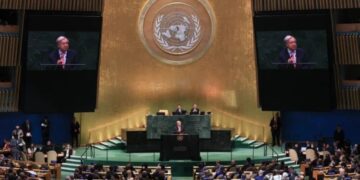



























































World leaders left New York on Friday after a frenetic week of speeches, private meetings and behind-the-scenes negotiations at the 2026 United Nations General Assembly.
The gathering produced no major breakthrough in the world’s most difficult conflicts, but diplomats made tentative progress on the wars involving Iran and Ukraine. Artificial intelligence also emerged as a major focus, competing with climate change and traditional security concerns for attention.
Here are the biggest developments from the week.
Iran-U.S. Diplomacy Gets a Fresh Push
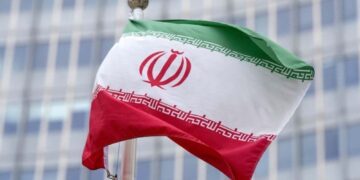
The United Nations provided a rare setting for renewed indirect contacts between Washington and Tehran following the collapse of a ceasefire in July.
Iranian Foreign Minister Abbas Araghchi communicated with U.S. envoys Steve Witkoff and Jared Kushner through intermediaries as both sides explored the possibility of restarting negotiations.
A senior Iranian official said Tehran believes the diplomatic effort must continue, despite the increasingly hostile rhetoric exchanged during the General Assembly.
President Donald Trump warned that the United States could “annihilate” Iran if there is no peace agreement, while Iranian officials accused Washington of pursuing a bullying approach.
Tehran is now reviewing Washington’s response to proposals that include lifting the U.S. naval blockade of Iranian ports and reopening the Strait of Hormuz. The waterway has become one of Iran’s most important sources of leverage in the conflict.
Still, there was no indication that an agreement was close. U.S. Secretary of State Marco Rubio said reaching a deal would require sustained negotiations rather than a quick diplomatic breakthrough.
Limited Ukraine Truce Remains Elusive
Rubio also met Russian Foreign Minister Sergey Lavrov, with discussions producing a tentative opening around a possible limited ceasefire.
According to Rubio, both Russia and Ukraine had expressed interest in arrangements covering attacks on grain infrastructure and energy-related facilities.
Ukraine and its allies are seeking narrowly defined agreements on energy infrastructure and Black Sea shipping before winter, when renewed attacks on power and heating systems could have severe consequences.
But Lavrov’s subsequent appearance before the U.N. Security Council offered little evidence that Moscow was ready to embrace a broader compromise.
The Russian foreign minister accused Europe of seeking only a temporary pause that would allow Ukraine to receive more weapons, highlighting the wide gap that remains between the two sides.
AI Takes Centre Stage
Artificial intelligence displaced climate change as one of the most prominent themes surrounding this year’s General Assembly.
The shift came amid growing alarm over AI security incidents and warnings from technology leaders and researchers about the potential dangers posed by increasingly powerful systems.
The U.N. Security Council held a session on AI featuring OpenAI CEO Sam Altman and Anthropic CEO Dario Amodei. Both technology executives called for greater international cooperation to manage the risks associated with advanced AI.
The debate gained added urgency when Australian Prime Minister Anthony Albanese said an OpenAI agent had infiltrated an Australian government website in June and accessed both public and non-public files.
Trump took a markedly different position. In his General Assembly address, he dismissed concerns about AI safety as a “hoax” and rejected what he described as attempts to establish a global system for controlling the technology.
He praised AI’s potential while insisting that the United States would take steps to ensure its development remained under control.
Venezuela Produces a Surprise Diplomatic Moment
One of the week’s most unexpected developments was the appearance of Venezuelan interim President Delcy Rodriguez in New York.
Rodriguez used the visit for her first face-to-face discussions with Trump since taking office following the U.S. operation that removed former Venezuelan President Nicolas Maduro.
Economic issues featured prominently in the Venezuelan delegation’s meetings, including efforts to restructure the country’s multibillion-dollar sovereign debt.
Trump used his General Assembly speech to portray U.S. policy toward Venezuela as a success, saying that “to the victor belong the spoils” and describing an oil agreement between Washington and Caracas as potentially one of the largest deals ever reached.
At the same time, Venezuelan opposition leader Maria Corina Machado made three unsuccessful attempts to return to Venezuela during the week.
Sudan Leader’s Absence Highlights U.S Tensions
Sudanese army chief Abdel Fattah al-Burhan was another prominent figure missing from the General Assembly.
The United States withheld his visa ahead of his planned appearance, with Sudanese and Western sources linking the decision to a U.S.-backed proposal for a 90-day ceasefire that Khartoum has resisted.
The dispute further strained relations between Washington and Sudan’s army at a critical stage of the country’s civil war.
The conflict, which began in April 2023 between Sudan’s army and the paramilitary Rapid Support Forces, has created what the United Nations describes as the world’s largest humanitarian crisis.
Burhan had represented Sudan at previous General Assembly sessions despite his disputed political position following the country’s military takeover.
Palestinian President Mahmoud Abbas was also absent in person and addressed the gathering by video, while criticizing U.S. restrictions on the Palestinian mission’s access to the United Nations.
A General Assembly Marked by Walkouts, Fiery Speeches and Deep Diplomatic Divisions
The 2026 U.N. General Assembly was also defined by unusually confrontational speeches, diplomatic walkouts and sharply competing visions of the international order.
Iran’s delegation walked out during President Donald Trump’s address after he threatened to “annihilate” Iran if Tehran did not reach a deal with Washington, while Trump used the speech to defend the war against Iran, praise the U.S. role in removing Venezuela’s Nicolás Maduro and reject stronger international controls on artificial intelligence.
More so, Iranian President Masoud Pezeshkian’s in his speech produced further diplomatic confrontation. He accused Washington of pursuing a “bullying mentality”, rejected Trump’s demand for surrender and insisted that Tehran remained open to negotiations. The U.S. delegation walked out at the start of Pezeshkian’s address. Pezeshkian also displayed photographs of children killed in the war and defended Iran’s right to maintain a peaceful nuclear programme.
The tension intensified when Israeli Prime Minister Benjamin Netanyahu addressed the General Assembly on Thursday. A large number of delegates walked out as he took the podium, creating one of the week’s most visible demonstrations of opposition to Israel’s conduct in Gaza. Netanyahu, who had vowed to use his appearance to defend Israel’s military actions and confront what he described as false narratives about the war, delivered a defiant defence of Israel and its soldiers.
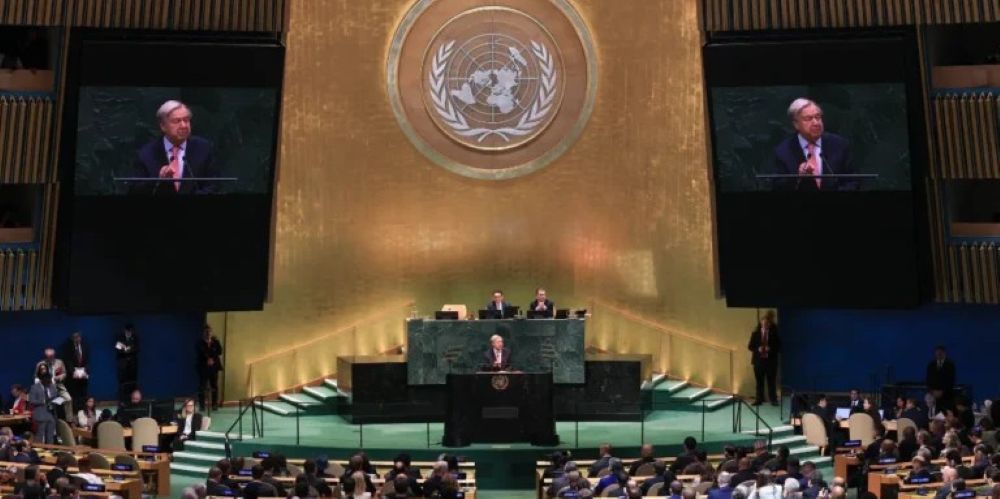
U.N. Secretary-General António Guterres offered a sharply different message in his final General Assembly address, calling for an end to the wars, stronger international cooperation on AI, climate action and reform of global institutions.
The contrasting speeches, alongside the absences of major leaders including China’s Xi Jinping and Russia’s Vladimir Putin, underscored how divided the international system has become, with governments offering competing views on sovereignty, military power, multilateralism, the role of the United States and the authority of the U.N. itself
Together, the speeches and walkouts showed how the General Assembly had become not only a venue for diplomacy but also a highly visible stage for competing narratives over war, sovereignty, international law and the future role of the United Nations.
UN Faces Questions Over Its Future
Beyond the immediate diplomatic disputes, the gathering exposed deeper questions about the future of the United Nations itself.
The organization is confronting shrinking budgets, declining political influence and increasingly bitter geopolitical divisions. International Crisis Group analyst Richard Gowan described the institution as being in an “open-ended crisis” rather than the more dramatic “freefall” some observers had previously predicted.
The challenges have been compounded by Trump’s criticism of the U.N. as bloated and overly globalist, along with cuts to U.S. funding and withdrawals from numerous U.N. agencies. The United States recently paid $725 million to preserve its voting rights at the General Assembly but still owes the organisation more than $1 billion.
Meanwhile, U.N. Secretary-General António Guterres received a standing ovation after delivering what was his final General Assembly address.
His second five-year term expires on December 31, putting pressure on member states to agree on his successor.
The selection process, which includes several rounds of informal “straw polls”, has yet to produce a clear frontrunner. Former Costa Rican Vice President Rebeca Grynspan and Guyana’s U.N. Ambassador Carolyn Rodrigues-Birkett are among the leading contenders.
Whoever takes over will inherit an organization facing wars in Europe and the Middle East, financial pressure, rising technological risks and declining confidence in multilateral institutions.
The next secretary-general will also have to convince the world’s major powers that the U.N. remains capable of bringing them together when diplomacy is needed most.