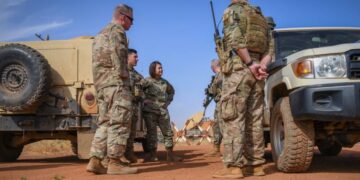










































































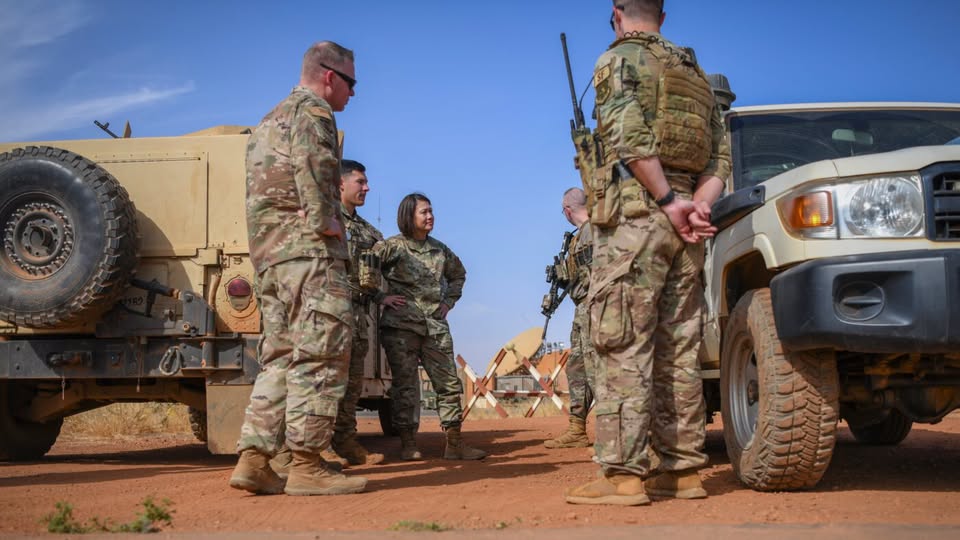
The United States has significantly reduced the number of military personnel deployed to Nigeria following a joint counterterrorism operation against Islamic State-linked militants earlier this year, while maintaining intelligence cooperation with Nigerian security forces.
The disclosure was made by the Commander of the United States Africa Command (AFRICOM), General Dagvin Anderson, during a briefing with journalists after the African Chiefs of Defence Conference held in Luanda, Angola.
According to Anderson, the temporary deployment was tied to a specific counterterrorism mission carried out alongside Nigerian forces in the Lake Chad Basin region. With the operation completed, most of the US personnel involved have returned, while intelligence-sharing arrangements requested by Nigeria remain in place.
He said the partnership reflects Washington’s current approach to security cooperation in Africa, where local forces take the lead in combat operations while the United States provides specialized capabilities such as intelligence, surveillance and operational support.
The joint operation, conducted in May, targeted senior Islamic State operatives in northeastern Nigeria. US officials said it resulted in the death of Abu-Bilal al-Minuki, identified as one of the group’s senior global commanders.
General Anderson described the mission as an example of effective collaboration between US and African security forces, noting that the operation disrupted militant leadership structures beyond West Africa because of the Islamic State’s international network.
He added that Nigerian forces have continued offensive operations against extremist groups since the mission, using intelligence support to sustain pressure on insurgent cells operating in the North-East.
According to the AFRICOM commander, the continued military campaign has contributed to additional defections and surrenders by suspected militants in the region.
The remarks were made on the sidelines of the three-day African Chiefs of Defence Conference, which brought together senior military officials from 35 African countries, alongside representatives from the United States and Brazil, to discuss regional security cooperation and emerging defence challenges.