
































































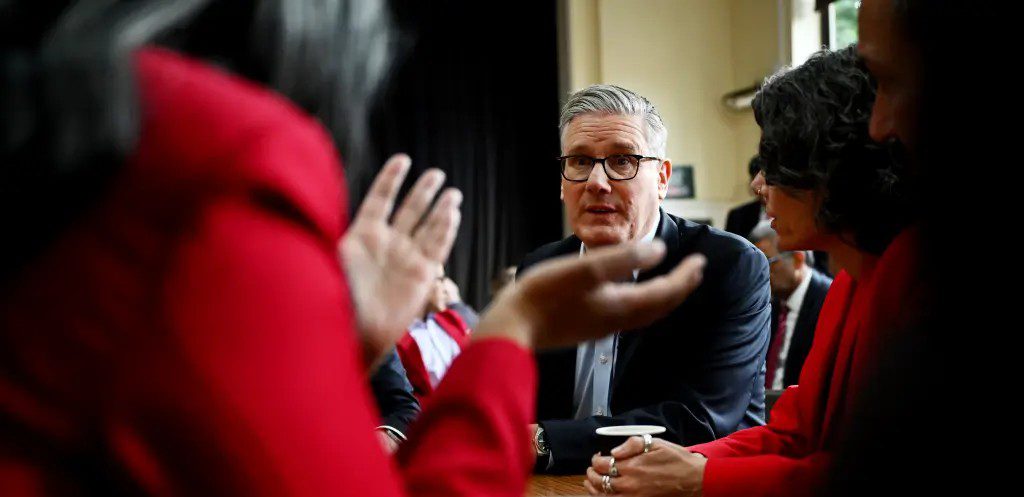
United Kingdom Prime Minister Keir Starmer has told his cabinet he will not resign despite growing political pressure and renewed criticism over his government’s handling of economic and foreign policy challenges.
The British leader moved to shut down speculation about his future during a cabinet meeting at 10 Downing Street, where ministers reportedly rallied behind him and urged the government to remain focused on governing amid mounting political uncertainty.
Speaking to journalists after the meeting, senior cabinet minister Pat McFadden said no minister challenged Starmer’s leadership during discussions.
“They didn’t,” McFadden said when asked whether anyone had suggested the prime minister should step aside.
He added that the government’s priority remained continuing its work despite the political pressure surrounding Downing Street.
“The government should carry on,” he told reporters outside No 10.
Starmer’s remarks come at a difficult period for his administration as the UK grapples with rising economic strain linked to the ongoing Middle East crisis, increasing fuel prices, and political divisions over Britain’s foreign policy alignment with the United States.
His government has also faced criticism from sections of the Labour Party over domestic spending pressures, immigration concerns, and Britain’s position on international conflicts involving Iran and Israel.
Political analysts say the speculation surrounding Starmer reflects growing unease within British politics over the country’s economic outlook ahead of future elections, particularly as inflationary pressures continue affecting households across the UK.
For African countries with strong economic and diplomatic ties to Britain, developments in London are being closely watched due to their potential impact on trade, migration policy, investment flows, and aid commitments.
The United Kingdom remains one of Africa’s key trading and development partners, with several African economies maintaining deep financial and institutional links to London.
Observers say any prolonged political instability in Britain could influence foreign investment decisions and reshape the UK’s international priorities, particularly in Africa and the Commonwealth.
Despite the pressure, Starmer has sought to project stability and continuity, signaling that his administration intends to push ahead with its agenda rather than bow to calls for leadership changes.
The Labour government has not officially commented on reports of internal dissatisfaction beyond McFadden’s remarks, but senior party figures have increasingly emphasized unity as opposition parties intensify criticism of the administration.
Starmer took office promising economic recovery, institutional reform, and renewed international engagement for Britain. However, his government now faces a series of overlapping domestic and geopolitical challenges that continue to test public confidence and political cohesion.