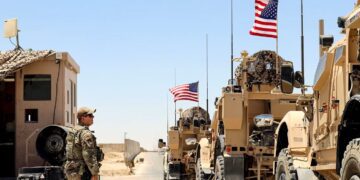























































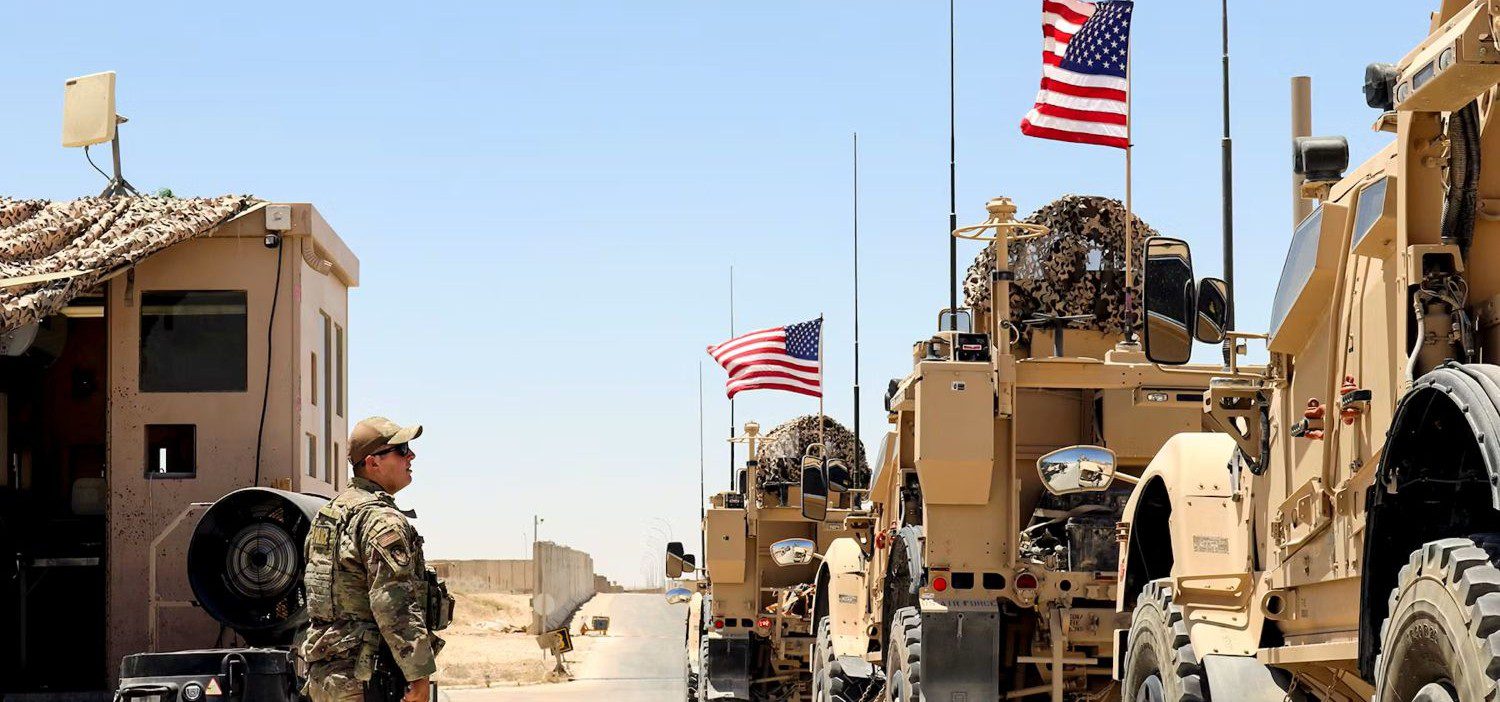
U.S forces are set to leave their remaining military bases in Iraq by Wednesday, ending more than two decades of American military presence in a country where about 4,500 US service members died during successive wars and counterinsurgency campaigns.
The withdrawal, agreed in 2024 under former President Joe Biden and carried out by President Donald Trump’s administration, comes as Washington is engaged in a wider war with Iran. Iraqi security analysts and officials warn that the departure could strengthen Iran-aligned armed groups while creating security gaps that Islamic State militants could exploit.
The final US withdrawal marks a major shift in Iraq’s security landscape, where Baghdad has maintained close relations with both Washington and Tehran.
Iran-Aligned Groups Celebrate Departure
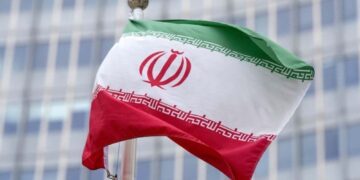
Iran and its allied armed factions have portrayed the US departure as a major victory.
Jasim al-Bahadli, an Iraqi security analyst who studies Iran-aligned Shi’ite armed groups, said the withdrawal removes a US military presence that had served as a counterweight to Tehran’s influence.
He said pro-Iranian militias could use the departure to strengthen their influence over Iraq’s security and political institutions.
Abu Mojtaba al-Yasiri, a commander with the Islamic Resistance in Iraq, an umbrella group of Iran-backed factions, described the withdrawal as a “historic victory” and a defeat for the US presence.
Iranian officials have also welcomed the move. Amir Hayat Moqaddam, deputy chairman of Iran’s parliamentary National Security Commission, said lasting security would prevail in Iraq once US forces leave the country and the wider region.
Washington has accused Iran-backed militias in Iraq of contributing to the wider Middle East conflict by launching attacks against neighbouring countries. The Iraqi government has said it is working to contain the influence of the armed groups.
Iraq Faces Questions Over Security Readiness
Although the departure of foreign troops has broad support among Iraqis, some officials and community leaders fear the country is not yet fully prepared to assume responsibility for all security operations.
Abdulrahman al-Zobaie, a Sunni tribal leader from Fallujah, said Iraqis wanted full sovereignty but warned that the withdrawal could create a security vacuum.
“We believe Iraq is still not fully ready to take over the security file at this time,” he said.
The United States invaded Iraq in 2003 to remove Saddam Hussein, then occupied the country and supported the creation of a new political system dominated by Shi’ite parties.
American troops withdrew in 2011 but returned less than three years later as part of an international coalition supporting Iraqi forces against Islamic State.
The militant group seized large parts of Iraq and Syria in 2014 before losing its territorial strongholds by 2017.
Two Decades of U.S.-Iran Rivalry in Iraq
Iraq has remained one of the few countries with close political and military ties to both Washington and Tehran, making it a frequent arena for US-Iranian confrontation.
In 2020, a US strike near Baghdad airport killed Iranian Revolutionary Guards commander Qasem Soleimani and Abu Mahdi al-Muhandis, a senior Iraqi militia commander. Iran-aligned groups subsequently carried out repeated attacks on US positions, sometimes prompting American retaliation.
The latest conflict with Iran has again brought Iraq into the confrontation. Seven of the 18 US service members listed as killed during this year’s war were in Iraq, according to the figures cited by Reuters.
The last US service member killed in Iraq was an Army sergeant who died in July during the controlled detonation of a drone at a base near Erbil.
Islamic State Threat Raises Concern
Iraqi security officials and commanders in the semi-autonomous Kurdistan region also fear the withdrawal could provide an opportunity for Islamic State to rebuild.
Although the group lost its self-declared caliphate nearly a decade ago, it retains sleeper cells capable of carrying out attacks.
Kurdish commander Sirwan Barzani said the loss of US intelligence, logistical support and drone capabilities could make it easier for the militants to regroup.
He said Kurdish forces had observed increased movement by Islamic State sleeper cells after the planned coalition withdrawal became public.
Iraqi security forces have also reported an alleged plot by an Islamic State cell to carry out suicide attacks around the time of the US departure.
Colonel Khalid al-Bayati, a senior security official in the oil-producing city of Kirkuk, said the group was seeking to demonstrate that it remained capable of carrying out major attacks.
A New Security Balance
The US departure closes a major chapter in Iraq’s post-2003 history while leaving Baghdad to manage a more complex security environment.
The withdrawal reduces America’s direct military footprint but could increase the influence of Iran-aligned factions that have long opposed the US presence. At the same time, Iraqi officials face the challenge of preventing Islamic State from exploiting any gaps created by the transition.
For Iraq, the end of the US military presence therefore represents both the assertion of greater national control over security and a test of whether its forces can manage the threats that remain without the intelligence, logistics and air capabilities previously provided by the US-led coalition.