


























































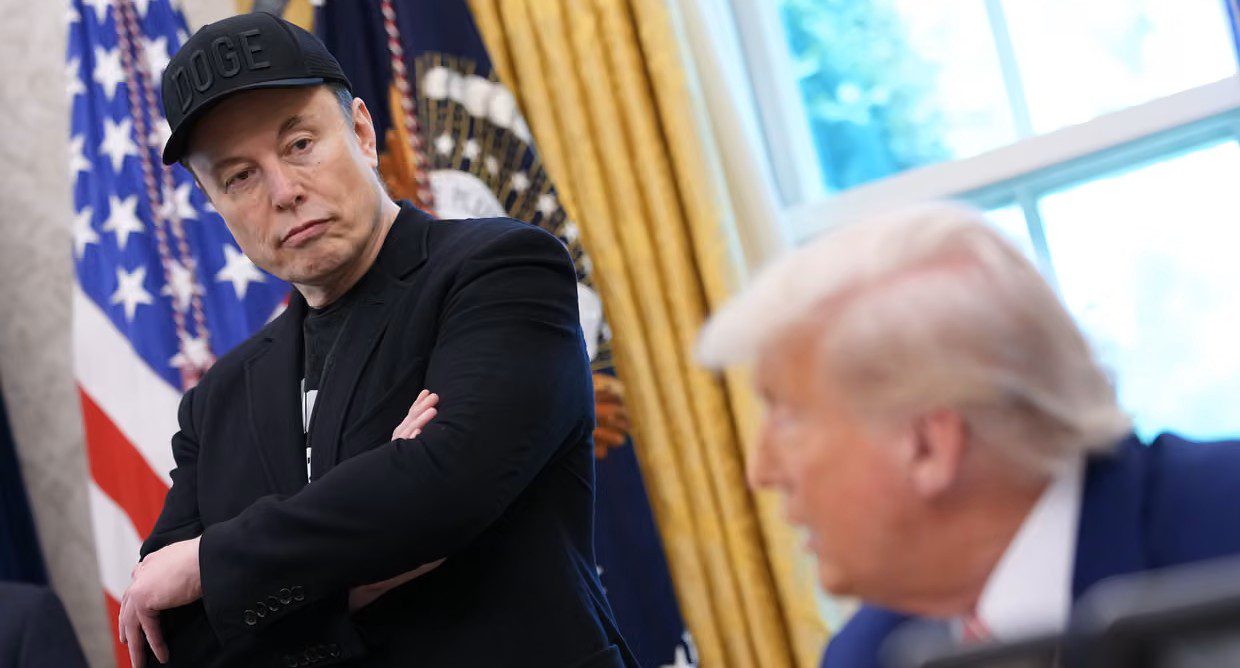
Tech billionaire Elon Musk has acknowledged that his deep involvement in American politics became a distraction, admitting he devoted too much time to political battles instead of concentrating on his companies.
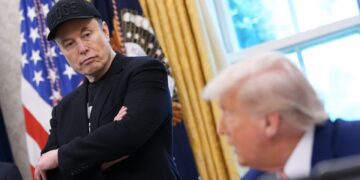
Speaking in a wide-ranging interview with The Economist, the Tesla and SpaceX chief reflected on his close relationship with U.S. President Donald Trump, his controversial role in the administration and his predictions about artificial intelligence, the future of work and global politics.
“I got carried away, frankly,” Musk said, referring to his decision to immerse himself in politics.
The world’s richest man played a major role in Trump’s successful 2024 presidential campaign, reportedly contributing about $200 million before later heading the administration’s Department of Government Efficiency (DOGE), an agency created to slash government spending and reduce the size of the federal workforce.
The agency oversaw sweeping spending cuts and thousands of job losses across government departments, drawing sharp criticism from labour groups and political opponents.
Looking back, Musk suggested he would have preferred to spend that period building his businesses instead.
“I think instead of doing DOGE, I would have basically worked on my companies,” he said.
Although Musk admitted politics consumed much of his attention, he also appeared to believe his influence on public debate was significant.
He argued that many of the positions he has championed would eventually prove correct, saying people often underestimate the long-term impact of his ideas.
The interview marked his first major public conversation since SpaceX’s blockbuster stock market listing, an event that briefly pushed his personal fortune above $1 trillion before market movements reduced it substantially.
Musk devoted much of the interview to artificial intelligence, predicting it would transform society more dramatically than any previous technological revolution.
According to him, AI systems will eventually outperform human intelligence and handle most intellectual and physical tasks currently performed by people.
He predicted that within five years, AI could exceed the combined intelligence of humanity, while robots could dominate workplaces within a decade.
Musk believes the combination of his AI company and SpaceX will accelerate that future by developing advanced computing systems capable of performing complex cognitive tasks while Tesla manufactures humanoid robots for physical work.
He also disclosed plans to power future AI systems using space-based data centres, a proposal that has already attracted criticism from some experts over its potential environmental implications.
Musk warned that artificial intelligence could eventually make traditional employment optional.
As machines become capable of performing nearly every type of work, he said governments may need to rethink how citizens earn a living.
He floated the idea of a “universal high income,” where governments provide direct financial support to citizens because automation would generate an abundance of goods and services.
According to Musk, the biggest economic challenge in such a future may not be inflation but falling prices caused by overwhelming production.
Beyond technology, Musk also spoke extensively about international affairs.
He argued that immigration and security issues are reshaping politics across Europe and claimed many political movements often labelled as far-right are being misunderstood.
Musk dismissed accusations that his views are discriminatory, insisting his positions are driven by concerns about public safety, law enforcement and national borders rather than hostility towards any religious or ethnic group.
He also reiterated his belief that the war in Ukraine will ultimately require territorial concessions to Russia as part of any lasting peace agreement, despite his Starlink satellite network playing an important role in supporting Ukraine’s communications during the conflict.
The billionaire ended the interview by returning to one of his favourite topics: space exploration.
He maintained his long-held ambition of sending humans to Mars within the next few years and suggested humanity’s long-term survival depends on becoming a multi-planet species.
Musk also revived one of his more unconventional theories, saying it remains possible that the universe itself could be an advanced computer simulation created by a more technologically advanced civilization.
Despite the controversies surrounding his political activities, Musk insisted he remains focused on building technologies that could fundamentally reshape the future of humanity.