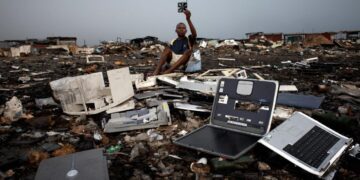










































































Faulty electrical appliances returned to major British retailers, including Tesco, Argos and Asda, have been traced to a major electronic waste site in Accra, Ghana, raising concerns about illegal waste exports and the environmental risks facing local communities.
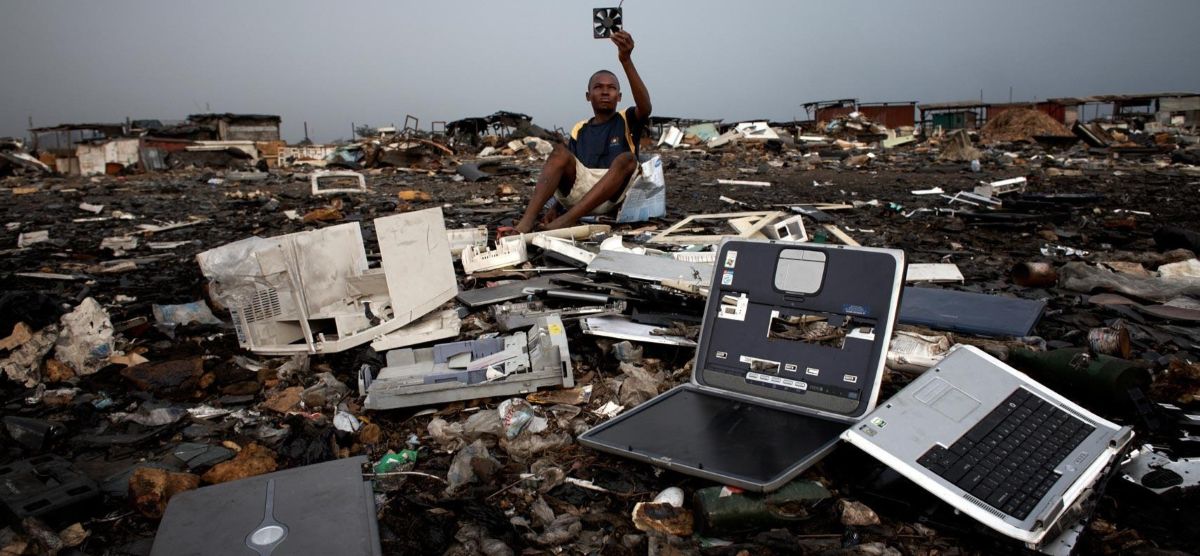
A joint investigation by Unearthed and Greenpeace Africa found discarded household products, including toasters, kettles and slow cookers, at Agbogbloshie, one of the world’s largest electronic waste sites.
The investigation alleged that mountains of unwanted appliances are dismantled and burned at the site, often by workers without basic protective equipment such as gloves and face masks.
The findings have raised questions about how faulty goods returned to British shops are handled and whether retailers’ waste management arrangements are preventing unwanted products from being shipped abroad.
Under UK waste export regulations, sending broken electrical appliances to African countries is illegal in almost all circumstances.
Among the products identified at Agbogbloshie were Tesco-branded slow cookers and toasters, as well as Crockpot appliances, including at least one carrying a Tesco returns label.
Tesco said it was concerned by the findings and had immediately suspended its third-party electronic waste management providers while conducting a comprehensive audit of their operations and practices.
The retailer said it was committed to reducing waste across its business and working with specialists to ensure materials were managed responsibly and in accordance with legal requirements and its internal standards.
Argos products were also discovered at the site. They included Cookworks-branded kitchen appliances such as slow cookers, toasters and food slicers.
The retailer said it had opened an investigation to establish how the returned goods reached Ghana. It added that it had procedures for handling returned products and was reviewing the evidence to determine whether further action was necessary.
Faulty returns enter second-hand export trade
The investigation also identified dozens of other British electrical products carrying retailers’ returns labels in second-hand shops around the dump. Many were marked as faulty or untested.
Some shop owners told investigators that they obtained the goods through brokers in the United Kingdom, who supplied mixed shipments of second-hand household electrical equipment.
One trader said the proportion of unusable appliances varied between shipments but could reach about 10 per cent. Broken items were reportedly placed in a collection box for local waste workers to take away.
The route taken by the products appears to involve a separate market for returned consumer goods, known as the liquidation trade.
When customers return recently purchased products, including faulty appliances, retailers may place them in this market alongside other unwanted stock rather than immediately classifying them as waste.
E-waste specialist Mark Sayers said a product returned as faulty by a customer was not necessarily recorded by the retailer as waste, creating a distinction that could affect how it was handled.
Many of the appliances found in Ghana carried labels describing them as untested returns.
According to the investigation, retailers sometimes sell returned goods in bulk at significantly reduced prices through liquidation channels. These sales can include entire pallets of small household electrical appliances.
The buyers, commonly known as jobbers, purchase the goods in large quantities and attempt to recover their value by reselling individual products online, supplying discount shops or exporting them to other countries.
Jim Puckett, founder of the Basel Action Network, which campaigns against international toxic waste shipments, warned that treating untested returned appliances as ordinary merchandise created a significant gap in waste controls.
He argued that such products should be regarded as waste unless their functionality and suitability for reuse could be established.
UK rules prohibit exports of faulty electrical waste
British retailers that sell electrical appliances are required to operate take-back arrangements under the country’s waste electrical and electronic equipment (WEEE) regulations.
The schemes allow consumers to return unwanted electrical goods for recycling, including bringing an old appliance to a retailer when purchasing a replacement.
Returned products should be recorded as electronic waste and transferred to approved treatment facilities. The system also helps retailers meet government-mandated recycling targets.
Exports are permitted only where companies can demonstrate that the appliances will be handled appropriately in facilities capable of providing high-quality treatment or recovery.
However, the Environment Agency says no facilities in West Africa are approved to receive British WEEE.
Ghanaian environmental consultant Joshua Awuku-Apaw warned that exporting broken appliances under the description of second-hand goods or products intended for reuse transferred the environmental and health consequences of excessive consumption from Britain to Ghanaian communities.
He said local workers and residents should not be forced to bear the costs of handling faulty products discarded by foreign retailers.
An Environment Agency spokesperson said illegal waste exports were serious offences and stressed that waste leaving England must be sent for legitimate recovery or recycling rather than dumped or sent to landfill overseas.
The agency said new controls require exports of waste electrical and electronic equipment to be notified and approved before shipment. It added that intelligence was being used to identify suspicious consignments earlier and disrupt illegal export operations.
Companies and individuals found breaking the rules could have shipments intercepted and face prosecution and financial penalties.
Environmental groups demand accountability
Greenpeace UK chief scientist Dr Doug Parr criticised the discovery, saying customers would be alarmed to learn that appliances returned to retailers had ended up at a major waste site rather than being repaired or properly recycled.
He warned that the practice exposed communities to toxic pollution and amounted to the export of Britain’s waste problem rather than a genuine effort to promote reuse and recycling.
Asda referred questions to the British Retail Consortium (BRC), which said reports of faulty electrical goods being dumped in Ghana were deeply troubling.
The industry body said used appliances should only be exported for legitimate reuse if they were safe and fully functional. It also argued that overseas communities should not be left to manage waste generated in Britain.
The BRC called for greater investment in the UK’s domestic recycling infrastructure to improve the safe reuse and processing of electrical products.
The findings have renewed scrutiny of the international trade in returned consumer goods, particularly the distinction between functional second-hand appliances and products that should legally be treated as waste.