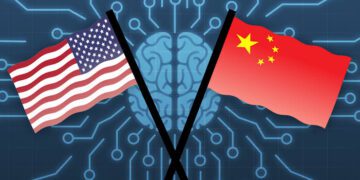









































































The United States is preparing to restrict Chinese telecommunications companies from directly accessing US phone numbers, citing national security concerns and the need to curb scam-related automated calls.
The Federal Communications Commission (FCC) announced on Thursday that it would vote on November 19 on a proposal targeting China Mobile, China Telecom, China Unicom and other internet-based communication service providers.
The proposed restriction would affect companies offering Voice over Internet Protocol (VoIP), a technology that converts voice calls into digital data and transmits them over broadband networks. Direct access to US phone numbers allows such providers to operate at lower costs and offer additional services.
FCC Chairman Brendan Carr said the proposed measure would strengthen the country’s defences against illegal robocalls and other malicious activities.
China has strongly opposed the planned restrictions. Foreign Ministry spokesperson Guo Jiakun accused Washington of using national security as a justification to suppress Chinese businesses and interfering excessively in their operations.
He said Beijing would take necessary steps to protect its legitimate rights and interests.
FCC considers wider restrictions on Chinese technology
The proposed phone-number ban is part of a broader effort by US regulators to limit the involvement of Chinese companies in American telecommunications infrastructure.
The FCC said it was also considering restrictions on internet-based service providers that use equipment manufactured by companies already listed as national security risks, including Huawei and ZTE.
The agency further announced plans to prohibit Chinese laboratories from testing US electronics by December 2028. It is also considering withdrawing direct phone-number access authorizations from other Chinese companies deemed security threats.
Additional measures under consideration could prevent Chinese telecommunications firms from connecting to US networks or operating data centres within the country.
The FCC has previously barred China Mobile, China Telecom and China Unicom from providing international telecommunications services to the United States.
Concerns over Chinese cyber activities
Washington’s concerns about Chinese access to American telecommunications systems have intensified in recent years, particularly following allegations of cyber espionage targeting US networks.
In late 2024, US authorities accused a Chinese state-sponsored hacking group known as Salt Typhoon of stealing customers’ call records and accessing sensitive communications data. The group was also accused of infiltrating telecommunications companies and critical infrastructure.
The Federal Bureau of Investigation said this year that the threat posed by Salt Typhoon remained active.
In July, the FCC added California-based Digitalsystem Technology to its list of companies considered threats to US national security, citing its links to Chinese telecommunications businesses and ownership by a Chinese national.
China has consistently denied wrongdoing in relation to allegations of cyber espionage.
The latest proposal signals Washington’s continued push to reduce Chinese involvement in its communications infrastructure, while Beijing maintains that the restrictions unfairly target its companies.