



















































































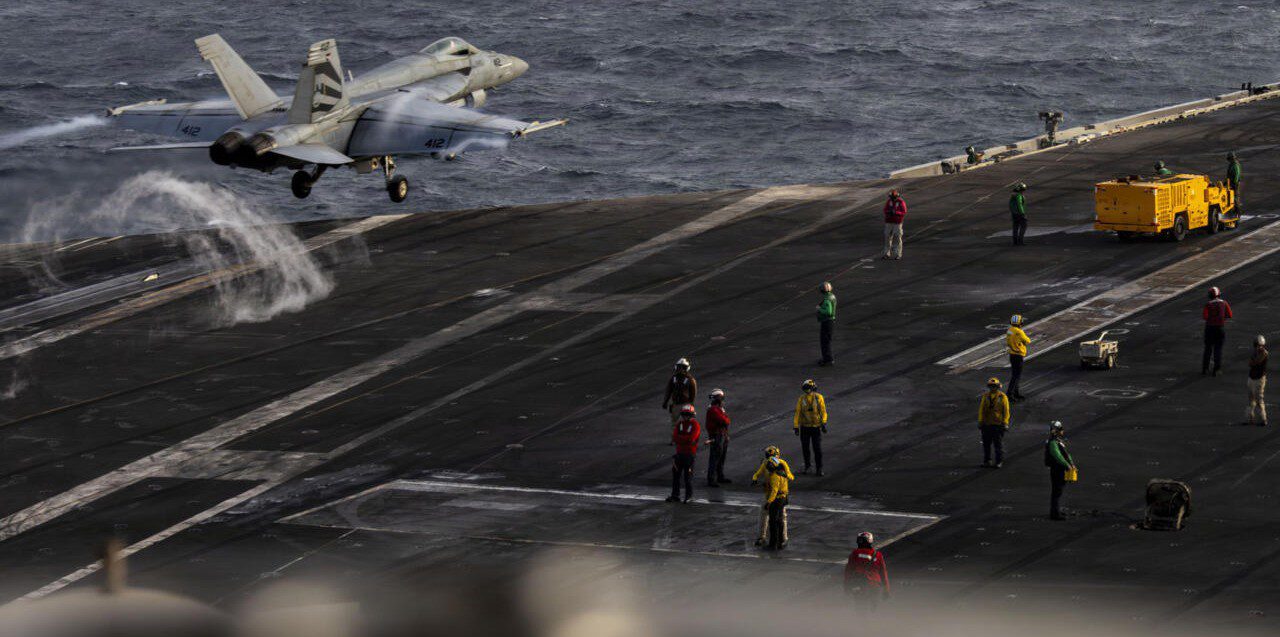
Concern is growing over the well-being of about 5,000 sailors aboard the USS Abraham Lincoln after the US aircraft carrier spent nearly nine months at sea without a major port visit while supporting military operations in the Middle East.
The San Diego-based carrier left the United States on November 21, 2025, originally for a deployment to the Pacific. It was later diverted to the Middle East following the outbreak of the US-Israel conflict with Iran.
By August 2026, the ship had spent more than 250 consecutive days at sea, with its deployment repeatedly extended.
Reports from US military-focused publications have described shortages of some supplies and water, plumbing problems, declining morale and concerns about the mental health of crew members. The reports also said several sailors had attempted to go overboard, prompting some US lawmakers to demand explanations from the Pentagon.
The US Navy has disputed aspects of the reports, saying it has not identified an increase in reported suicidal thoughts or suicide attempts among Lincoln sailors.
A Navy spokesperson said extended deployments could place considerable pressure on service members and their families, but insisted that the welfare of the crew remained a priority.
The Navy also said the ship had continued access to clean water, functioning air-conditioning and healthy meals, while medical, religious and mental-health personnel remained available to support sailors.
US Defence Secretary Pete Hegseth similarly rejected reports portraying conditions aboard the carrier as severely deteriorated, saying the situation had been “completely misrepresented”.
However, former senior Navy officers and military health specialists say the length of the deployment itself presents significant challenges.
Why the long deployment is raising concerns
Aircraft carriers are effectively floating communities, housing thousands of people in confined spaces while operating complex military equipment around the clock.
Retired US Navy Captain Armen Kurdian, who served aboard the Abraham Lincoln in 2005, described the vessel as a “giant floating city” accommodating roughly 5,000 people.
He said maintaining such a ship involved providing around 15,000 meals every day, alongside medical services, communications, recreation and other facilities.
Kurdian said equipment failures and maintenance problems were not unusual on a carrier, particularly during intensive operations. Toilets, plumbing and other facilities can break down, while the constant operation of aircraft can place additional stress on the ship.
What concerns him more about the Lincoln’s current deployment is the prolonged absence of a significant break on land.
“That will take a toll on people when you don’t get to stand on dry land for a while,” he said.
Retired Vice Admiral Robert Murrett said a conventional aircraft-carrier deployment typically lasts about six months and includes port visits, giving sailors opportunities to leave the ship, rest and reconnect with life outside the military environment.
The Lincoln’s current deployment has gone far beyond that period.
“They’ve been under way for that very, very long period of time, approaching nine months,” Murrett said, noting that much of the deployment has also taken place under combat conditions.
He described life aboard a carrier as physically and psychologically demanding because of the confined environment, operational pressure and inherent dangers involved.
The uncertainty can be as difficult as the deployment
Military health experts say the problem is not simply how long sailors have been away from home, but the uncertainty surrounding when they will return.
Nancy Lacore, a retired three-star Navy rear admiral, said sailors often cope with deployment by working towards a known end date.
But when that date repeatedly changes, she said, the psychological burden can become much heavier.
She recalled her own experience when a planned return home was disrupted by developments in the Gulf.
The experience of believing a deployment is nearly over, only to discover that the mission has been extended, can be particularly difficult for service members and their families.
Terri Tanielian, a behavioural scientist who has studied the effects of military deployments, said predictable timelines allow troops and their families to prepare mentally and practically.
Repeatedly changing those expectations can increase stress and make it harder for people to cope.
She said supporting sailors should involve more than providing counselling or other mental-health services. Adequate sleep, opportunities to exercise, time to reset and maintaining general physical wellbeing are also important.
Possible replacement being prepared
The concerns come as the US military reportedly prepares to replace the Abraham Lincoln with another aircraft carrier, the USS George Washington.
The move would provide the Lincoln’s crew with an opportunity to return home or otherwise receive relief after months of continuous operations.
The situation also comes after another US carrier, the USS Gerald R. Ford, completed a 326-day deployment earlier this year, the longest US aircraft-carrier deployment since the Vietnam War era.
That deployment also generated reports of onboard problems, including a fire and complaints about food shortages.
For the Lincoln’s sailors, however, the immediate concern is the cumulative effect of months at sea, combat operations and repeated extensions.
While US officials continue to describe the crew as resilient, veterans and mental-health experts caution that resilience has limits.
Their argument is straightforward: keeping sailors safe during a prolonged military operation means looking after not only the ship’s equipment and combat readiness, but also the people expected to keep it running.