












































































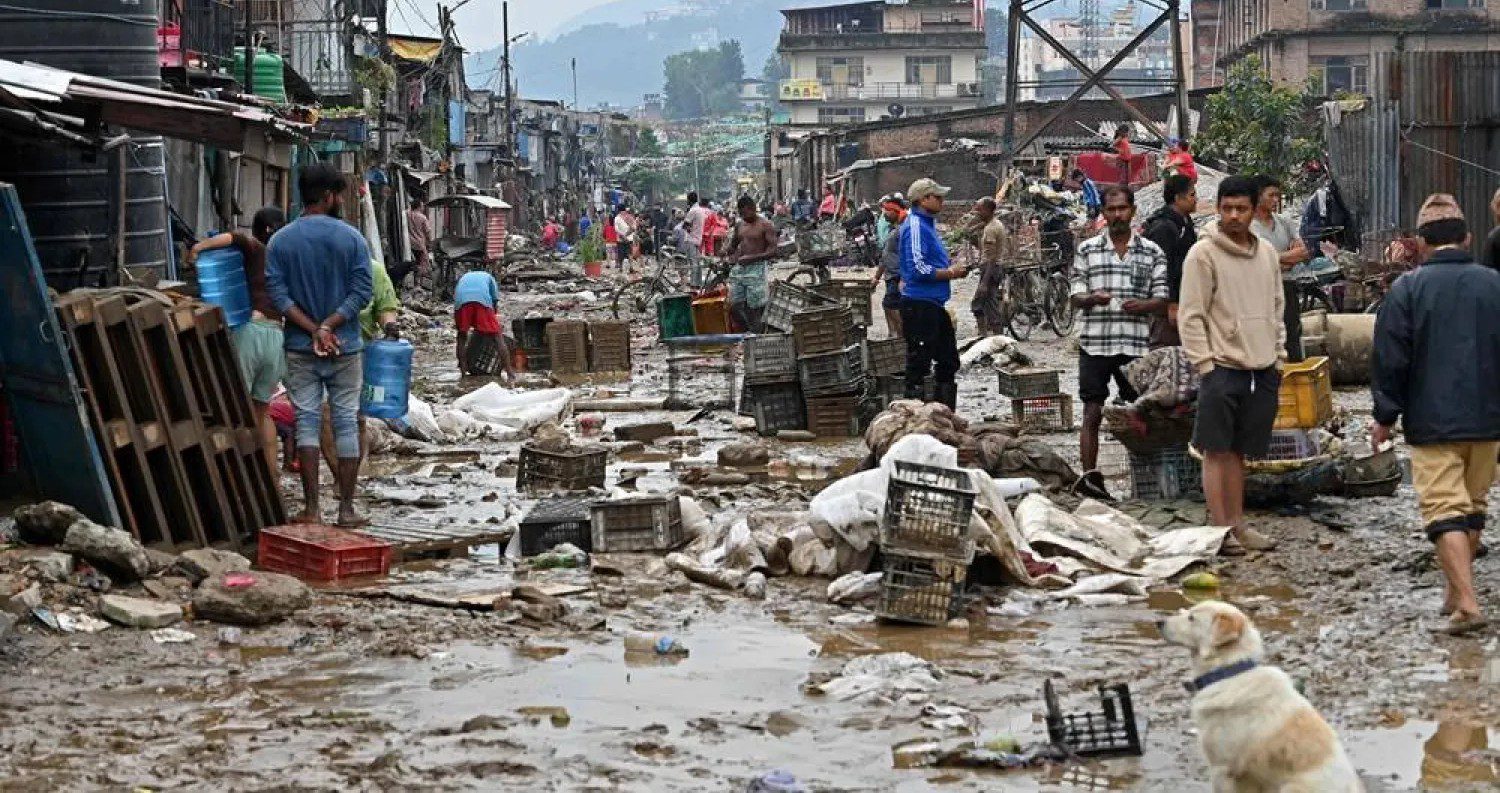
The catastrophic flooding along the Nepal-Tibet border has renewed concerns among scientists that rising temperatures could be making high-altitude regions increasingly unstable.
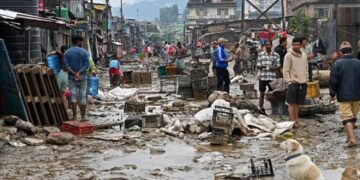
A glacier collapse in the Himalayas is believed to have triggered the powerful surge of mud, rocks, ice and water that swept through communities along the Bhotekoshi River, destroying roads, buildings and bridges.
Authorities have reported hundreds of deaths, while more than 1,000 people remain missing as rescue teams continue searching the affected areas.
Scientists examine what triggered the collapse
An earthquake was initially suspected to have caused the disaster after seismic activity was detected in the area.
However, analysis by the US Geological Survey indicated that the seismic energy was more likely generated by the collapse of a mass of ice and rock, followed by a debris flow.
The avalanche struck the slopes of Langtang Lirung, a mountain rising to about 7,000 metres, sending huge amounts of debris into the Lhende Khola River, which feeds into the Bhotekoshi.
According to the International Centre for Integrated Mountain Development, water levels downstream rose by as much as seven to nine metres within about 30 minutes.
Scientists are still studying the exact chain of events, but experts say unusually high temperatures could have played a role in weakening ice and rock around the glacier.
How rising temperatures can weaken mountains
Glaciers and permafrost help hold together parts of the high mountain landscape. As temperatures rise, ice can melt inside cracks in rocks and mountain slopes, potentially weakening the structures that have remained stable for years.
Dr Hamish Pritchard, a glaciologist with the British Antarctic Survey, said sensors near the site recorded unusually high ground temperatures shortly before the collapse.
He suggested that the heat could have weakened the snowpack, allowed water to enter cracks and thawed the frozen material binding ice and rock together.
Other researchers have described high mountain terrain as fractured rock effectively held together by ice. As that ice and permafrost disappear, slopes can become more vulnerable to sudden collapse.
The monsoon season may also have contributed to the disaster by saturating the ground and increasing river levels.
A wider warning for mountain communities
The Nepal disaster is drawing attention to a broader climate risk.
The Intergovernmental Panel on Climate Change has previously warned that continued warming will increase hazards in regions containing glaciers, snow and permafrost, including the risks of floods and landslides.
Mountain regions can experience even faster warming than the global average. As snow and ice disappear, darker exposed surfaces absorb more heat, potentially accelerating local warming and further ice loss.
The consequences extend well beyond individual mountain valleys.
Across Asia, hundreds of millions of people rely on rivers fed by Himalayan glaciers, including major waterways such as the Ganges and Brahmaputra. Changes in the mountain environment can therefore affect water supplies, agriculture and communities far downstream.
Nepal has already experienced similar disasters
The latest tragedy is not an isolated event.
The Bhotekoshi River experienced another major flood in 2025, while the Langtang area has also suffered devastating avalanches in the past.
Research has found that glacier loss in the Langtang catchment has accelerated significantly over recent decades, adding to concerns about the stability of the region.
Scientists say similar risks exist in other mountain systems where glaciers and permafrost are retreating, including the Alps, Andes, Caucasus and other high-altitude regions.
Calls for better early warning systems
As rescue operations continue in Nepal, climate and mountain researchers are also calling for stronger disaster preparedness.
Growing glacial lakes, unstable slopes and retreating ice could create new hazards for communities living in mountain valleys.
Experts say improved monitoring, early-warning systems, emergency planning and better communication with vulnerable communities will become increasingly important.
The Nepal disaster has therefore become more than a rescue operation. It is also a reminder that changes taking place high in the mountains can have devastating consequences for people living both nearby and many kilometres downstream.