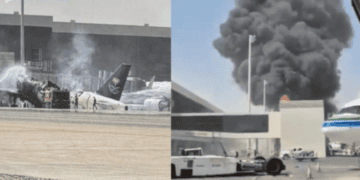












































































Yemen’s Houthi movement has renewed threats against Saudi Arabia’s airports and airspace, warning airlines and travellers to stay away following a deadly attack in the kingdom on Saturday.
The warning, issued on Sunday, was the group’s first public statement since the assault.
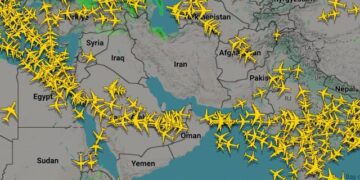
Houthi military spokesman Yahya Saree said the holy cities of Mecca and Medina were excluded from the threat, but warned that other Saudi airports and airspace could be targeted.
“Saudi airports and airspace are exposed to targeting and constitute a theatre of operations for our forces,” Saree said, urging the public to take the warning seriously.
He also held Saudi Arabia responsible for any failure to intercept incoming attacks.
The spokesman said the Houthis would continue their campaign under the principle of “airport for airport, siege for siege, and escalation for escalation” until the group achieved its objectives.
Saudi Arabia seeks additional air defenses
The latest warning comes as the Houthis have repeatedly targeted the main airport in Riyadh, Saudi Arabia’s capital, while Saudi forces have intensified strikes on Houthi-controlled areas of Yemen.
The Gulf kingdom has reportedly asked the United States and other Western allies to supply additional missile interceptors as the conflict widens.
The Houthi-run health ministry says Saudi-led attacks have killed 91 people and injured 168 others in Yemen over the past five weeks. It claims women and children account for 60 per cent of those killed. The figures have not been independently verified.
Meanwhile, the Saudi-led coalition supporting Yemen’s internationally recognized government launched a major counter-offensive this week in an attempt to reverse the Houthis’ territorial gains.
The rebels have rapidly expanded their control since September, adding to concerns over the security of key regional shipping routes.
Red Sea shipping route faces growing risks
The Houthis have seized islands in the Bab al-Mandab Strait and established positions along the Red Sea, increasing pressure on a vital maritime corridor linking the Red Sea to the Gulf of Aden.
The passage is strategically important to Saudi Arabia, one of the world’s leading oil exporters, which has been diverting some oil shipments through alternative routes while the Strait of Hormuz remains closed.
The latest threats against Saudi airports add another dimension to the growing regional crisis, as attacks on transport infrastructure and pressure on major shipping lanes threaten to widen the conflict beyond Yemen.