





























































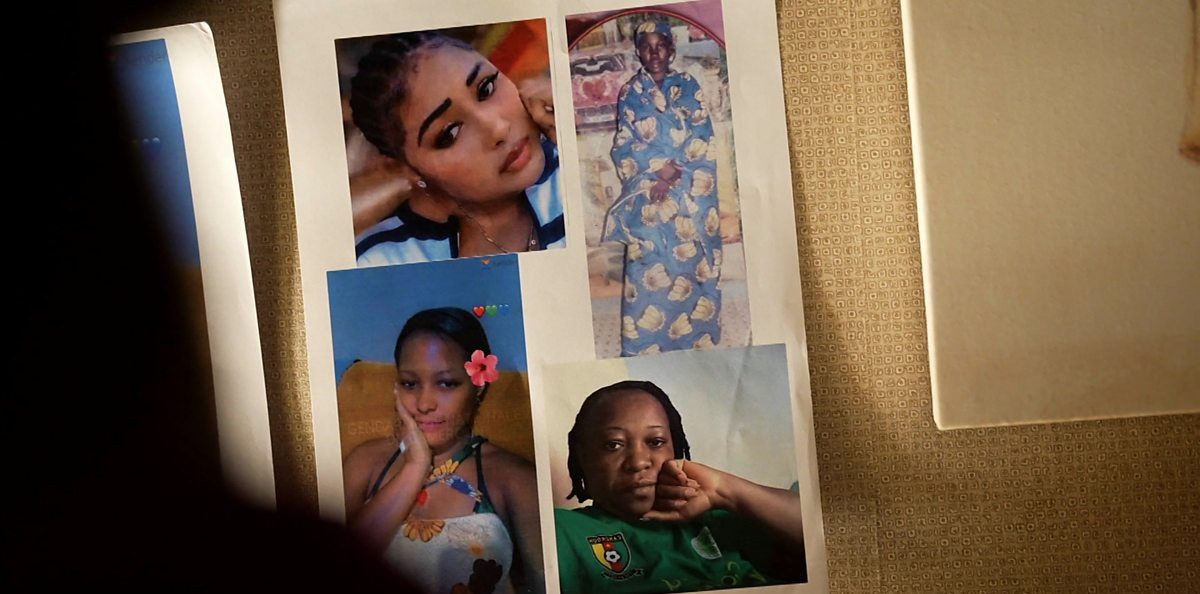
Cameroon is confronting a worsening femicide crisis, with government figures indicating that about 250 women were killed in gender-related violence between 2023 and the first four months of 2026, while rights groups warn that the true toll is likely considerably higher.
The Ministry of Women’s Empowerment and the Family, known as MINPROFF, recorded 56 femicide cases in 2023, 67 in 2024 and approximately 77 in 2025. Another 50 cases were recorded between January and April 2026 alone, according to figures presented by Minister Marie-Thérèse Abena Ondoa to the National Assembly in June.
The minister warned lawmakers that the official figures represented only the “tip of the iceberg”, citing fear of reprisals, family pressure and social stigma as major reasons victims and their families fail to report cases.
The latest figures have intensified concerns among human rights organizations that Cameroon is failing to protect women from lethal domestic and gender-based violence.
Human Rights Watch said in August that several women had been killed between August 6 and 26, including women allegedly murdered by current or former partners, with some of the killings occurring in the presence of their children. The organization said the cases illustrated the limited protection available to women facing domestic abuse and the difficulties survivors encounter in accessing justice.
Killings rise as reporting remains weak
The government figures show a steady increase in recorded femicides over the past three years.
In 2023, authorities recorded 56 cases. The number rose to 67 in 2024 and about 77 in 2025. By the end of April 2026, another 50 cases had already been documented.
That means the country had recorded almost two-thirds of the previous year’s total within just four months of 2026.
The figures are particularly concerning because they do not capture the full scale of the problem.
MINPROFF has acknowledged that many cases go unreported because victims and families fear social consequences, pressure from relatives and the stigma attached to gender-based violence.
Human Rights Watch similarly warned that government statistics are likely to significantly underestimate the scale of the crisis.
In its June 2026 report, the organization cited government data showing that 77 women were killed by current or former partners in 2024. It said the actual number was likely higher because of widespread under-reporting and difficulties collecting information from rural and displaced communities.
Eight women killed within days
The latest wave was reported across several parts of Cameroon, including Yaoundé, Douala, Belabo and Tibati.
Cameroon Radio Television reported at least eight cases involving women who were killed in violent or suspicious circumstances over roughly eight days in August. Some of the cases involved current or former intimate partners, while others were still under investigation.
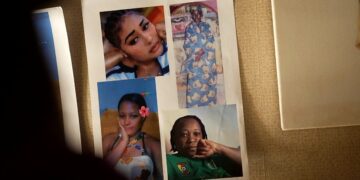
Among the cases was the killing of 19-year-old Diane Yidi Ebabi in Yaoundé. She was reportedly strangled by her boyfriend following an argument. Her body was allegedly kept in his room for two days before being buried in a pit. The suspect was later arrested and reportedly confessed to the killing.
In another case in Douala, a woman identified as Modestine was reportedly stabbed to death by her husband in their home while their children were present. In Yaoundé’s Tsinga neighbourhood, another mother of three was reportedly killed and decapitated, with her body found hidden under a bed. Her partner allegedly fled with the children before he was arrested.
A 44-year-old woman was also reportedly stabbed to death in a hotel in Yaoundé on August 25. A 22-year-old suspect was arrested in connection with the killing.
Human Rights Watch separately documented several women killed between August 6 and 26, including women allegedly murdered by current or former partners and some killings that occurred in the presence of children.
Domestic violence at the heart of crisis
Many of the killings are linked to violence within intimate relationships.
Human Rights Watch’s research found widespread physical, psychological, emotional and economic abuse against women in Cameroon. The organization interviewed 60 women in Maroua, Douala and Buea who had experienced different forms of violence.
The testimonies revealed a pattern in which abusive partners used financial control, threats, physical violence and restrictions on women’s movement and employment to maintain control over them.
Some women said their partners prevented them from working, destroyed or sold their business equipment, or deprived them of access to jointly acquired property.
For women attempting to leave abusive relationships, economic dependence can make escape particularly difficult.
Human Rights Watch said discriminatory practices involving land, housing and inheritance further weaken women’s ability to establish economic independence and seek protection from abusive partners.
Government under pressure to act
The worsening figures have put renewed pressure on the government to strengthen its response.
Cameroon adopted a National Strategy to Combat Gender-Based Violence in 2022, with an objective of halving violence against women by 2026.
But Human Rights Watch said the government had failed to meet that target and had not taken sufficient steps to establish the legal framework, services and resources required to protect survivors.
The organization said Cameroon still lacks a comprehensive domestic violence policy or national guidelines, leaving police officers, judicial officials, health workers and social service providers without a sufficiently coordinated response.
Women seeking help can also face pressure to reconcile with their abusers or encounter dismissive attitudes when reporting violence, according to the rights group.
Cameroon also does not have a standalone law specifically criminalizing gender-based violence. UN Women’s country database lists the country as having no standalone law on violence against women and girls and no specific legal provision against marital rape.
The government has indicated that legislative reform is being considered.
Minister Abena Ondoa told parliamentarians in June that her ministry was working on a bill that would create a standalone criminal offence for gender-based violence and strengthen legal protection for women.
Economic dependence leaves women vulnerable
The crisis is also closely linked to wider inequalities that limit women’s ability to leave abusive relationships.
Human Rights Watch said Cameroon’s legal and social structures continue to give men significant control over family property and household decisions.
Under the country’s legal framework, the husband is designated as head of the family and has authority over the family’s place of residence. UN Women also notes that Cameroon does not provide equal legal treatment for spouses in marriage and divorce.
Women also face significant disadvantages in land ownership.
Human Rights Watch reported that men were nine times more likely than women to be sole owners of land and homes, based on available 2018 data. Women are also heavily represented in informal employment, where incomes are generally unstable and social protections are limited.
The result is a cycle in which economic dependence can make it harder for women to escape abusive homes, seek legal assistance or establish independent lives after separation.
Conflict compounds the danger
Cameroon’s wider security crisis has further increased risks for women and girls.
The country continues to face armed conflict in the English-speaking North-West and South-West regions, while violence linked to Boko Haram persists in the Far North.
The insecurity has displaced communities, disrupted access to health and social services and made it more difficult for victims of gender-based violence to obtain protection and justice.
UNFPA has also reported that persistent insecurity in the North-West, South-West and Far North is increasing protection risks for women and girls, while limiting access to essential sexual and reproductive health and gender-based violence services.
Support services remain limited
Despite existing government programmes, the availability of specialized services remains a concern.
UN Women’s Cameroon country profile lists 39 specialized police units and 116 social services, including shelters, helplines and centres offering psychosocial support. The organization notes, however, that women empowerment and family centres operate in only 116 of the country’s 360 subdivisions.
Human Rights Watch has called for more domestic violence shelters, better staffing and improved coordination between the agencies responsible for policing, justice, healthcare and social protection.
It also urged the government to remove barriers that prevent women from obtaining protection orders and to ensure that perpetrators are arrested and prosecuted.
Women’s rights groups demand action
The latest killings have triggered renewed outrage among activists, women’s rights organizations and public figures.
Cameroonian international footballer Nchout Njoya Ajara publicly called for an end to what she described as a “tragic wave” of attacks against women, saying that silence in the face of the killings amounts to complicity.
Civil society groups have also criticised the government’s response, arguing that authorities have been too slow to translate promises into effective legal and institutional protection.
The government says a bill aimed at strengthening protection against gender-based violence is being reviewed. Minister Abena Ondoa has said the legislation is intended to provide a stronger legal framework for combating violence against women.
But activists remain uncertain about when the legislation will become law.
Viviane Tathi, whose organization documents femicide cases in Cameroon, told the BBC that there were concerns the proposed legislation could face delays because the next parliamentary session is expected to focus heavily on budget debates. She has also called for a specialized court to handle family disputes that can escalate into domestic violence.
Rights groups demand stronger response
Human Rights Watch said Cameroon needs to move beyond public commitments and establish a properly funded national response to gender-based violence.
Among its recommendations are the creation of a coordinated task force involving the ministries responsible for women’s affairs, justice, defence, national security, territorial administration and finance.
The organization has also called for legal reforms, increased funding for survivor-centred services, better training for police and judicial officials, and reforms that improve women’s access to land, property and financial resources.
The urgency is underscored by the pace of killings in 2026. With 50 femicides recorded in the first four months alone, the country had already surpassed half of the approximately 77 cases recorded throughout 2025.
For advocates, the growing numbers point to a crisis that cannot be addressed solely through condemnation after each killing. They argue that preventing femicide requires early intervention in domestic violence cases, effective protection for survivors, economic support for women seeking to leave abusive relationships and a justice system capable of holding perpetrators accountable.
As the government considers new legislation and other measures, the central challenge remains whether those commitments can be translated into practical protection for women before violence escalates into another killing.
Drawing a parallel with Nigeria
A similar but less acknowledged crisis exists in Nigeria, where killings of women linked to intimate-partner violence and other forms of gender-based violence continue to be reported across the country, yet the problem is rarely treated as a distinct national crisis.
Unlike Cameroon, where the government has at least begun publishing femicide figures and discussing dedicated legislation, Nigerian authorities have been reluctant to formally recognize femicide as a major public policy problem, leaving the scale of the killings fragmented across police records, media reports and civil society monitoring.
The absence of a centralized national database makes it difficult to establish the true number of women killed, while official responses often treat individual cases as isolated incidents rather than manifestations of a broader pattern of violence against women.
This reluctance to acknowledge the scale and gendered nature of the problem has, in turn, limited public debate, weakened pressure for targeted interventions and allowed a persistent cycle of domestic abuse, impunity and preventable deaths to continue largely outside the national policy spotlight.