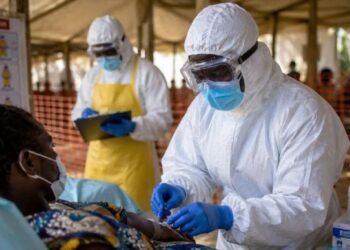















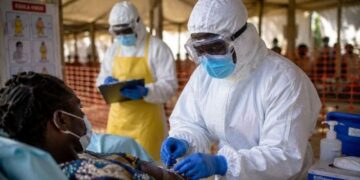










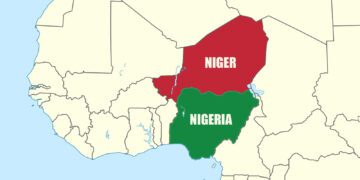






















































Nigeria’s first confirmed Ebola patient has been evacuated to Switzerland following a significant improvement in her condition, while health authorities continue monitoring people who may have been exposed to the virus.
The 42-year-old Ugandan-born woman, who is married to a Swiss diplomat based in Abuja, was flown out of Nigeria early Monday aboard a medical evacuation aircraft, according to ARISE News.
The evacuation took place through the private aviation wing of Nnamdi Azikiwe International Airport in Abuja. ARISE News reported that ambulances and diplomatic vehicles were seen arriving at the airport before the aircraft departed.
Coordinating Minister of Health and Social Welfare, Professor Muhammad Ali Pate, confirmed the evacuation, saying the patient was stable, conscious and able to communicate. He added that her laboratory results showed improvement towards normal levels.
Her husband accompanied her on the flight and had reportedly shown no symptoms.
Nigeria confirmed the Ebola case on 20-10-2026, marking the country’s first reported infection in more than a decade. A report published by The PUNCH on 23-10-2026 said the woman had spent about a week receiving treatment at a private clinic in Abuja before the diagnosis was made.
Swiss authorities initially suspected that she contracted the virus during a recent visit to Uganda. However, investigations into the exact source of infection were still ongoing.
The case involves the Bundibugyo strain of Ebola, which has been linked to outbreaks in parts of Central and East Africa. Health officials are tracing the patient’s movements and investigating possible exposure to establish how the infection occurred and whether others may have been infected.
Despite the patient’s reported recovery progress and evacuation, public health monitoring remains a priority. Authorities are continuing to monitor identified contacts and strengthen infection-prevention measures to limit the possibility of further transmission.
The evacuation represents a major development in Nigeria’s response to the case, but officials still face the task of establishing the source of infection and assessing potential exposure risks.
Health authorities have emphasized the importance of continued surveillance and compliance with public health protocols, noting that an improvement in a patient’s condition does not automatically establish that the person is no longer infectious.