














































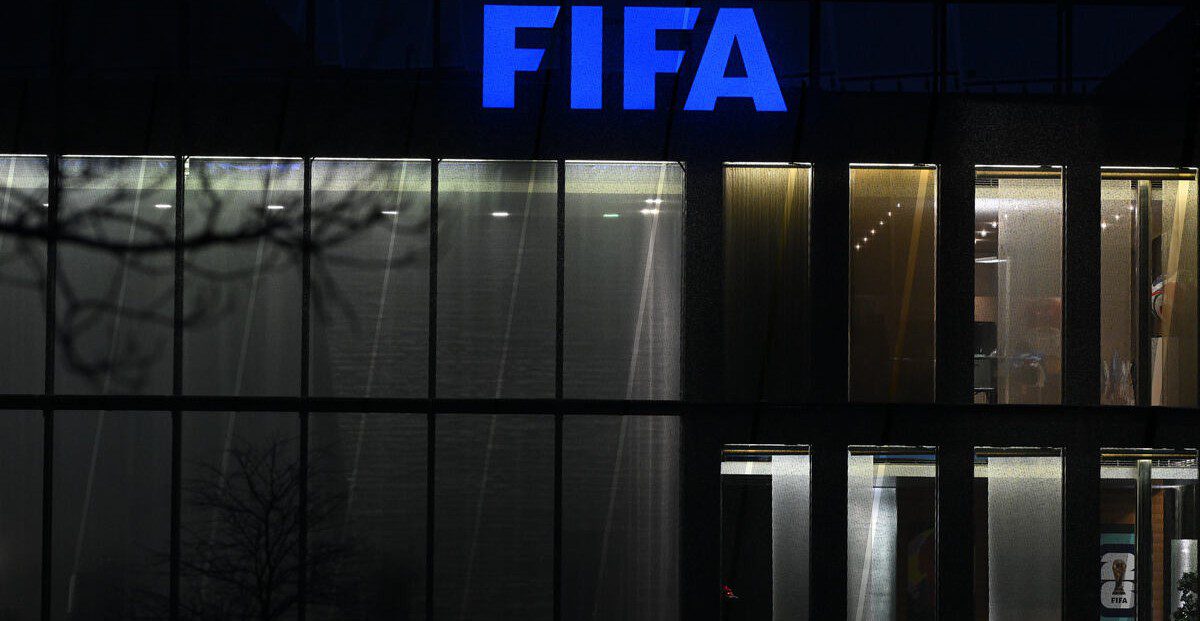
World football governing body FIFA says it has yet to decide what action to take over the leadership crisis at the Nigeria Football Federation, NFF, following the resignation of President Ibrahim Gusau, General Secretary Mohammed Sanusi and other members of the federation’s Executive Committee.
FIFA and the Confederation of African Football, CAF, said they were still examining the legal, administrative, governance and electoral consequences of the developments before reaching any decision.
The two bodies have also suspended the NFF election earlier scheduled for September 27 and announced plans to send a joint delegation to Nigeria for consultations with key football stakeholders.
In a letter addressed to NFF Deputy General Secretary Emmanuel Ikpeme, FIFA said no conclusion had yet been reached despite several communications from stakeholders and meetings involving Nigerian government representatives.
The letter was signed by FIFA’s Chief Member Associations Officer, Elkhan Mammadov.
FIFA said it had received notifications concerning the resignation of the NFF president, members of the Executive Committee and the General Secretary, as well as additional submissions from other stakeholders in Nigerian football.
It also referred to a meeting held at the FIFA headquarters in Zurich on September 1 involving FIFA, CAF, the NFF administration and representatives of the Federal Government.
According to FIFA, the situation requires a detailed examination of the facts, relevant NFF regulations and the positions presented by the various parties.
“At this stage, FIFA and CAF have not reached any conclusions regarding the matters under review and no determination has been made with respect to any potential next steps,” the football body said.
Normalization committee decision put on hold
The development means any immediate move to establish a normalization committee remains uncertain.
Speculation had grown that FIFA could appoint an interim body to oversee the affairs of Nigerian football following the wave of resignations within the NFF.
However, FIFA and CAF said they would first complete their assessment before deciding whether any recommendations should be presented to their relevant decision-making bodies.
Gusau and other senior NFF officials resigned on August 27 following increased scrutiny of the federation and the performance of Nigeria’s national and youth teams.
The development came amid criticism over the failure of the senior men’s and women’s national teams to qualify for their respective World Cups.
The resignations also occurred shortly before the planned September 27 NFF elections.
The National Sports Commission, NSC, subsequently intervened following President Bola Tinubu’s call for action over what the government described as repeated failures in Nigerian football.
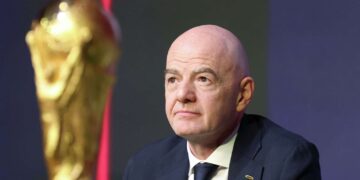
A Nigerian delegation led by NSC Chairman Shehu Dikko later travelled to Zurich for discussions with FIFA President Gianni Infantino and other officials.
Ikpeme remains contact point
Although the NSC has endorsed Emmanuel Ikpeme as Acting General Secretary of the NFF, FIFA addressed him as the federation’s Deputy General Secretary in its latest correspondence.
FIFA directed Ikpeme to continue serving as the principal point of contact between the NFF, FIFA and CAF pending further decisions.
The planned September 27 election has also been suspended to allow the two international football bodies to complete their review.
FIFA stressed that suspending the election should not be interpreted as recognition or endorsement of any particular position in the ongoing dispute.
Instead, it said the move was intended to preserve the process while consultations and assessments continued.
FIFA and CAF delegation heading to Abuja
As part of the review, FIFA and CAF officials will travel to Abuja to hold meetings with major stakeholders in Nigerian football.
The delegation is expected to meet with the NFF administration, members of the federation’s Congress, electoral bodies and officials of the National Sports Commission.
FIFA said the visit would help the two organizations gain a clearer understanding of the circumstances surrounding the recent resignations and the competing positions of stakeholders.
The mission will also examine whether any issues require further consideration under FIFA, CAF and NFF regulations.
After completing the assessment, FIFA and CAF will decide whether recommendations or proposals should be submitted to their respective decision-making bodies.
Until then, FIFA said the outcome remained open.
The governing body warned stakeholders against assuming that a decision had already been taken on whether the NFF would be placed under a normalization arrangement or subjected to any other intervention.
For now, the future structure of the NFF remains undecided as FIFA and CAF prepare to deepen their assessment of Nigeria’s football crisis.