













































































A priceless collection of Bronze Age artefacts has been targeted in a lightning-fast burglary at a museum in the Spanish town of Villena, with thieves escaping just four minutes after triggering the alarm.
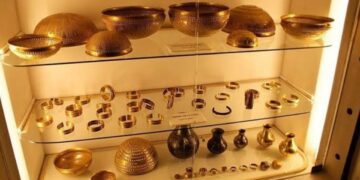
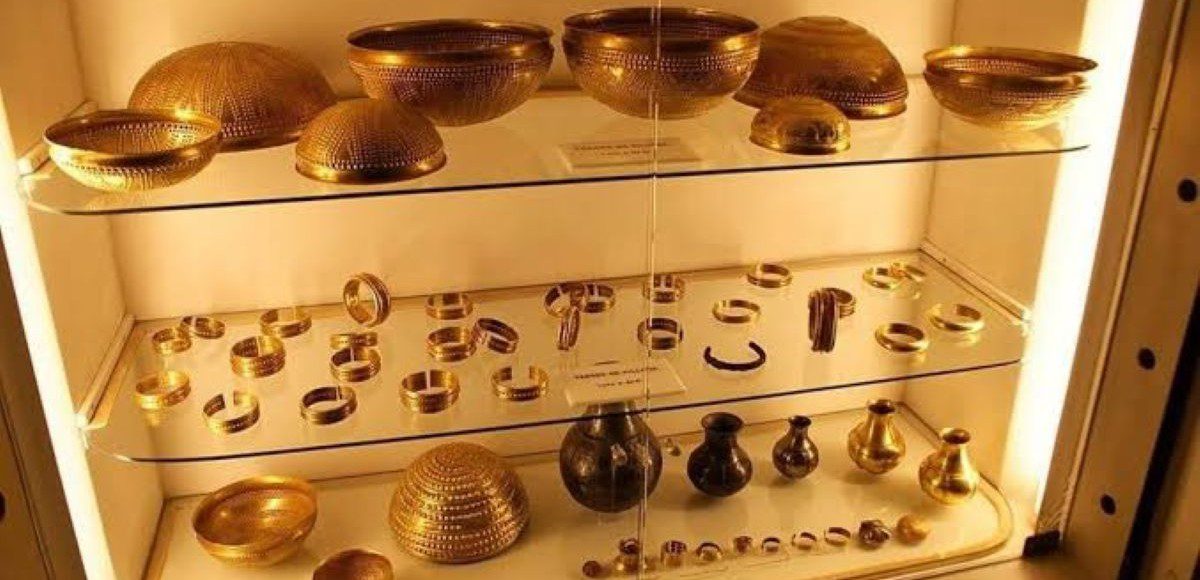
The Treasure of Villena, regarded as one of Europe’s most significant prehistoric discoveries, contains 66 artefacts, most of them made of gold. The collection was raided early Thursday morning at the Museum of Villena in Alicante province.
According to the town council, the museum alarm was activated at about 5:20am, and the intruders had left the building by 5:24am.
“They’ve taken most of the treasure,” Villena mayor Fulgencio Cerdán told reporters, describing the loss as devastating for the town.
The thieves reportedly left behind several items, including three silver vessels, a bracelet and parts of a ceremonial prehistoric sceptre known as the “Kingfisher staff”.
Authorities believe the robbery was carefully planned. Mauro Hernández, an archaeology professor at the University of Alicante and an expert on the collection, said the speed and execution of the operation indicated that the perpetrators knew exactly what they were doing.
The thieves are believed to have arrived in several vehicles before gaining entry through a museum window, according to Manuel Pineda, the Spanish government’s deputy representative in Alicante.
Museum officials said all security systems were activated during the incident and insisted there had been no security failure.
Investigators are also examining whether an earlier alarm at a nearby sports centre was deliberately triggered as a distraction.
A collection dating back 3,000 years
The Treasure of Villena was discovered in 1963 by archaeologist José María Soler, who found the hoard buried inside a vessel in a dried-up riverbed.
The collection dates to around 1000 BC and includes 29 bracelets, 11 bowls, three vessels and other objects. It became the centrepiece of the local museum’s archaeological collection.
Since May 2024, the artefacts had been displayed in a specially designed room at the newly opened, municipally owned Museum of Villena.
Although the majority of the objects are made from gold, researchers have also identified silver, iron, amber and a dark lead-like material among the pieces.
A recent scientific study suggested that some of the unusual iron objects may have been made from meteoritic iron, adding to the historical significance of the hoard.
The collection’s overall cultural value is considered impossible to calculate. Cerdán estimated the market value of the gold alone at around €1.7 million.
Part of a wider wave of museum thefts
The Villena burglary comes amid a series of high-profile thefts targeting museums and cultural institutions across Europe.
In October, robbers broke into Paris’s Louvre Museum in broad daylight and escaped within minutes with jewellery valued at about €88 million.
More recently, four Renaissance paintings by Antonello da Messina were reported stolen from a museum in Sicily, while Italian police recovered works by Renoir, Cézanne and Matisse worth more than $10 million after they were stolen from a museum near Parma.
Europol warned earlier this week that European countries were seeing a shift towards more aggressive and forceful methods in cultural-property thefts.
The agency said some recent cases appeared to involve loosely connected criminals recruited locally through social media and messaging platforms, rather than the traditional organized networks that have dominated the trafficking of stolen cultural artefacts.