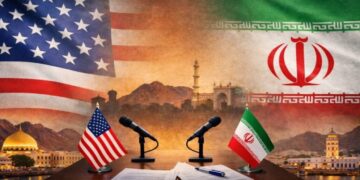










































































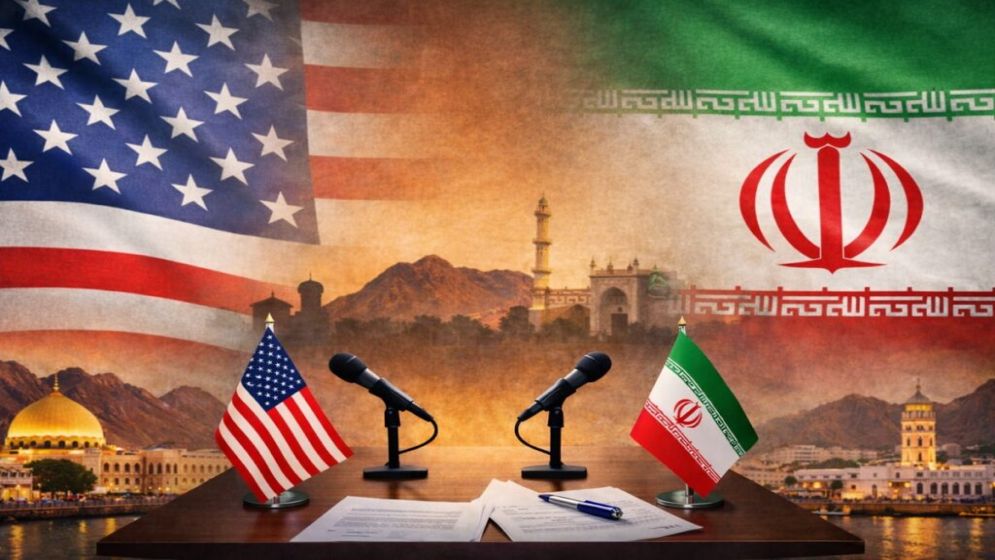
High-level peace talks between the United States and Iran are set to begin on Sunday at the Buergenstock mountain resort in Switzerland, as both countries seek to secure a lasting end to their nearly four-month conflict amid fresh tensions over Iran’s claim that it has closed the Strait of Hormuz.
The negotiations, led by U.S. Vice President JD Vance and Iran’s chief negotiator Mohammad Baqer Qalibaf, are the first formal discussions since Presidents Donald Trump and Masoud Pezeshkian signed a 14-point Memorandum of Understanding earlier this week, establishing a 60-day ceasefire to pave the way for a permanent peace agreement.
However, the fragile truce has already come under pressure after Iran’s Islamic Revolutionary Guard Corps announced on Saturday that it had shut the Strait of Hormuz in response to continued Israeli military operations in Lebanon.
The claim was swiftly disputed by the United States. U.S. Central Command said 55 merchant vessels carrying more than 17 million barrels of crude oil successfully passed through the strategic waterway on Saturday, insisting commercial shipping remains uninterrupted.
The Strait of Hormuz, one of the world’s most important oil transit routes, carries nearly one-fifth of global crude exports, making any disruption a major concern for global energy markets.
Swiss authorities confirmed that negotiations would commence on Sunday morning at the heavily secured Buergenstock resort overlooking Lake Lucerne.
Vice President Vance arrived early Sunday via Emmen Air Base alongside Second Lady Usha Vance, while the Iranian delegation includes Foreign Minister Abbas Araqchi, senior security officials, central bank representatives and oil ministry executives.
Pakistan and Qatar, which helped broker the ceasefire agreement, are participating as mediators. Pakistani Prime Minister Shehbaz Sharif and Army Chief Field Marshal Syed Asim Munir have also arrived in Switzerland for the discussions.
“The logistics of these negotiations have never been simple or predictable,” a White House spokesperson said ahead of the talks.
Before departing Washington, Vance expressed optimism that negotiations could produce meaningful progress.
“I think we’re going to hopefully make progress on the nuclear issue, make progress on the Lebanon ceasefire issue,” he told reporters, adding that discussions could continue for several days.
Despite the ceasefire framework, disagreement over the Strait of Hormuz remains one of the biggest obstacles facing negotiators.
Iran insists the waterway remains under its control and has warned that vessels approaching the strait could face risks if Israeli military actions continue in Lebanon.
Former Iranian officials have argued that the United States has yet to fully implement the ceasefire agreement, particularly its commitment to ending hostilities on all fronts, including Lebanon.
Iran has also indicated it intends to introduce maritime service charges for vessels using the strait after the current 60-day negotiation period.
President Trump, however, maintained there would be no tolls during the ceasefire, suggesting only that the United States could consider imposing fees in the future if peace negotiations collapse.
Although the agreement includes provisions aimed at ending hostilities in Lebanon, fighting has continued.
Lebanese civil defence officials reported that Israeli strikes killed at least 20 people on Saturday despite the ceasefire.
Israel maintains it is not bound by the U.S.-Iran agreement and has vowed to continue military operations against Hezbollah whenever it considers its security threatened.
Israeli officials have also ruled out withdrawing from territories currently occupied in southern Lebanon, while Hezbollah insists it will continue resisting Israeli military activity.
The continued violence has complicated one of the central objectives of the Swiss talks, which is to secure a permanent ceasefire across the region.
Negotiators are expected to focus heavily on Iran’s nuclear programme during the talks.
Under the interim agreement, both countries have 60 days to negotiate a long-term framework governing Iran’s uranium enrichment programme, international inspections and broader regional security arrangements.
Washington is also expected to seek restrictions on Iran’s long-range missile programme, while Tehran is demanding that all parties fully implement the commitments already outlined in the memorandum.
Iranian officials have repeatedly warned that they will respond firmly to any violation of the agreement.
The peace process comes amid growing political debate in Israel over the outcome of the conflict.
A new survey conducted by the Hebrew University found that about 92 per cent of Israelis believe Iran benefited more than Israel from the joint U.S.-Israeli military campaign.
Nearly nine in ten respondents said the war failed to achieve its stated objectives, while fewer than one-third expressed confidence in Prime Minister Benjamin Netanyahu’s claims of major strategic success.
Since fighting escalated in late February, more than 7,000 people have reportedly been killed, mostly in Iran and Lebanon, while the conflict disrupted global energy markets and heightened fears of a broader regional war.
The outcome of the Swiss negotiations is now seen as critical to determining whether the current ceasefire evolves into a lasting peace or whether the region risks sliding back into conflict.