









































































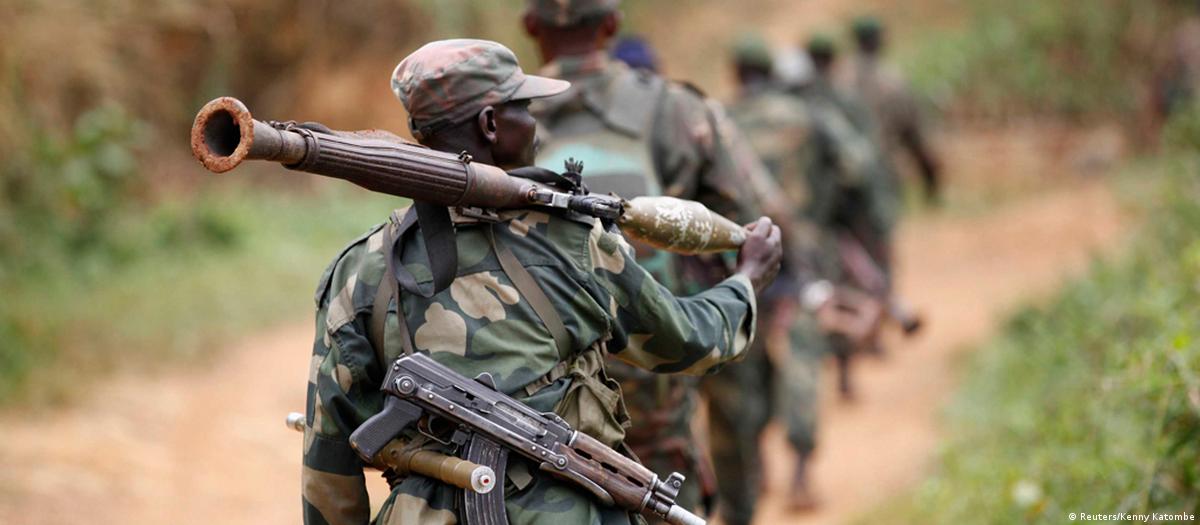
More than 30 people have been killed in a series of attacks by suspected Islamist rebels in eastern Democratic Republic of Congo (DRC), further complicating efforts to contain a growing Ebola outbreak in the region.
The latest violence occurred around the city of Beni in North Kivu Province, where armed assailants attacked several communities over recent days, leaving dozens dead, homes destroyed and residents displaced.
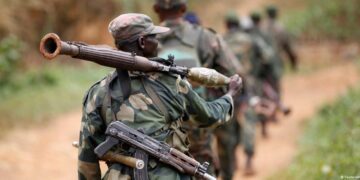
Local authorities and community leaders blamed the attacks on the Allied Democratic Forces (ADF), an armed group linked to the Islamic State that has been responsible for years of deadly violence in eastern DRC.
At least 10 people were reportedly killed in raids on the villages of Matété, Mamuli and Kitoho early Wednesday, while more than 20 others had been killed in an earlier attack on Beni over the weekend. Witnesses said several victims were beheaded, while others were shot during the assaults.
Residents said the attacks triggered panic across affected communities, forcing hundreds of people to flee their homes in search of safety.
The renewed violence comes as health authorities battle an Ebola outbreak affecting North Kivu, South Kivu and Ituri provinces. According to official figures, the outbreak has recorded 344 confirmed cases and 60 deaths.
North Kivu’s military governor disclosed that three patients diagnosed with Ebola fled treatment centres in Beni following the attacks, raising concerns about the potential spread of the virus.
Health experts warn that ongoing insecurity is making disease containment increasingly difficult, as displaced populations move between communities and healthcare workers struggle to operate in volatile areas.
Community leaders say the movement of people escaping violence could accelerate transmission of the disease and undermine efforts to trace contacts and isolate infected individuals.
Civil society groups also expressed concern that the worsening security situation could weaken public trust in health interventions, a challenge that previously complicated Ebola response efforts during earlier outbreaks in the region.
The ADF has intensified attacks against civilians and Congolese security forces in recent years. Civil society organizations estimate that thousands of civilians have been killed by the group since 2014.
Military operations involving Congolese and Ugandan forces have continued in an effort to dismantle ADF strongholds in North Kivu and Ituri. However, analysts say the group’s ability to operate in dense forest terrain and in small mobile units has made it difficult to eliminate.
Researchers also note that attacks on civilians often increase following military offensives against the group, suggesting a strategy aimed at discouraging security operations.
The Congolese government condemned the killings and reiterated that defeating the ADF remains a top national security priority.
Meanwhile, health authorities and international partners continue to warn that insecurity remains one of the biggest obstacles to controlling the Ebola outbreak, with concerns that continued violence could further hamper emergency response efforts and increase the risk of wider transmission.