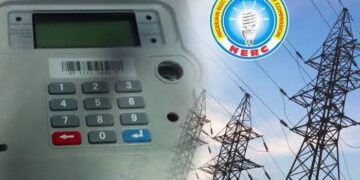






























































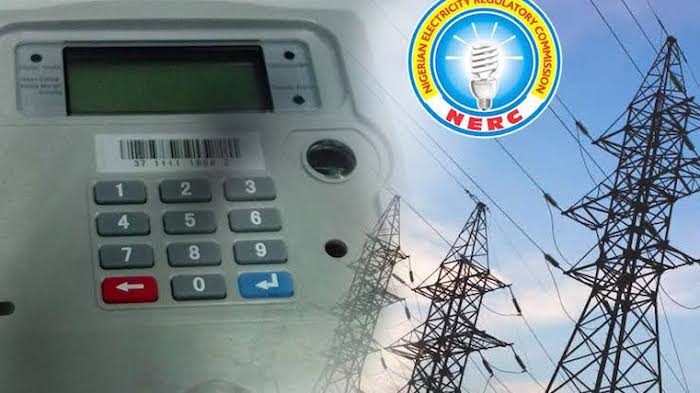
The Nigerian Electricity Regulatory Commission (NERC) has approved a special compensation package for eligible Band A electricity customers affected by prolonged power supply shortfalls caused by generation constraints on the national grid between February and March 2026.
The commission announced the decision in a public notice issued on Thursday, saying the measure was designed to address service disruptions that prevented some electricity distribution companies (DisCos) from meeting the minimum supply hours promised to Band A customers.
According to NERC, the compensation is backed by Directive No. NERC/2026/002 on the Special Compensation of Band A Customers Arising from Grid Generation Constraints.
The regulator explained that the supply challenges were largely caused by factors beyond the control of the DisCos, including inadequate gas supply to power plants and vandalism of critical gas and transmission infrastructure.
NERC noted that the widespread generation shortfall significantly reduced the volume of electricity available for distribution across the country during the period under review.
Under the directive, Band A customers connected to feeders that maintained an average daily supply of between 18 and 20 hours will continue to receive compensation under the existing framework established by Addendum No. NERC/2024/003.
However, the commission introduced an additional compensation arrangement for Band A customers connected to feeders that received less than 18 hours of electricity supply daily between February and March 2026.
To protect affected customers, NERC said feeders covered by the directive would not be downgraded during the compensation period.
For non-maximum demand customers, compensation will be equivalent to 20 per cent of the approved February 2026 energy cap applicable to the affected feeder.
Maximum demand customers will receive compensation equivalent to 20 per cent of the average energy billed per customer in February 2026.
The commission stated that prepaid customers will receive compensation through electricity token credits, while postpaid customers will benefit through bill adjustments.
NERC directed DisCos to complete compensation for February 2026 by May 31, 2026, while compensation for March 2026 must be fully implemented by June 30, 2026.
The regulator also barred electricity distribution companies from deducting compensation credits from existing customer debts.
“Distribution companies are prohibited from offsetting compensation credits against any existing customer debt,” NERC stated, adding that customers must be clearly informed of the value and period covered by any compensation received.
The commission reaffirmed its commitment to consumer protection and market stability, promising to monitor implementation and ensure full compliance by electricity distribution companies.
The compensation directive comes amid persistent challenges in Nigeria’s power sector, particularly gas supply shortages that have affected electricity generation.
Industry data from the Nigerian Independent System Operator showed that thermal power plants required about 1,629.75 million standard cubic feet of gas per day to operate at optimal capacity. However, as of February 23, 2026, actual gas supply stood at about 692 million standard cubic feet per day, representing less than 43 per cent of required volumes.
The shortage forced several power plants to reduce operations or shut down, while the Transmission Company of Nigeria implemented load shedding to ration available electricity among distribution companies.
Despite the challenges, some consumers have reported noticeable improvements in power supply in recent weeks as generation levels gradually recover.