












































































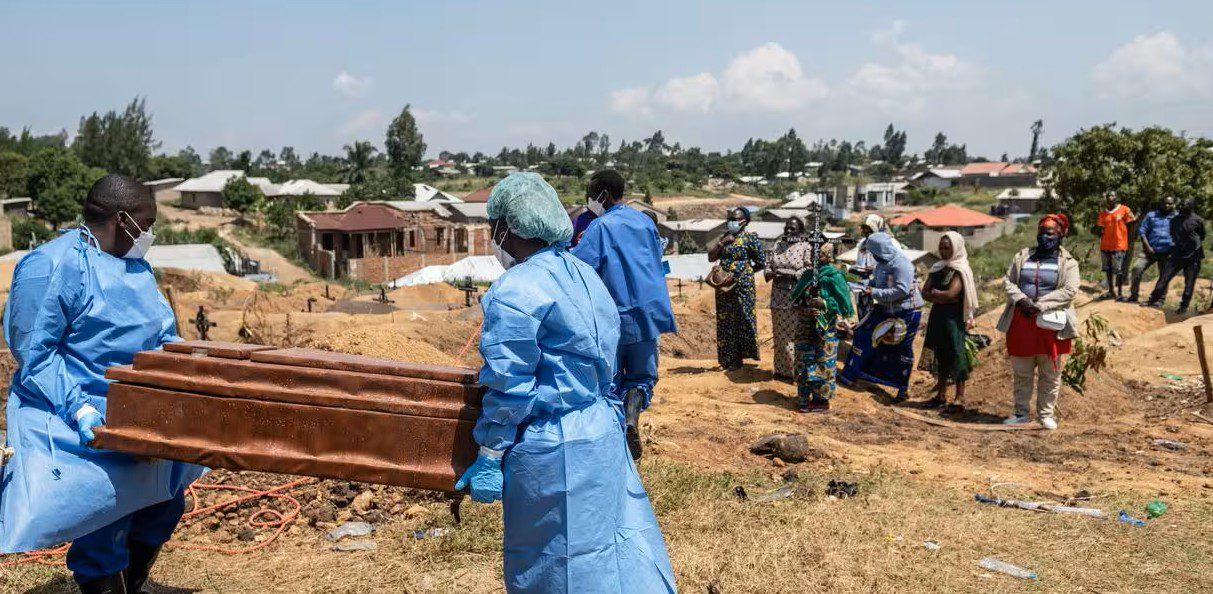
At least 30 people have died since the beginning of May at a camp for displaced civilians in northeastern Democratic Republic of Congo, raising fears that the country’s deadly Ebola outbreak may be spreading rapidly among vulnerable communities.
The deaths were recorded at Kigonze camp in Bunia, the epicentre of the current Ebola outbreak, where officials and humanitarian workers say an unusually high number of residents have died after exhibiting symptoms commonly associated with the virus.
Camp authorities and aid organization Caritas said the exact causes of the deaths have not yet been confirmed because families had until Thursday refused to allow health officials to test either sick patients or the bodies of those who died.
However, multiple sources, including camp officials, aid workers, a bereaved parent and civil society leaders, told Reuters that the victims displayed symptoms such as fever, severe headaches and vomiting, all of which are consistent with Ebola infection.
“People didn’t just die like this before,” Kigonze camp spokesperson Desire Grodya Bapi said.
The deaths have heightened concerns that Ebola could be circulating undetected among the more than five million internally displaced people living across eastern Congo, where overcrowded camps, poor sanitation and resistance to testing continue to hamper efforts to contain the outbreak.
Camp President Dz’djo Ndrutsi Etienne said 10 people were buried this week alone, compared with the camp’s usual mortality rate of between one and three deaths per month.
Justin Zanamuzi, director of Catholic aid organization Caritas, said aid workers encountered several bodies covered with sheets during a visit on Wednesday, including those of children and a pregnant woman.
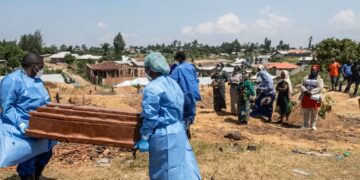
Video footage verified by Reuters showed health workers wearing full protective suits disinfecting bodies and preparing small coffins while grieving relatives looked on.
“Our team tried to persuade people to accept doctors to inspect the bodies. They completely refused,” Zanamuzi said.
Health officials have now collected samples from five victims and are awaiting laboratory results to determine whether Ebola caused the deaths. Authorities noted that cholera, which also spreads rapidly in poor sanitary conditions, shares several symptoms with Ebola.
One grieving resident, 47-year-old Kato Lonu, said he had lost two children, including his six-month-old baby.
“These are conditions that no human being should have to live in. If you look around, people are dying one after another,” he said.
The worsening situation has also exposed the impact of shrinking humanitarian funding.
Aid organizations say severe reductions in water, sanitation and hygiene (WASH) programmes, particularly following cuts in U.S. foreign assistance, have left displaced communities increasingly vulnerable to infectious diseases.
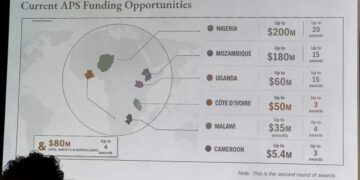
United Nations data show funding for water and sanitation programmes in Congo fell by more than half between 2024 and 2025, dropping to about $38 million. This year’s $80 million humanitarian appeal has received only about 21 per cent of the required funding.
Humanitarian workers say the lack of functioning toilets, clean water and handwashing facilities has significantly increased the risk of disease transmission in camps such as Kigonze, where families share cramped plastic shelters separated by less than a metre.
Although several toilets in the camp were constructed with support from the United States Agency for International Development (USAID), residents say they are too few and frequently overflow.
“The latrines fill up very quickly, and people have to empty them themselves with their bare hands,” Grodya said.
Before recent funding reductions, the United States had been the largest supporter of water and sanitation programmes in Congo, providing more than $60 million in 2024 to help prevent the spread of infectious diseases, including Ebola.
Several humanitarian organizations, including Mercy Corps, CARE International, Oxfam and the Danish Refugee Council, confirmed that U.S.-funded sanitation projects across the three Ebola-affected provinces have since been significantly scaled back or discontinued.
Mercy Corps said it had reduced services from 82 water taps and more than 400 public toilets serving over 125,000 displaced people in 2024 to just six taps serving fewer than 19,000 people this year.
The Ebola outbreak was officially declared by Congolese authorities on May 15 and has since recorded nearly 900 confirmed infections, with Ituri Province accounting for more than 90 per cent of reported cases.
Health experts warn that unless testing, surveillance and sanitation improve rapidly, the outbreak could spread further among displaced populations already living in overcrowded and unsanitary conditions.