













































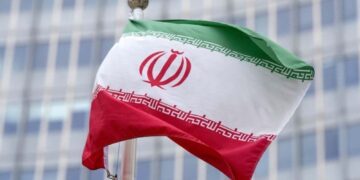
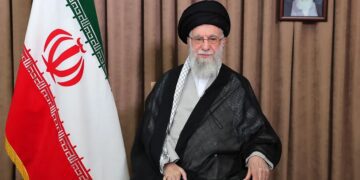


















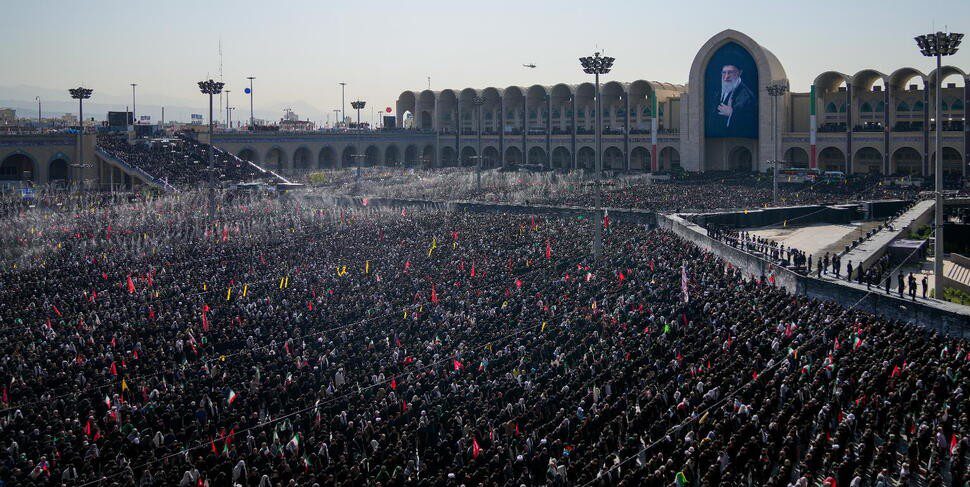
Iran has begun a week of state funeral ceremonies for former Supreme Leader Ayatollah Ali Khamenei, drawing large crowds in Tehran, while his successor, Supreme Leader Mojtaba Khamenei, remained absent from public events, fueling continued speculation over his condition.
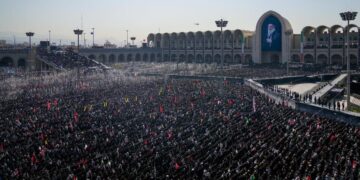
State television broadcast funeral prayers on Sunday from the Imam Khomeini Mosalla in Tehran, where the coffins of Ayatollah Khamenei and four members of his family were placed before mourners. The late leader’s sons, Mostafa, Meysam and Masoud Khamenei, were seen participating in the prayers alongside senior Iranian officials.
President Masoud Pezeshkian, Parliament Speaker Mohammad Bagher Qalibaf and other government leaders attended the ceremony as thousands of mourners gathered at the religious complex. Footage from the event showed Masoud Khamenei visibly emotional during the prayers.
Notably absent was Mojtaba Khamenei, who recently assumed Iran’s highest leadership position following his father’s death. Iranian authorities have not explained his absence, and no recent images or public appearances of the new supreme leader have been released.
Reports circulating in international media have suggested Mojtaba Khamenei sustained injuries during the February 28 attacks that killed his father and several members of the family. Those claims have not been independently verified, and Iranian officials have not commented publicly on his health.
The funeral ceremonies form part of a nationwide week of mourning that Iranian authorities say will include processions across several cities and visits to important Shia religious sites.
The coffins of Ayatollah Khamenei, his daughter, son-in-law, daughter-in-law and infant granddaughter were displayed for public viewing after an initial private ceremony attended by senior officials and foreign dignitaries.
Authorities have announced that the funeral procession will continue through Tehran before the remains are taken to the holy city of Qom. Additional ceremonies are scheduled in Iraq’s Shia shrine cities of Najaf and Karbala before the body returns to Iran for burial in Mashhad.
Iranian officials say extensive transportation and logistical arrangements have been made to accommodate millions of expected mourners throughout the week-long events.
The funeral comes amid a fragile ceasefire that has paused months of conflict involving Iran, Israel and the United States. Diplomatic efforts to build on the truce remain ongoing, although officials in Washington have indicated that formal talks have temporarily slowed during the mourning period.